Lost Motion Corvette Manta Ray Resurfaces After 50 Years
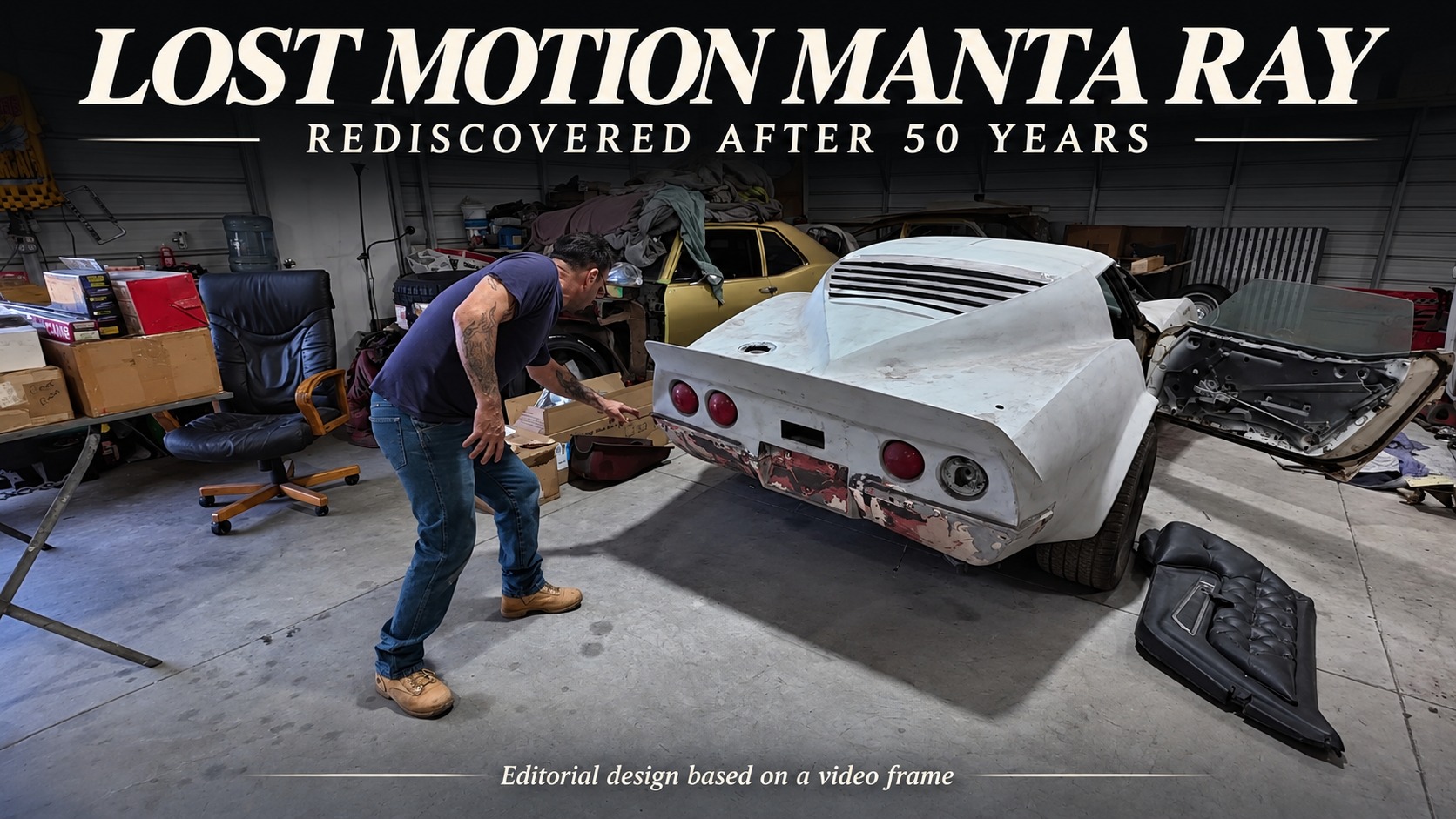
Featured-image design based on the video frame at 14:25.
A Corvette once featured as “The Electric Orange” has resurfaced looking very different from its magazine days. Its body is now pale gray, sections of trim are missing, and loose parts occupy the cabin. Yet the sweeping tail, rear-window louvers, and deeply buttoned upholstery still give this Motion Corvette Manta Ray a personality that unfinished paint cannot hide.
Jerry Heasley’s video, Found: 1969 Motion Corvette Manta Ray Missing 50 Years “Fell In My Lap”, brings viewers into the workshop where the rediscovered car is being examined. The attraction is immediate: an elaborate custom Corvette has survived, and its next chapter connects to a family with ties to Motion itself.
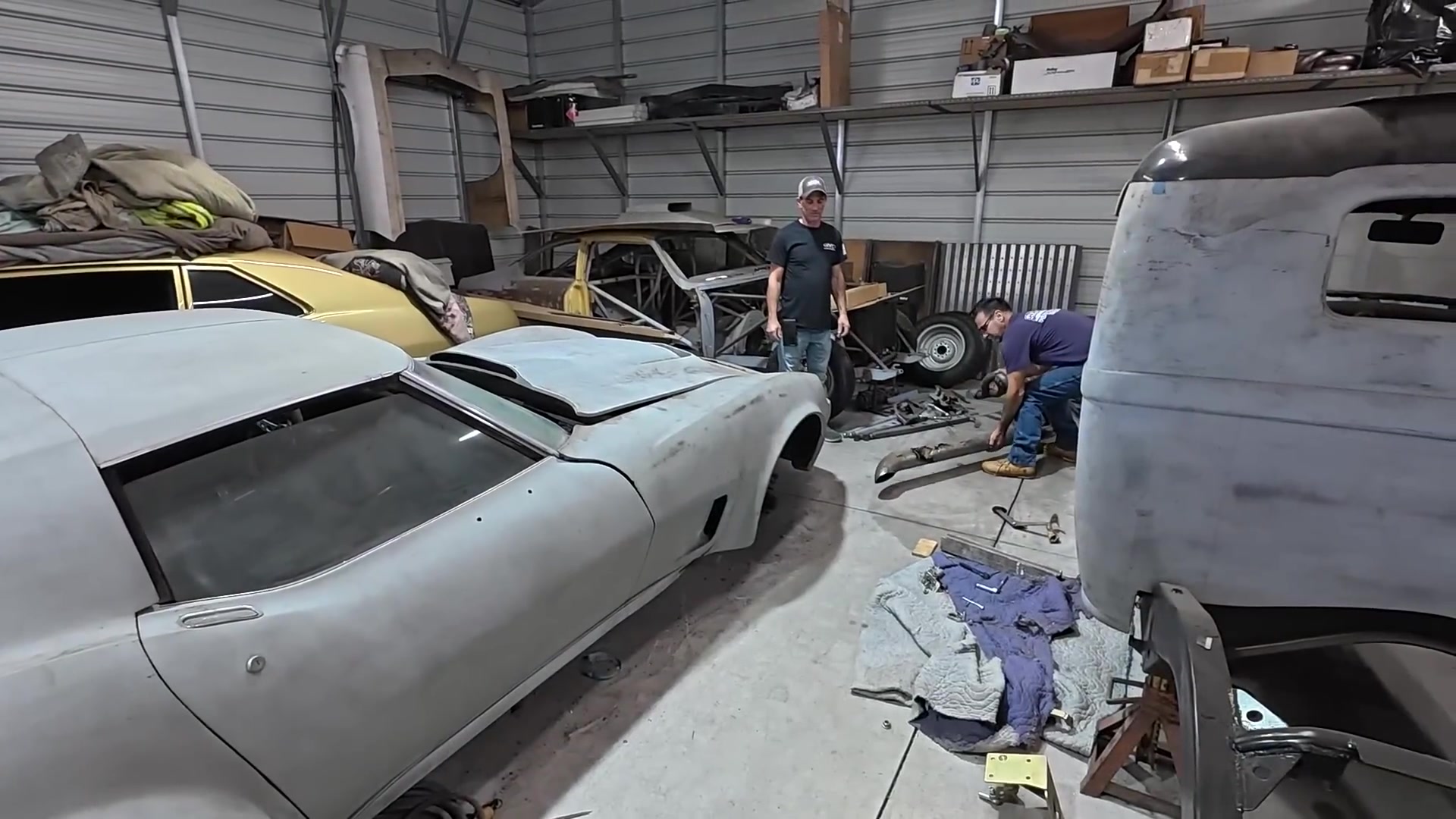
The Manta Ray in the workshop at 7:40. The unfinished body still shows its distinctive custom shape.
A Florida Find With a Family Connection
According to CorvetteBlogger’s coverage of Heasley’s visit, Greg Ferrara located the car through a friend who had kept it in a barn at a trailer park south of Tampa after bringing it from New York. The same report links the Corvette to the “Electric Orange” feature in the 1976 Corvette annual published by CARS.
For Greg, the connection extends beyond the bodywork. His father, Dennis Ferrara, worked with Joel Rosen’s Motion operation and remembered the car from that period. CorvetteBlogger reports that Greg intends to restore and keep it, with that family history contributing to his attachment.
That gives the recovery a useful focus. The car is a restoration project, but its significance also lies in the people who can connect its present condition to its earlier identity. The workshop footage gives those surviving details room to speak.
The Bodywork Still Carries the Story
Seen from the side, the Corvette’s long hood and sculpted fenders lead into a roof and rear section that demand a second look. The rear window is covered by broad horizontal slats, while the body flows outward into a pronounced trailing edge.
The rear view makes the transformation easier to appreciate. A tall, integrated spoiler line stretches across the tail above round lamp openings. One opening is empty in the footage, and the lower rear area shows missing trim and rough surfaces. These are useful details of the car as encountered, rather than distractions from a finished-car portrait.
The visual impression comes from the whole arrangement. The louvers, broad rear shoulders, and raised tail work together; removing one element would change how the others read. For a restoration, that makes photographs of the existing shapes especially valuable.
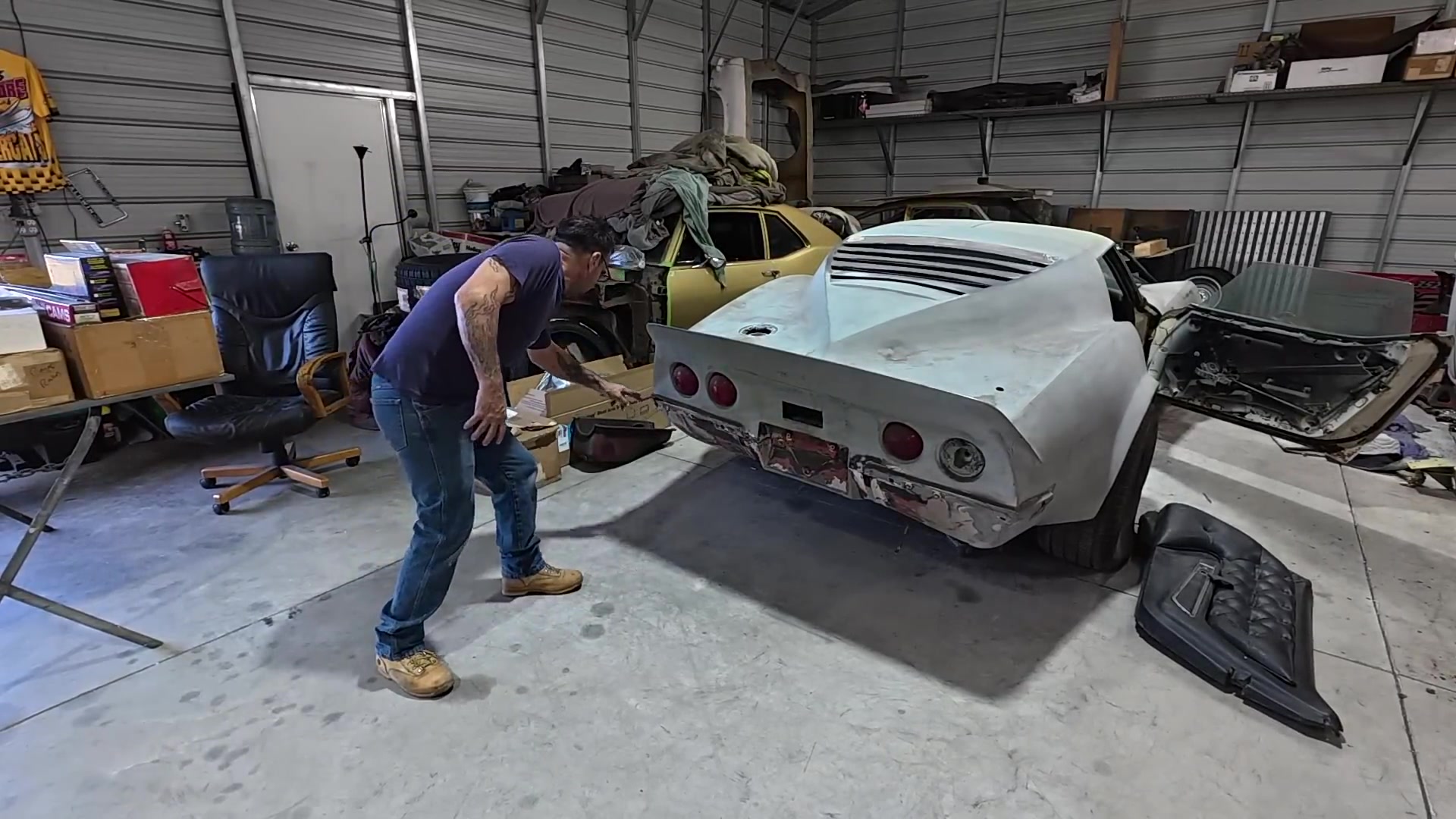
The rear treatment at 14:25: the custom tail remains recognizable despite the work still ahead.
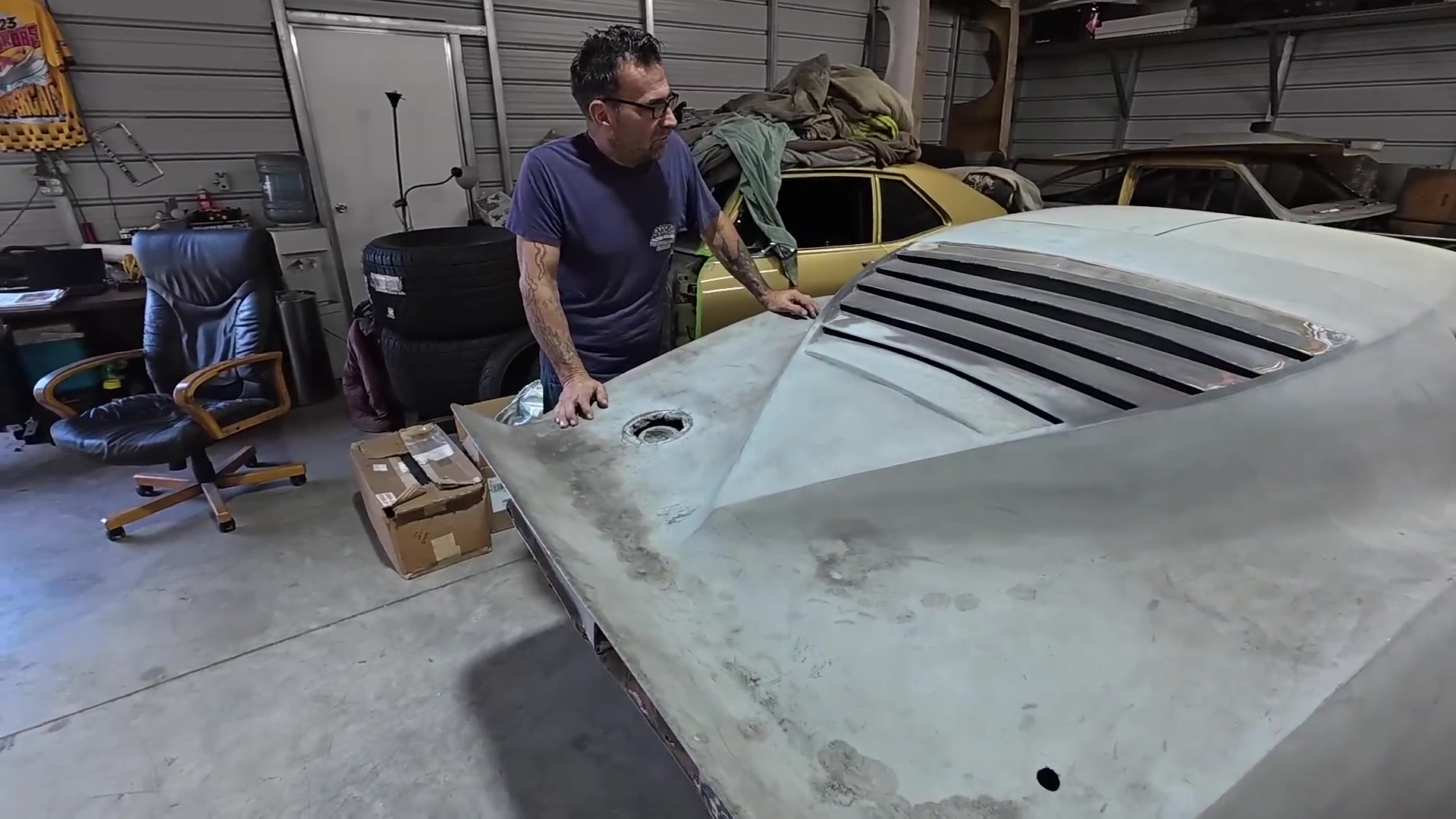
Rear-window louvers and the surrounding bodywork at 15:10.
Where Motion Fits Into Corvette History
Joel Rosen’s name is often associated with powerful Chevrolet street machines, but his interest in Corvettes ran deeper than engine swaps. In a firsthand history published by VETTE, Motion program participant Martyn L. Schorr describes Rosen’s progression toward distinctive Corvette grand tourers with custom appearance and practical changes alongside performance work.
The Phase III GT was one expression of that approach. Schorr explains that its fastback rear-window conversion opened up the space behind the seats, while other styling changes gave the Corvette a separate identity. Those details help place the recovered Manta Ray within a broader culture of rethinking the Corvette, rather than merely decorating one.
For this particular car, the visible body and cabin offer a stronger starting point than a borrowed horsepower figure from another Motion build. Custom cars have individual histories. Understanding this one means following its own components, photographs, and records.
A Cabin That Preserves the Custom-Car Era
The interior is among the most striking parts of the inspection. Button-tufted upholstery extends across the rear cabin surfaces, creating a padded, almost furniture-like effect. Even with debris and loose components present, the repeated pattern is clear.
It is a detail that could disappear from a simplified restoration story. A fresh exterior color would make a dramatic before-and-after image, but the stitching pattern, padding, and placement of the trim contribute just as much to the car’s character.
The footage also shows removed door trim and exposed areas around the cabin. Together, these views provide a record of how the remaining material relates to the body. Before new upholstery is made or damaged pieces are discarded, those relationships are worth documenting.
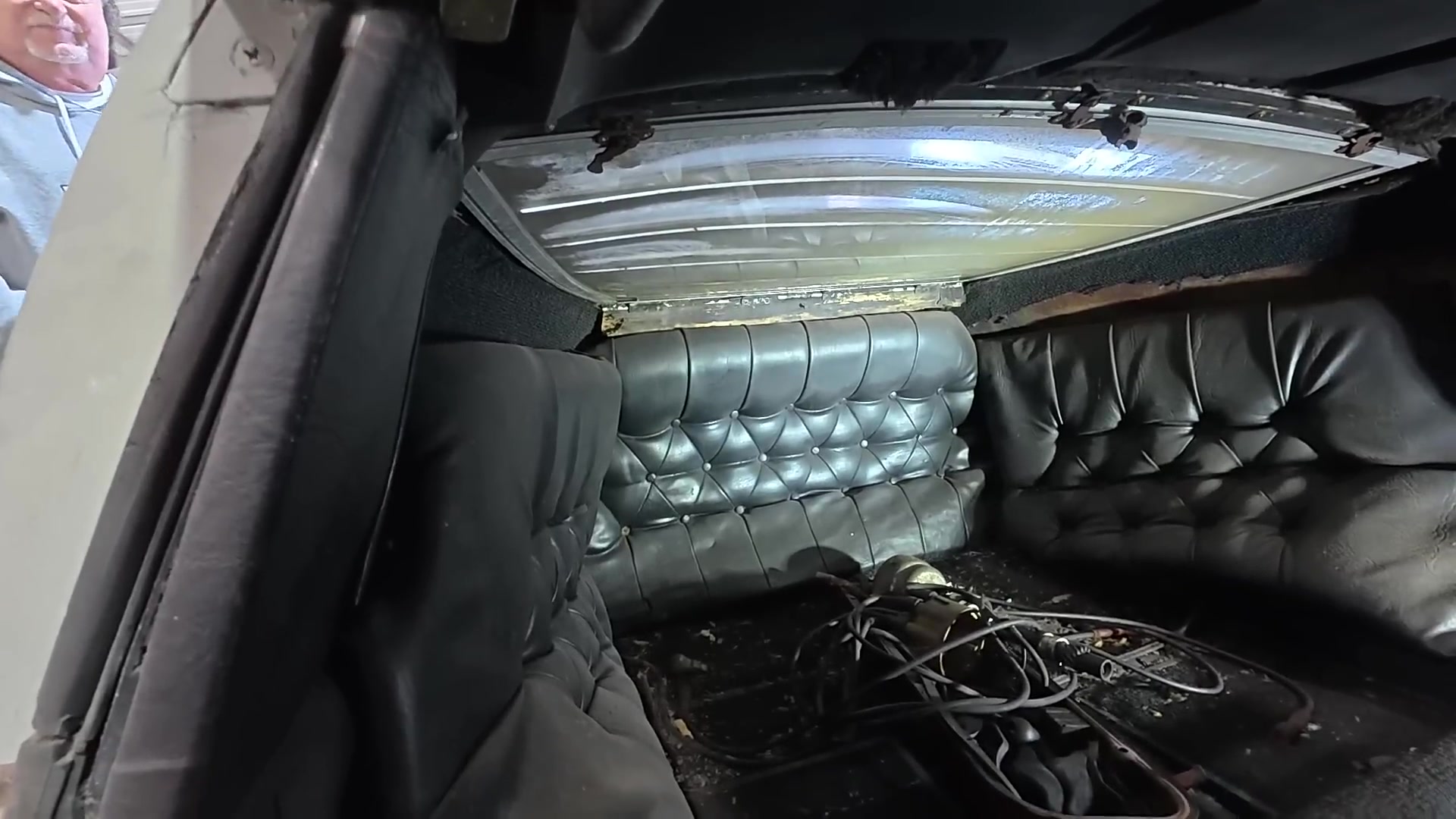
Surviving tufted trim at 11:35 provides a close look at the custom interior.
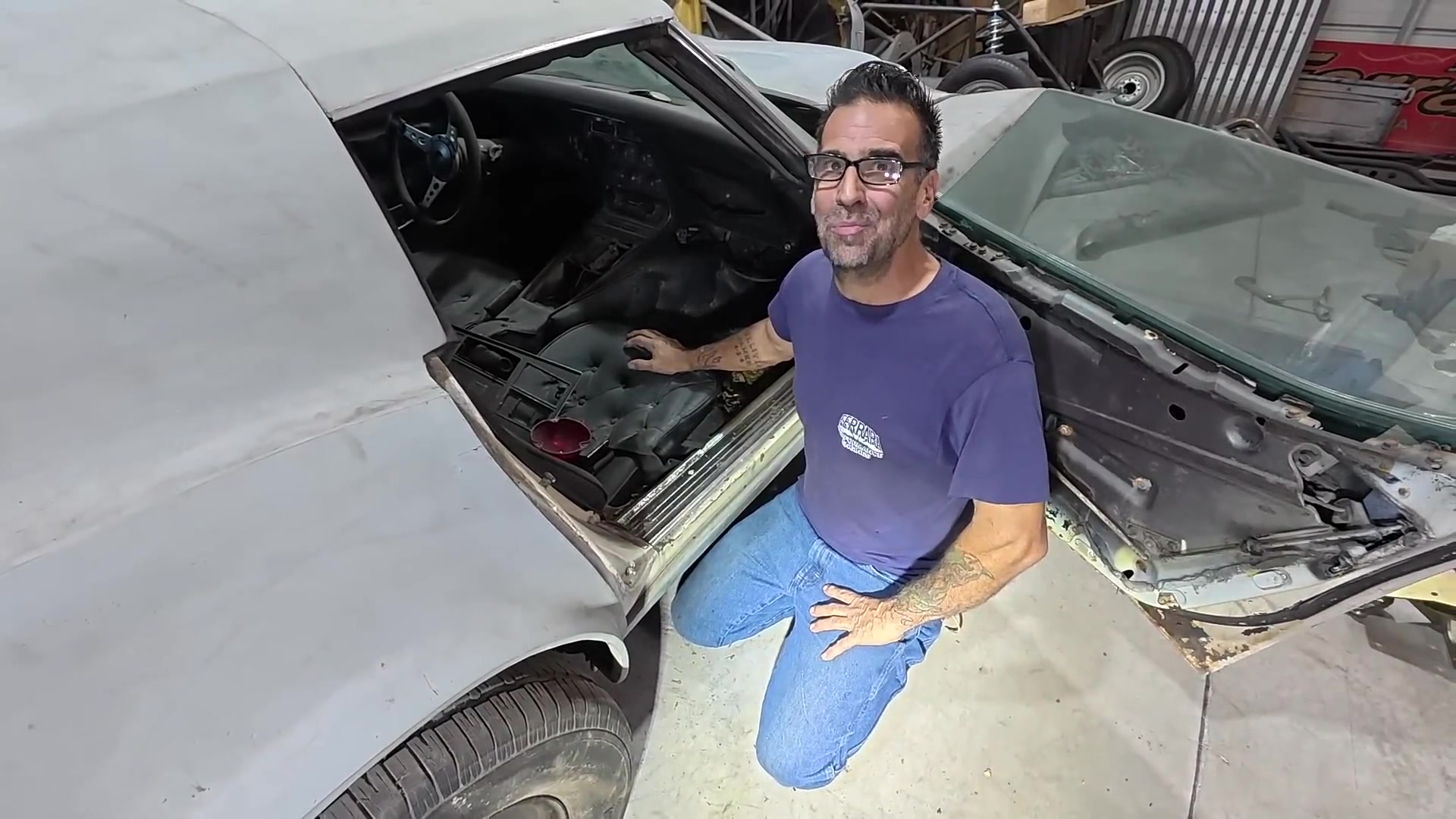
The cabin inspection at 9:55 shows the car partway through examination and disassembly.
The Manta Ray Name Needs Context
The name can lead readers toward a different Corvette altogether. General Motors’ own 1969 Manta Ray was a concept car developed by revising the 1965 Mako Shark II. GM’s heritage account places that vehicle within its design-studio show-car history.
The subject of Heasley’s video is a Motion-customized Corvette. Sharing the Manta Ray name does not make it the GM concept, nor does the 1969 identification in the video’s title establish when its custom conversion took place. The production car’s model year and the date of subsequent bodywork are separate questions.
Rediscovered, With the Restoration Still Ahead
During the workshop inspection, two men lift the hood clear of the car, exposing the engine compartment. Elsewhere, the camera records the unfinished exterior and partially dismantled interior. The story documented here is the recovery and examination of a project—not a completed restoration reveal.
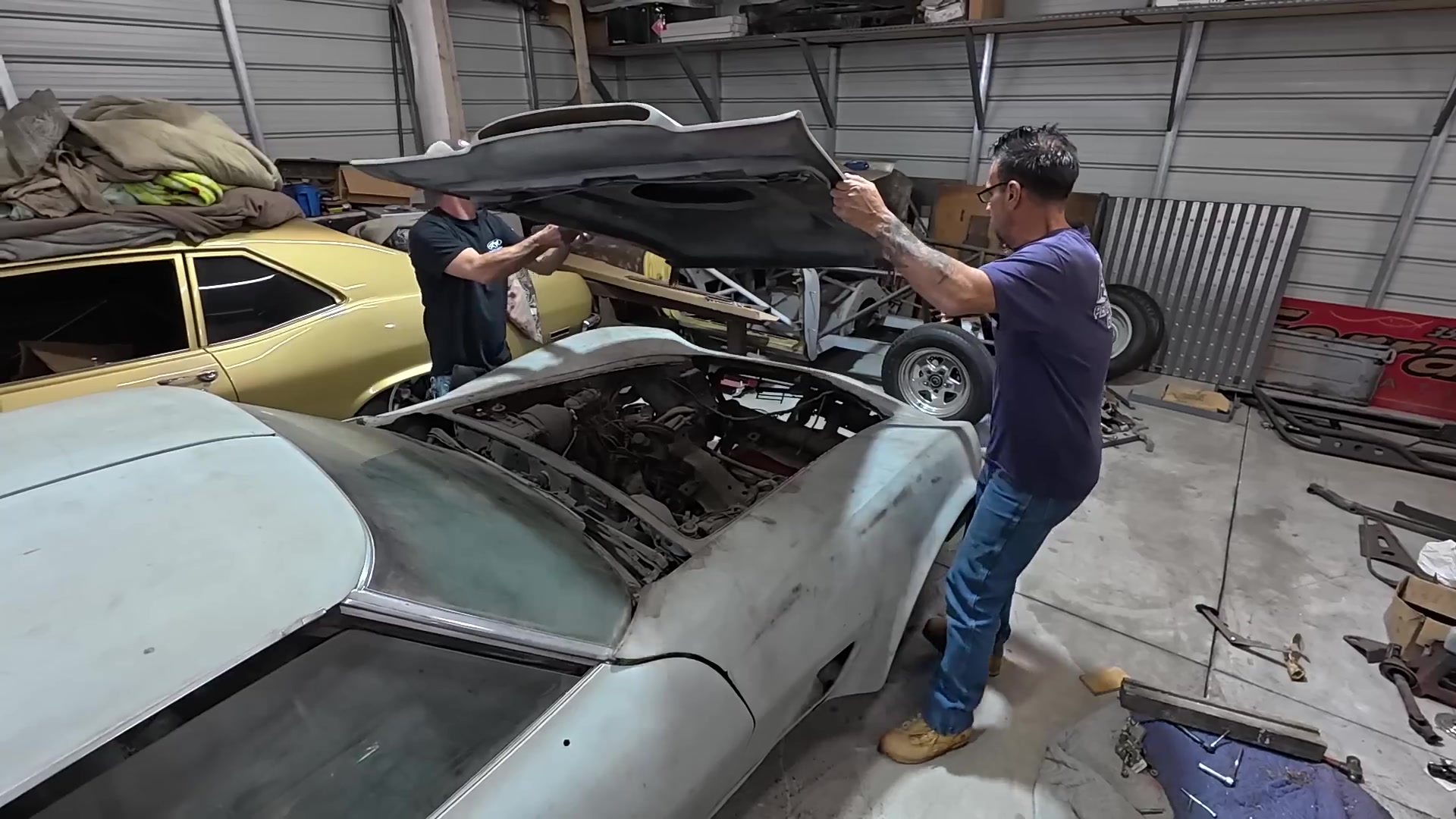
The hood is lifted during the inspection at 6:55, allowing a closer look beneath it.
That stage has its own value. A custom car can preserve evidence in an imperfect panel, an unusual trim piece, or a surviving upholstery pattern. Restoring it well begins with recognizing which details explain its identity.
For the recovered Motion Corvette Manta Ray, the result already matters: a car long absent from public view has returned to attention with much of its distinctive design still readable. The next challenge is to carry that identity through the work ahead, so that the finished Corvette tells the same story more clearly.


