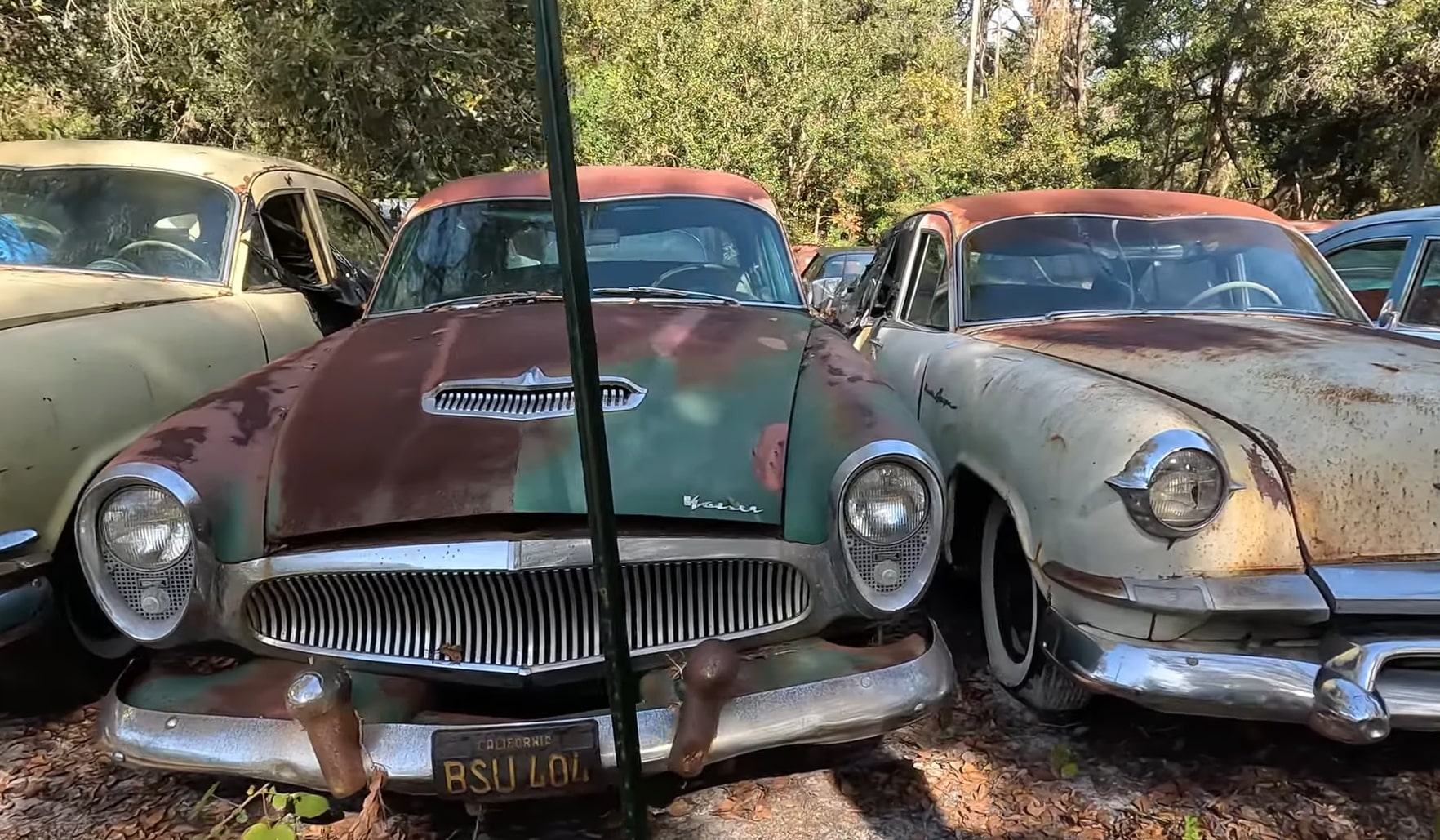
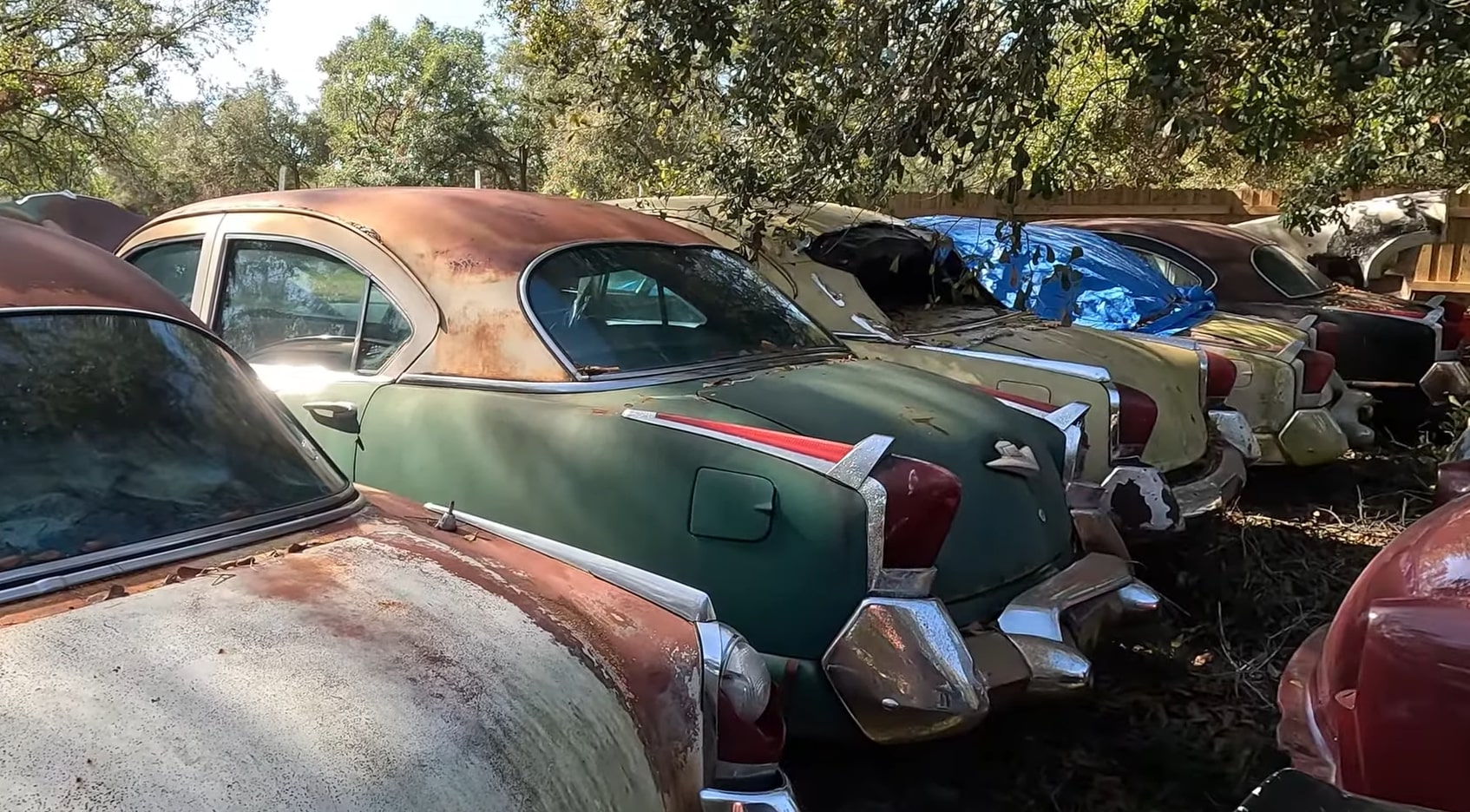
While most classic car enthusiasts focus on mainstream muscle cars from Detroit’s Big Three, a remarkable collection in someone’s backyard tells a different story about American automotive history. Geoff Hacker’s impressive assembly of forgotten Kaiser automobiles represents one of the most significant concentrations of these rare post-war independents anywhere in the country. Among the dozen vehicles scattered across his property sits an ultra-rare 1953 Kaiser Dragon – one of only 1,277 ever produced and a crown jewel of orphaned American automotive brands.




The Collection: A Kaiser Enthusiast’s Dream
Geoff’s collection consists almost exclusively of 1953-1955 Kaisers of the full-size variety. He has at least four Dragons, three Manhattans, and a few Specials. Some cars are in poor shape, but others still run and drive. The diversity within this single-brand focus demonstrates just how varied Kaiser’s offerings were during their brief but innovative existence in the American automotive landscape.
What makes this collection particularly remarkable isn’t just the quantity, but the rarity of what’s represented. While Ford, Chevrolet, and Plymouth produced hundreds of thousands of cars annually during the 1950s, Kaiser struggled to achieve even modest production numbers. This makes each surviving example increasingly precious as automotive history.
The Crown Jewel: 1953 Kaiser Dragon
At the heart of this collection sits the legendary 1953 Kaiser Dragon, a car that represents both the pinnacle of Kaiser engineering and the company’s desperate attempt to survive in an increasingly competitive marketplace. A Dragon is not a common car. It was made for just one year – 1953, and only 1277 were produced during an approximate 6 month production run from late 1952 to late spring of 1953.
The Dragon’s production story reads like a tragedy of American automotive ambition. Dragon Production stopped entirely on May 28th, 1953 due to UAW Strike leaving just 1277 Kaiser Dragons being produced. This work stoppage effectively ended Kaiser’s most ambitious model before it had a real chance to find its market.
1953 Kaiser Dragon Specifications:
- Engine: 226 cubic inch “Supersonic” inline-6
- Power: 118 horsepower
- Transmission: 3-speed manual or optional Hydra-Matic automatic
- Wheelbase: 118.5 inches
- Price: Nearly $4,000 (approximately $45,000 in today’s money)
- Production: Only 1,277 units built
The Dragon’s Designer Luxury
What made the Dragon special wasn’t just its rarity, but its luxury appointments that rivaled Cadillac and Lincoln. Fashion designer Marie Nichols Five colors were offered with specific interior color combinations in each, creating a level of sophistication that Kaiser hoped would attract affluent buyers looking for something different from Detroit’s mainstream offerings.
The Dragon featured:
- Exterior: Five available colors including the ultra-rare “Show Dragon” variants
- Interior: Designer fabrics by fashion industry professionals
- Appointments: Luxury trim exceeding even Kaiser’s Manhattan model
- Options: Advanced features including optional air conditioning
Show Dragons represent the absolute pinnacle of rarity within an already rare model. Approximately six or twelve of these were built depending on the source referenced, making them among the most sought-after Kaiser variants by collectors today.
Kaiser’s Brief But Innovative History
Understanding this collection’s significance requires appreciating Kaiser’s unique position in American automotive history. Kaiser was a new automobile company that started production after World War II and made cars in America from 1947 to 1955. Founded by industrialist Henry J. Kaiser, the company represented one of the last serious attempts to challenge Detroit’s established Big Three.
Kaiser’s innovations included:
- Safety Focus: Early adoption of safety features ahead of federal requirements
- Advanced Styling: Distinctive designs that influenced industry trends
- Engineering Innovation: Unique solutions to common automotive challenges
- Market Positioning: Attempting to fill gaps left by mainstream manufacturers
However, the company faced insurmountable challenges. The Frazer marque was discontinued after the 1951 models, and by 1953, Kaiser was struggling to maintain production volumes necessary for profitability in the increasingly competitive American market.
The Collection’s Broader Context
Beyond the headline-grabbing Dragon, this collection represents a comprehensive survey of Kaiser’s final years. A 1953 Manhattan and a 1954 two-door sedan bolted onto a Lincoln chassis round out Geoff’s impressive Kaiser collection, demonstrating both the variety within Kaiser’s lineup and the experimental approaches the company took to survive.
The Manhattan models represent Kaiser’s attempt to compete in the luxury car market, while the Specials targeted more budget-conscious buyers. This range shows Kaiser’s desperate attempts to find profitable niches in an increasingly crowded marketplace.
Market Values and Collector Interest
Today’s classic car market has begun recognizing the significance of orphaned brands like Kaiser, with values reflecting both rarity and historical importance:
Current Kaiser Market Values:
- 1953 Dragon (Restored): $35,000-65,000
- 1953 Manhattan: $15,000-30,000
- Kaiser Special: $8,000-20,000
- Project Cars: $3,000-12,000 depending on completeness
The 1953 Dragons is a rare, intriguing and historically significant automobile that shows exceptionally well, according to auction house descriptions. Recent sales have shown strong appreciation for quality examples, particularly those with documented provenance and original components.
The Preservation Challenge
What makes collections like Geoff Hacker’s particularly valuable extends beyond individual car values to their role in preserving automotive history. Many Kaiser parts are no longer available through traditional channels, making complete cars essential sources for restoration components and technical information.
Preservation Considerations:
- Parts Scarcity: Original components increasingly difficult to source
- Documentation: Service manuals and technical information rare
- Expertise: Qualified Kaiser mechanics and restorers limited
- Community: Small but dedicated network of Kaiser enthusiasts
This collection serves as both museum and parts repository, ensuring that future Kaiser restoration projects have access to original components and reference examples.
The Video Documentation Project
Recognizing the historical significance of this collection, Hacker agreed to document it on video and share it online. This documentation serves crucial purposes for the broader classic car community:
Educational Value:
- Visual record of rare Kaiser variants
- Technical information sharing
- Condition assessment for similar projects
- Historical preservation through media
The video documentation helps ensure that even if individual cars are eventually sold or restored, knowledge about their original condition and specifications remains available for future researchers and restorers.
Investment and Restoration Potential
For serious Kaiser enthusiasts, this collection represents both opportunity and responsibility. It’s unclear which cars will be restored first, but I hope Mr. Hacker will have time to revive all of them. The restoration potential varies dramatically across the collection:
Prime Candidates:
- Running and driving examples requiring cosmetic work
- Complete cars with original components
- Rare variants like the Dragon
- Models with documented history
Project Challenges:
- Cars requiring extensive metalwork
- Vehicles missing critical components
- Examples with non-original modifications
- Models in poor structural condition
The Orphan Brand Phenomenon
Kaiser’s story reflects broader themes in American automotive history – the challenge of independent manufacturers competing against established giants. If you’re into orphan brands and Kaiser’s forgotten sedans, you’ll find this collection represents one of the most comprehensive surveys of the marque’s final years.
Other orphaned brands from this era include:
- Studebaker: Survived until 1966
- Hudson: Merged with Nash in 1954
- Nash: Became part of American Motors
- Packard: Final cars built in 1958
- Crosley: Ceased production in 1952
Kaiser’s failure wasn’t due to lack of innovation or quality, but rather the enormous capital requirements necessary to compete in the post-war automotive boom.
Modern Relevance and Lessons
Today’s automotive landscape, with new electric vehicle startups challenging established manufacturers, echoes many themes from Kaiser’s era. The company’s focus on safety, innovation, and distinctive styling prefigured many modern automotive trends.
Kaiser’s Legacy:
- Safety innovation ahead of federal requirements
- Distinctive styling that influenced industry design
- Attempt to serve underrepresented market segments
- Demonstration of challenges facing automotive startups
The Collector Community
Collections like Geoff Hacker’s serve as focal points for Kaiser enthusiast communities nationwide. These gatherings preserve not just cars but knowledge, stories, and connections between people who appreciate these forgotten automotive gems.
Community Benefits:
- Technical knowledge sharing
- Parts source networking
- Historical documentation preservation
- Social connections among enthusiasts
- Education for younger generations
Future Prospects
The long-term future of collections like this depends on finding dedicated caretakers who understand both the cars’ historical significance and the practical challenges of preservation. Whether individual vehicles are restored, preserved in current condition, or used as parts sources, each decision impacts Kaiser’s automotive legacy.
Preservation Options:
- Complete concours restoration to show standards
- Driver-quality rebuilds for road use
- Static preservation maintaining current condition
- Parts donation to support other restoration projects
The Verdict: Automotive Archaeology in Action
Geoff Hacker’s collection represents automotive archaeology at its finest – a comprehensive survey of a failed but innovative American car company preserved in someone’s backyard. The presence of an ultra-rare 1953 Dragon elevates this collection from interesting to historically significant.
For Kaiser enthusiasts, this collection offers both inspiration and resources. For broader classic car culture, it demonstrates how dedicated individuals can preserve important automotive history that might otherwise disappear forever.
The dozen Kaisers scattered across this property tell stories of American automotive ambition, innovation, and ultimate failure in the marketplace. But they also represent hope – proof that even commercial failures can find appreciation among those who understand their historical significance.
Whether these cars eventually find individual new homes or remain together as a comprehensive collection, they serve as tangible reminders of an era when American entrepreneurs still believed they could challenge Detroit’s established order. In Geoff Hacker’s yard, the Kaiser dream lives on, waiting for the next chapter in their remarkable story.