Hubert Platt’s 1969 Mustang: A Ford Drag Team Legend Restored
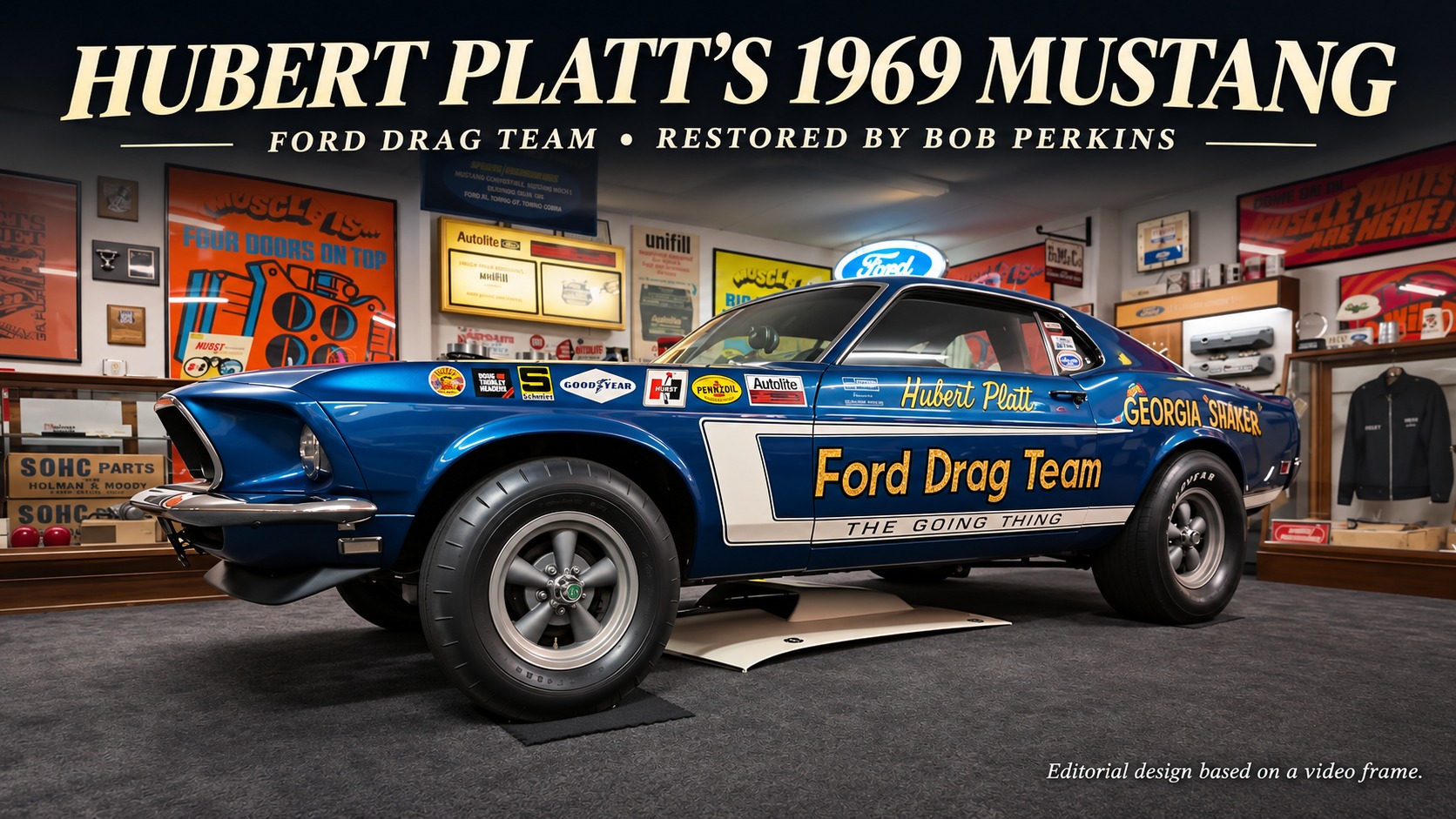
Featured-image design based on the video frame at 1:40.
The gold lettering stretches across the blue door: Ford Drag Team. Hubert Platt’s name sits above it, with “Georgia Shaker” on the rear quarter. In Bob Perkins’ collection, the restored Mustang is surrounded by enough uniforms, parts displays, and promotional material to suggest that an entire racing program has followed the car home.
That is the appeal of Jerry Heasley’s video, The Hubert Platt 1969 “Ford Drag Team” Mustang Found & Restored by Bob Perkins. The car supplies the visual centerpiece. The objects around it explain how Ford put its performance message in front of racers and customers—and how much work it takes to preserve that history.
For readers researching the Hubert Platt 1969 Mustang, the first detail to establish is its identity. This is the 427 SOHC match racer associated with Ford’s Eastern Drag Team, presented today as a restored competition car with its story still attached.
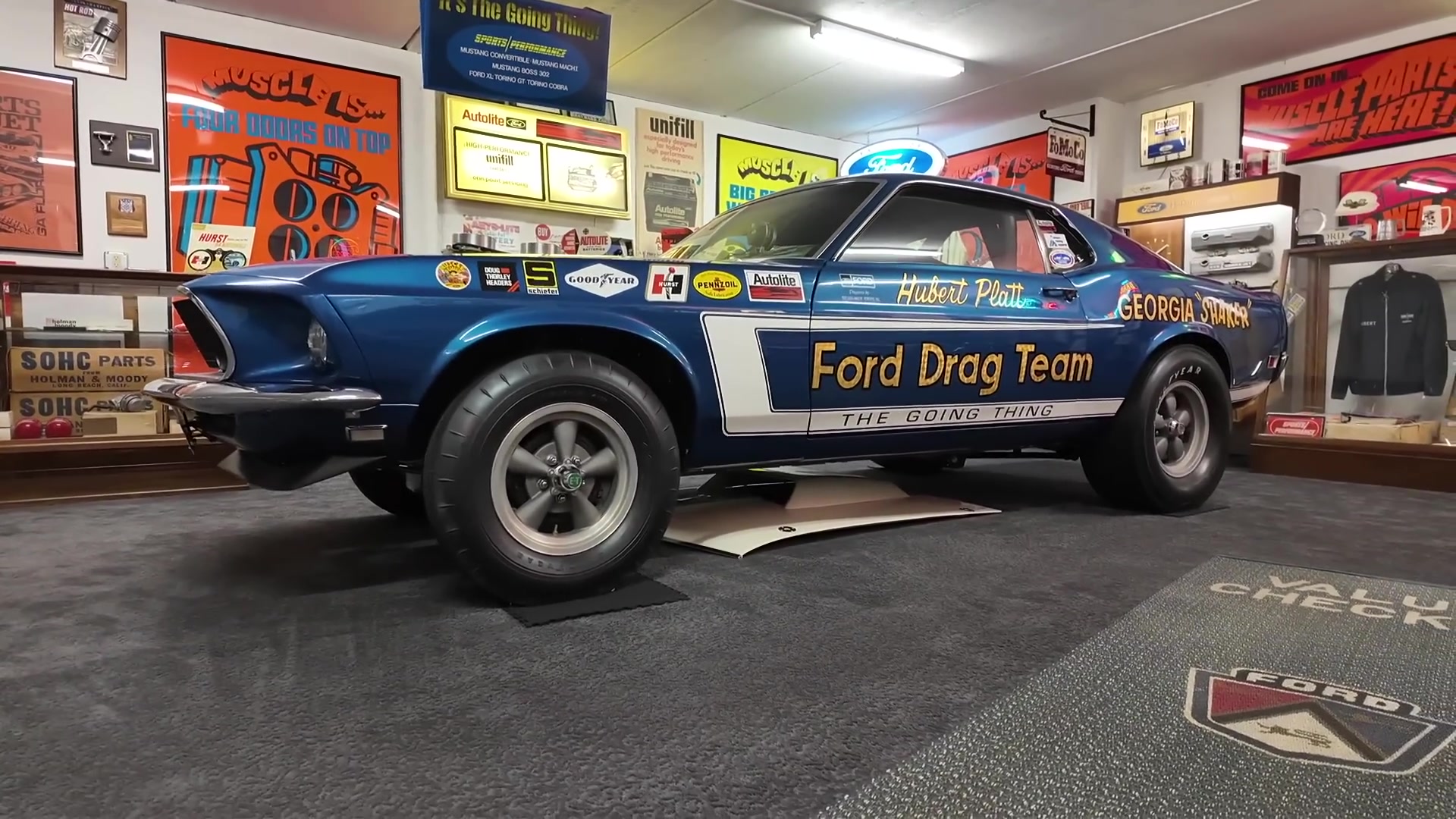
The restored Mustang at 1:40, with its Ford Drag Team livery and Georgia Shaker lettering clearly visible.
Two Mustangs, Two Different Jobs
Perkins Restoration identifies the car as a 1969 SportsRoof with a 427 SOHC engine. Its account separates this match racer from the 428 Cobra Jet Mustang Platt drove in Super Stock. Platt captained the Eastern team; Randy Payne drove its Cobra Jet Torino. The Western operation paired Ed Terry with Richard Wood, and its reversed blue-and-white colors distinguished it from the Eastern cars.
That distinction is essential when following photographs and restoration stories. Platt drove more than one Mustang under the same team banner. A familiar driver name and similar paint scheme can lead readers from one car’s history into another’s unless the engine and racing role stay clear.
The restored livery makes that team identity unusually easy to read. White graphics frame the gold lettering, while sponsor decals cluster across the front fender. The effect is purposeful: even standing still, the car communicates who it raced for and who drove it.
Following the Car Back to Bob Perkins
In Heasley’s 2014 account of the restoration, Ford transporter driver Bob Oswald spotted the former race car outside Tom Sutton’s shop in Rock Hill, South Carolina. Oswald told collector and Ford dealer Jacky Jones, who obtained the Mustang and traded it to Perkins.
A difficult piece to reunite with it was the Ford experimental intake. The same account reports that Perkins recovered the manifold through racing-parts dealer Jay Cushman in 1990. Returning that component helped restore the distinctive engine presentation seen today.
These details give the recovery story its weight. Locating a recognizable body was one step; connecting the right parts with the right car was another. The finished Mustang represents the point at which those separate trails came together.
The 427 SOHC Is Central to Its Identity
The Cammer designation is more than a nickname in this story. SOHC means single overhead cam, and 427 cubic inches is approximately 7.0 liters. Ford engineers N. W. Faustyn and J. Eastman documented development of the engine in SAE Technical Paper 650497 in 1965.
The workshop footage gives the subject a physical presence. With the hood removed, the camera shows the broad engine assembly and two carburetors mounted high above it. Perkins stands beside the open compartment, allowing a clear view of the installation rather than leaving the engine as a line in a specification list.
For a historically important race car, that view helps connect the name to the machinery. It also shows why a specific component such as the experimental intake can matter to the overall restoration: its shape is part of how the car is recognized.
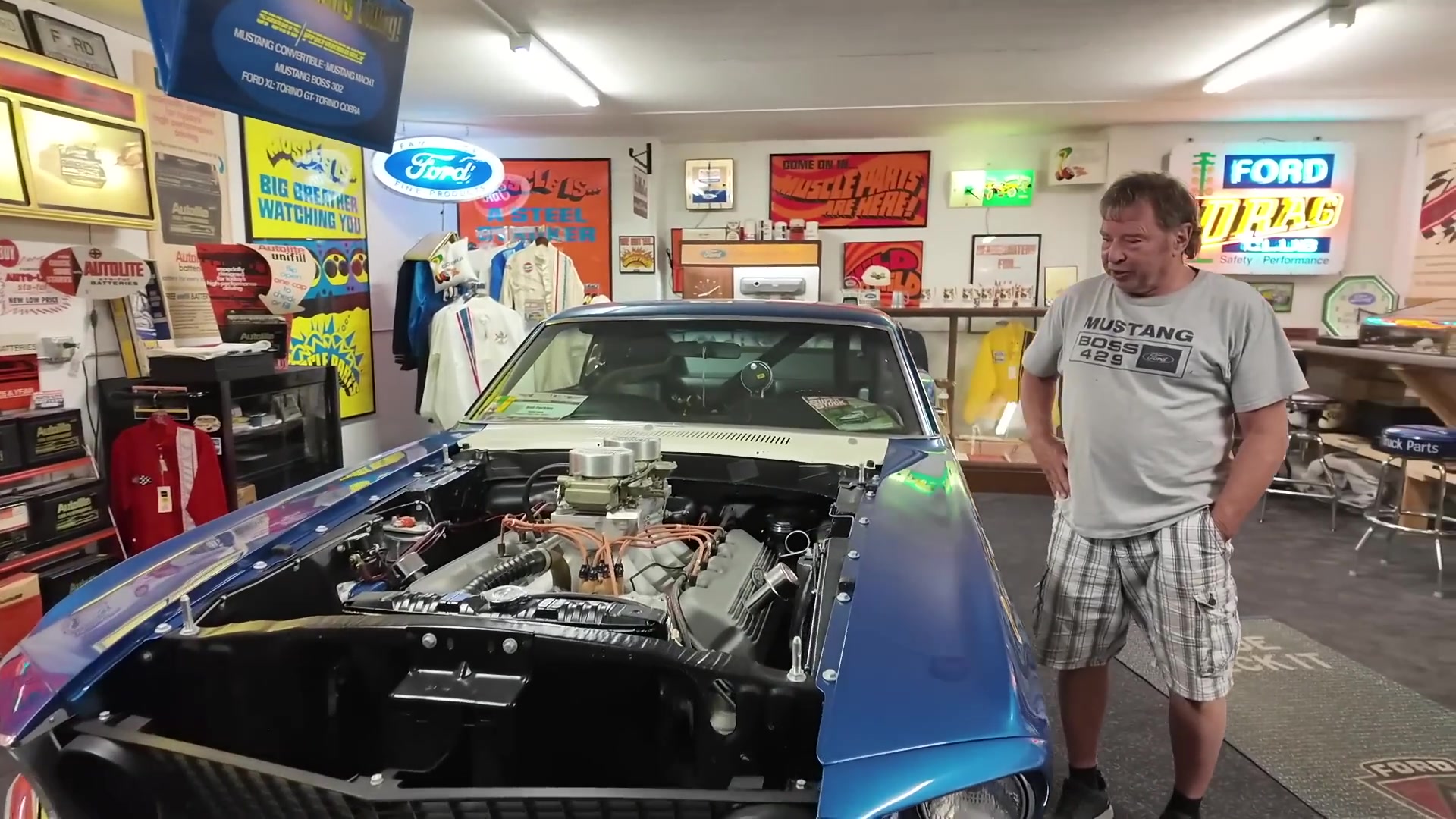
Perkins and the exposed engine compartment at 4:20.
A Competition Interior Beneath Familiar Mustang Lines
The cabin retains a recognizably Mustang setting, but the rollbar and harness bring its racing purpose into focus. In the close interior view, the diagonal bar crosses the space behind the front seat, with the rear upholstery visible beyond it.
That combination makes the car compelling to study. From the outside, the SportsRoof shape is familiar; inside, the competition equipment changes how the space functions. The restoration allows viewers to examine both aspects together.
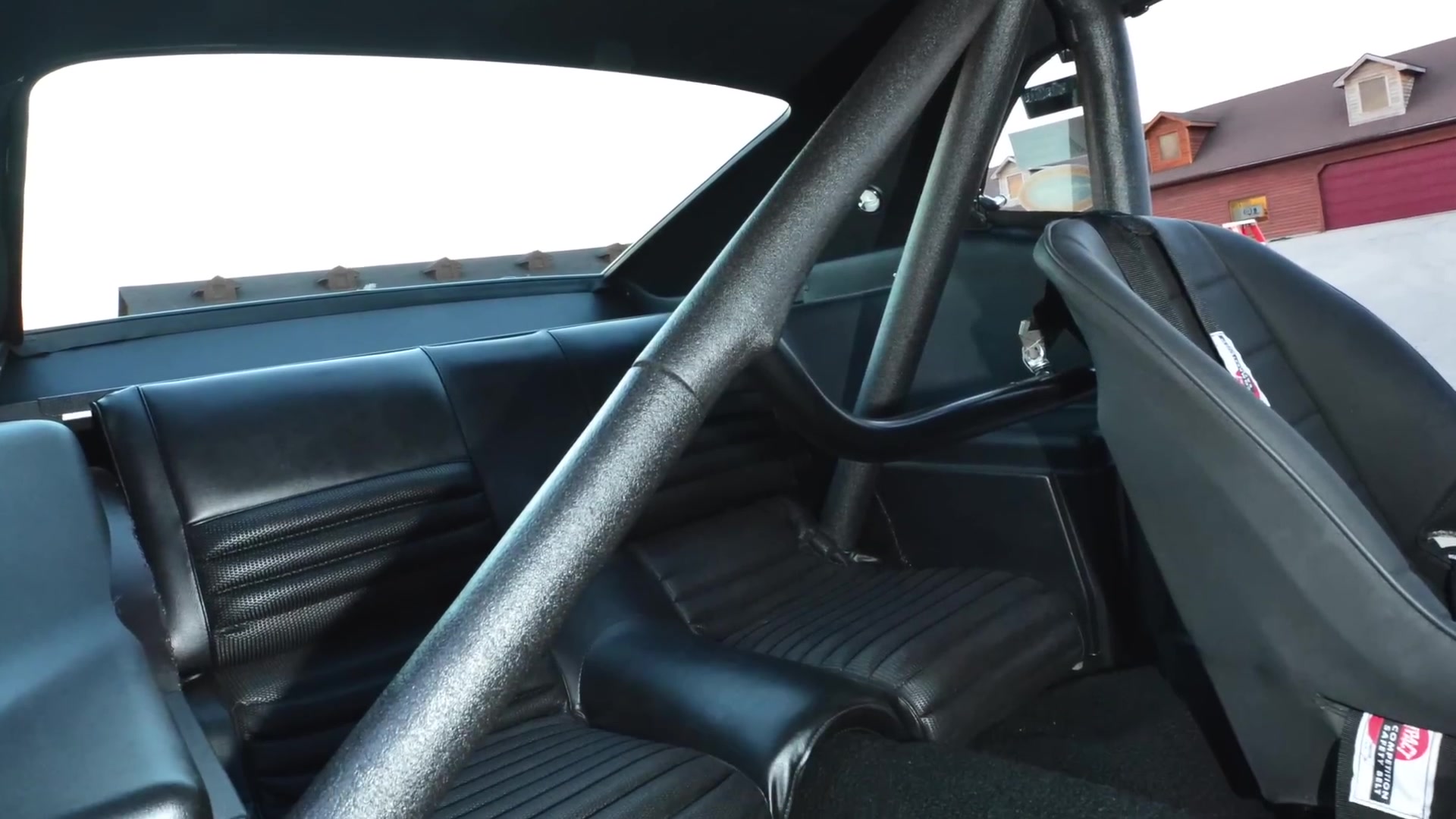
The interior at 3:30 shows the rollbar within the Mustang cabin.
The Uniforms Put a Person Back Beside the Car
One of the video’s strongest images is a blue jacket with Hubert Platt’s name embroidered in gold above the words Ford Drag Team. Nearby are white team garments, a helmet, and colorful promotional displays.
These objects make the driver’s name more tangible. Lettering on a quarter panel tells viewers who drove the car; clothing bearing the same identity helps restore the human scale of the program. The repeated colors and logos also reveal how consistently the team was presented.
Heasley’s reporting on the Ford Drag Team includes an interview with program coordinator Jon Brantmeier describing dealership seminars with the racers, films, parts displays, and questions from attendees. It also records Perkins’ acquisition of clothing and memorabilia through Hubert and Allen Platt.
The collection therefore provides context for activities that a static race car cannot show on its own: traveling, demonstrating, teaching, and representing Ford between race weekends.
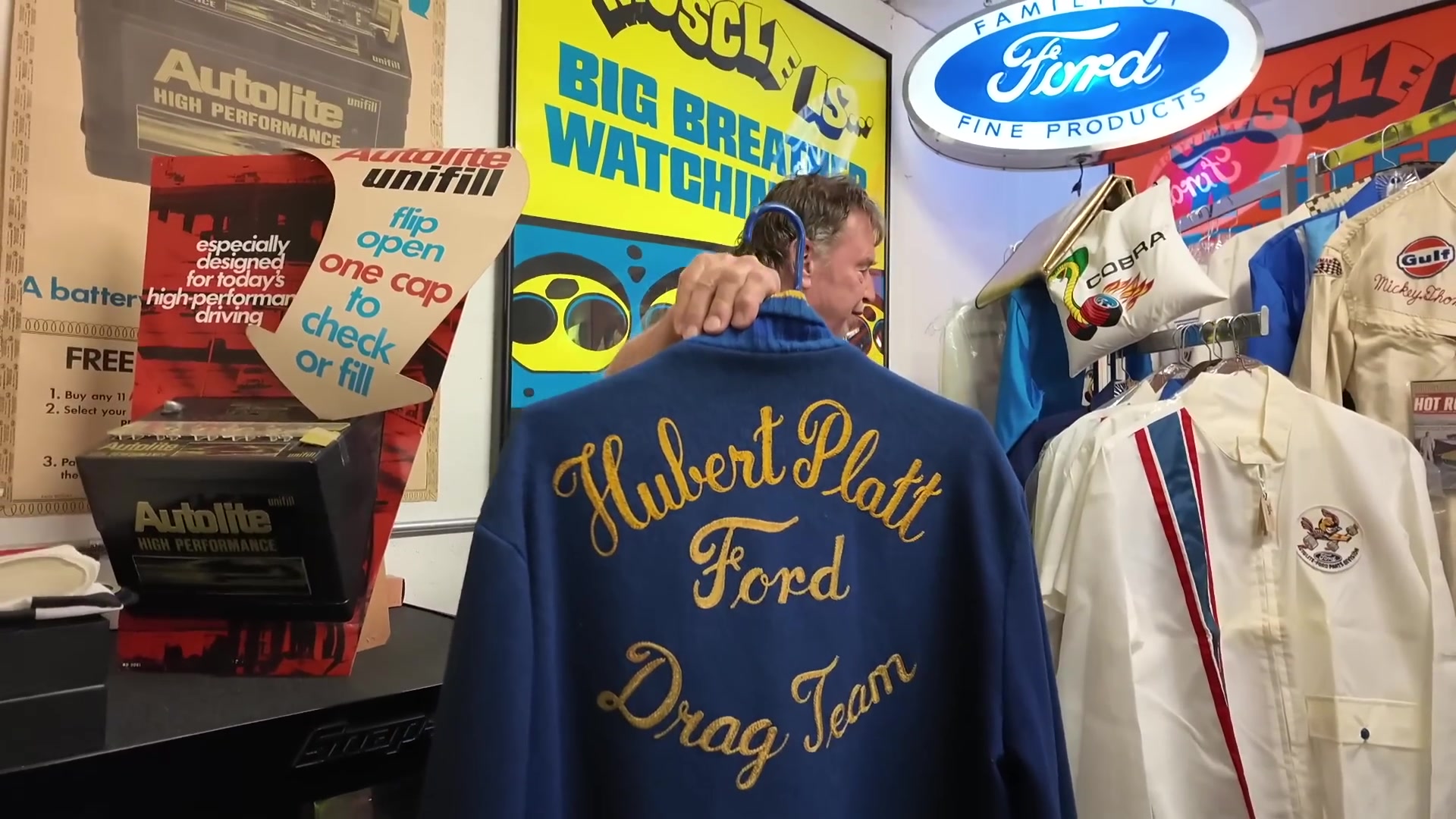
The named team jacket at 6:00 connects the collection directly to Platt’s identity.
Small Parts Preserve the Bigger Program
The camera spends time on an Autolite High Performance Unifill battery and on binders of promotional graphics. A close battery view reveals the branding, translucent top pieces, and printed instructions. Elsewhere, preserved material carries Muscle Power and Street/Strip Boss graphics.
These details broaden the restoration story. The Mustang was the attention-getter, but the surrounding displays show the products and visual language presented alongside Ford performance. They help explain the setting in which a customer might have encountered the car.
They also reward close documentation. A small label, the position of a graphic, or the construction of a display can carry information that a general photograph of the room would miss. The video gives those pieces attention alongside the restored sheetmetal.
Close-up of the Autolite High Performance Unifill battery installed in the Mustang, showing its branded case and top fittings.
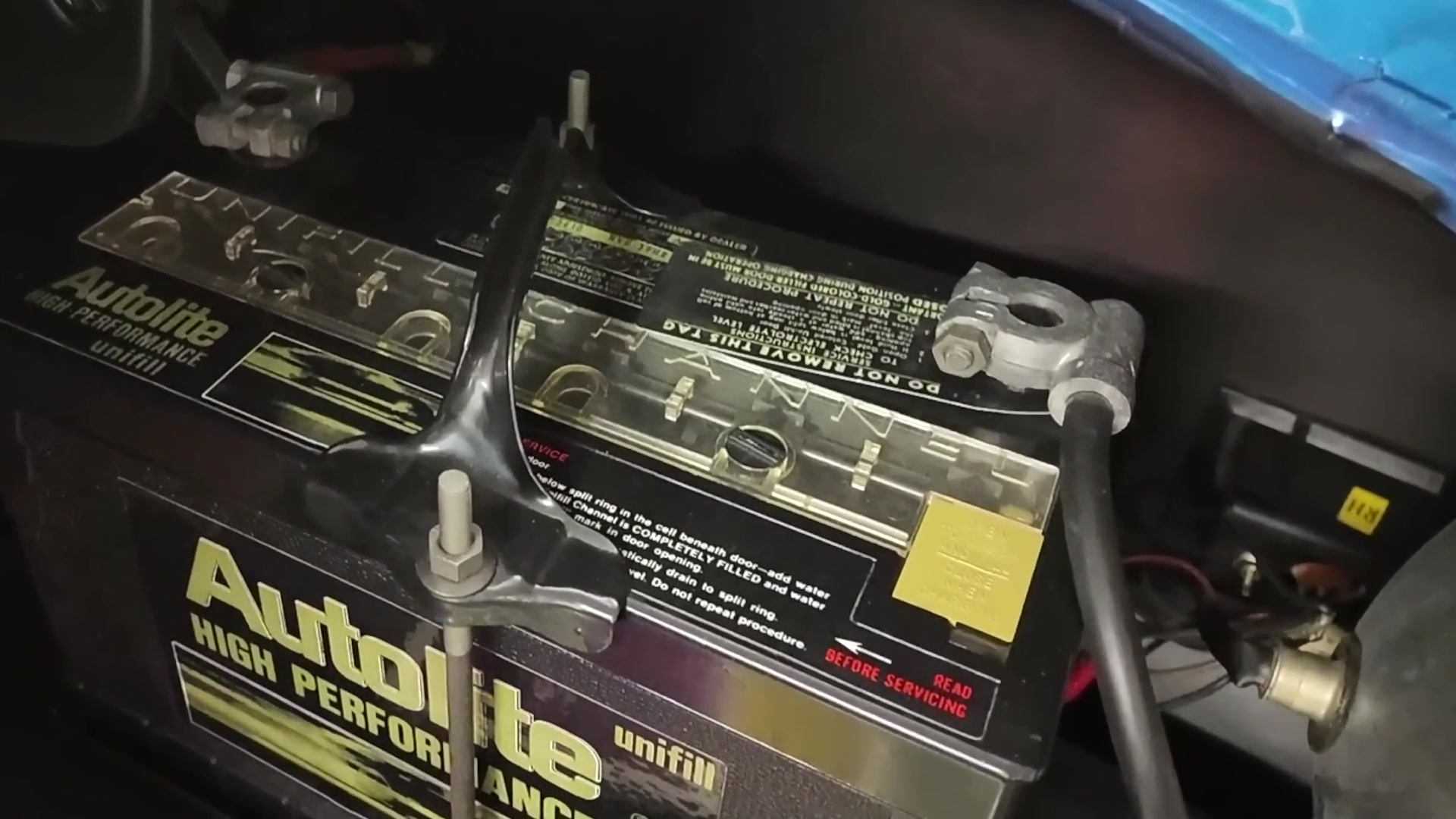
The Autolite battery at 7:40 is one of the detailed artifacts shown during the visit.
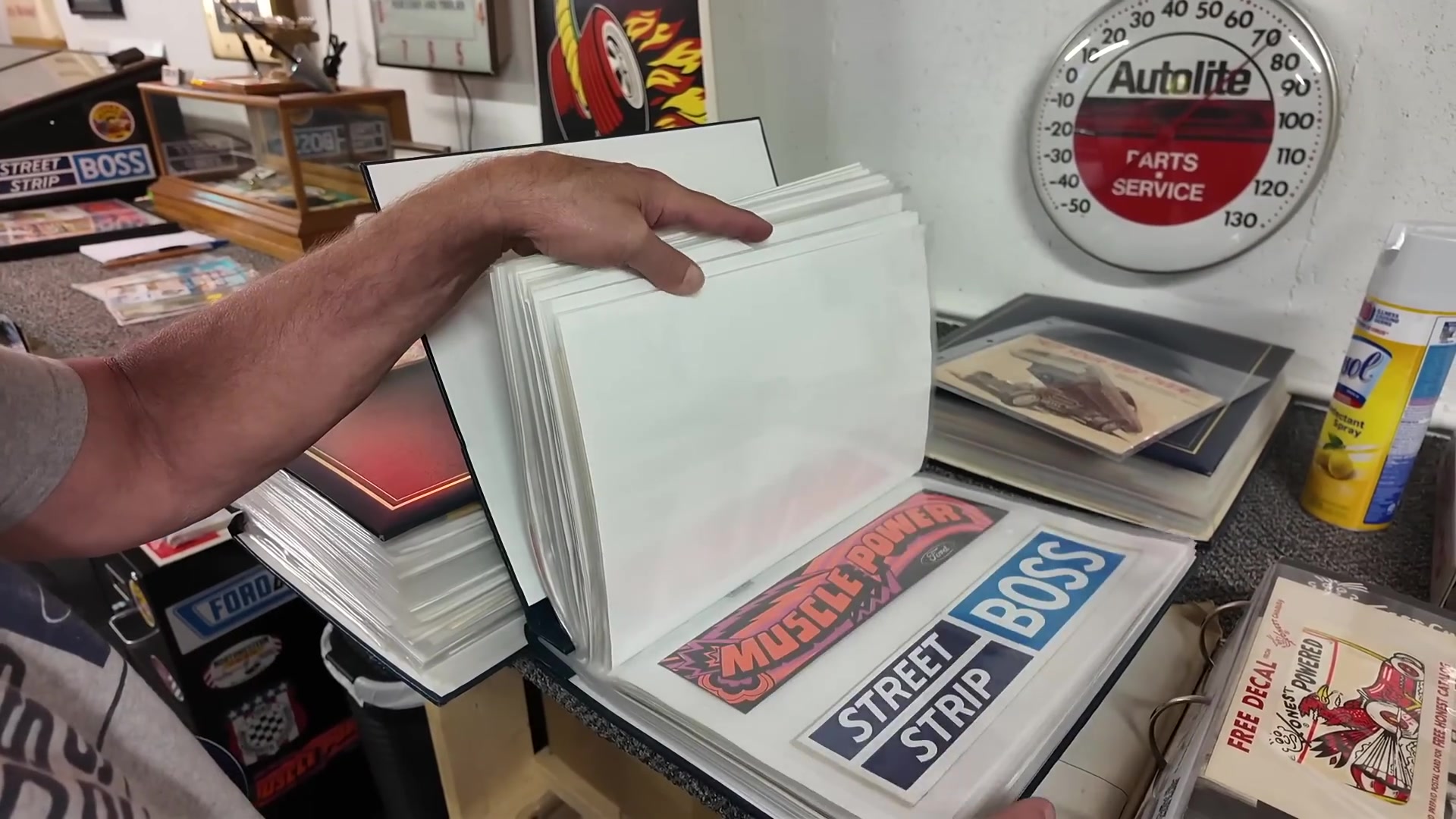
Promotional graphics and printed material at 8:30 extend the story beyond the race car.
Restoring a Car and Rebuilding Its Context
The result of Perkins’ work can be appreciated at two distances. From across the room, the blue-and-white Mustang is a striking restored drag car. Up close, the engine, team clothing, and printed material create a much fuller record of its place in Ford performance history.
That is what makes this particular restoration worth returning to. The car has been reunited with a setting that explains its purpose. Hubert Platt’s name remains prominent on the body, while the collection around it gives that name a history readers can see in detail.