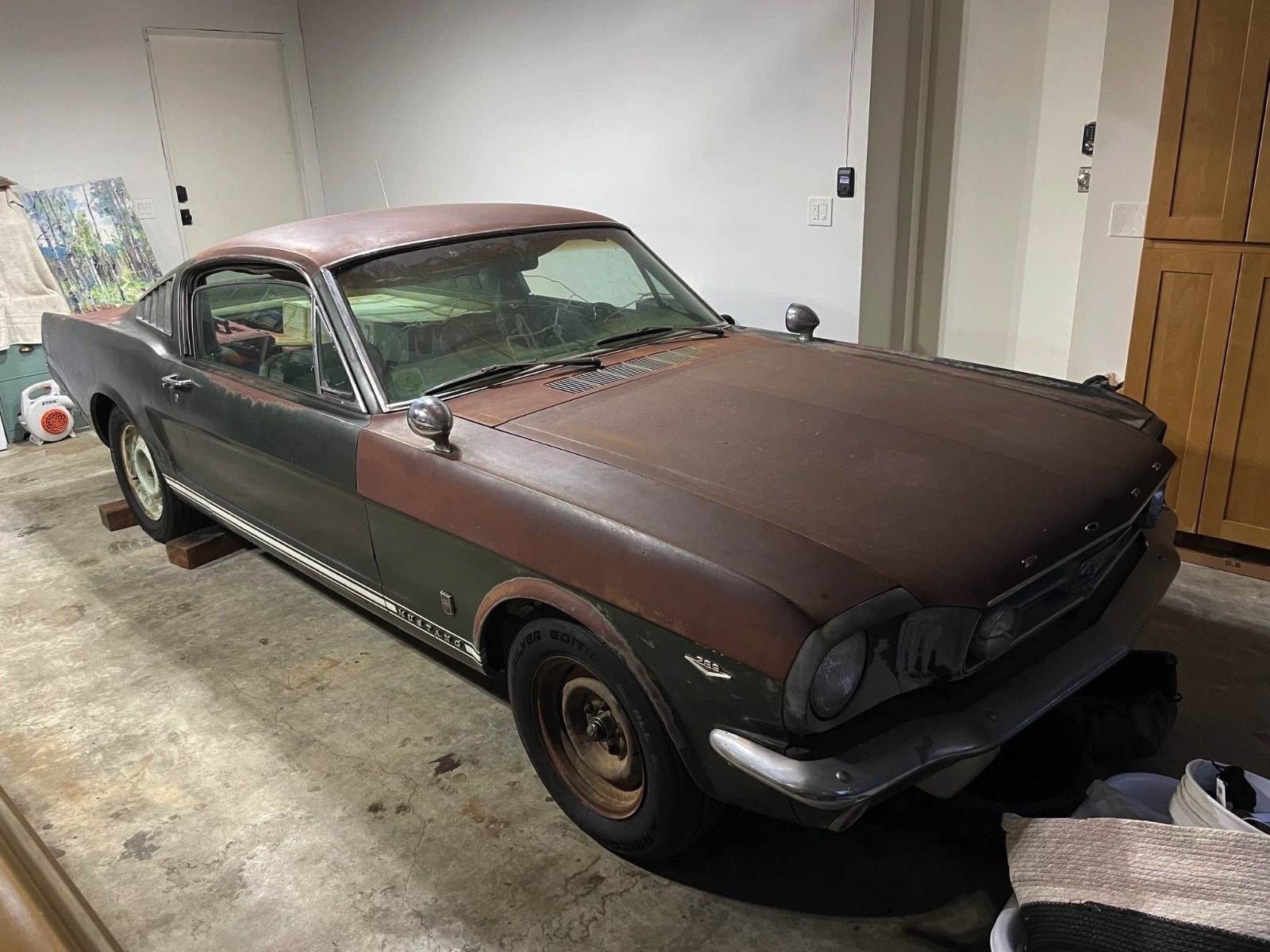
Every classic car enthusiast dreams of having “too many” of their favorite model, but sometimes reality forces difficult decisions. A beautifully patinated 1965 Ford Mustang GT is currently creating fierce bidding competition precisely because its owner has reached that enviable problem – too many Mustangs in the garage. Complete with original papers and authentic aging that can’t be replicated, this first-year pony car represents both the golden age of American automotive design and the modern collector’s dilemma about preservation versus restoration.
The “Too Many Mustangs” Dilemma
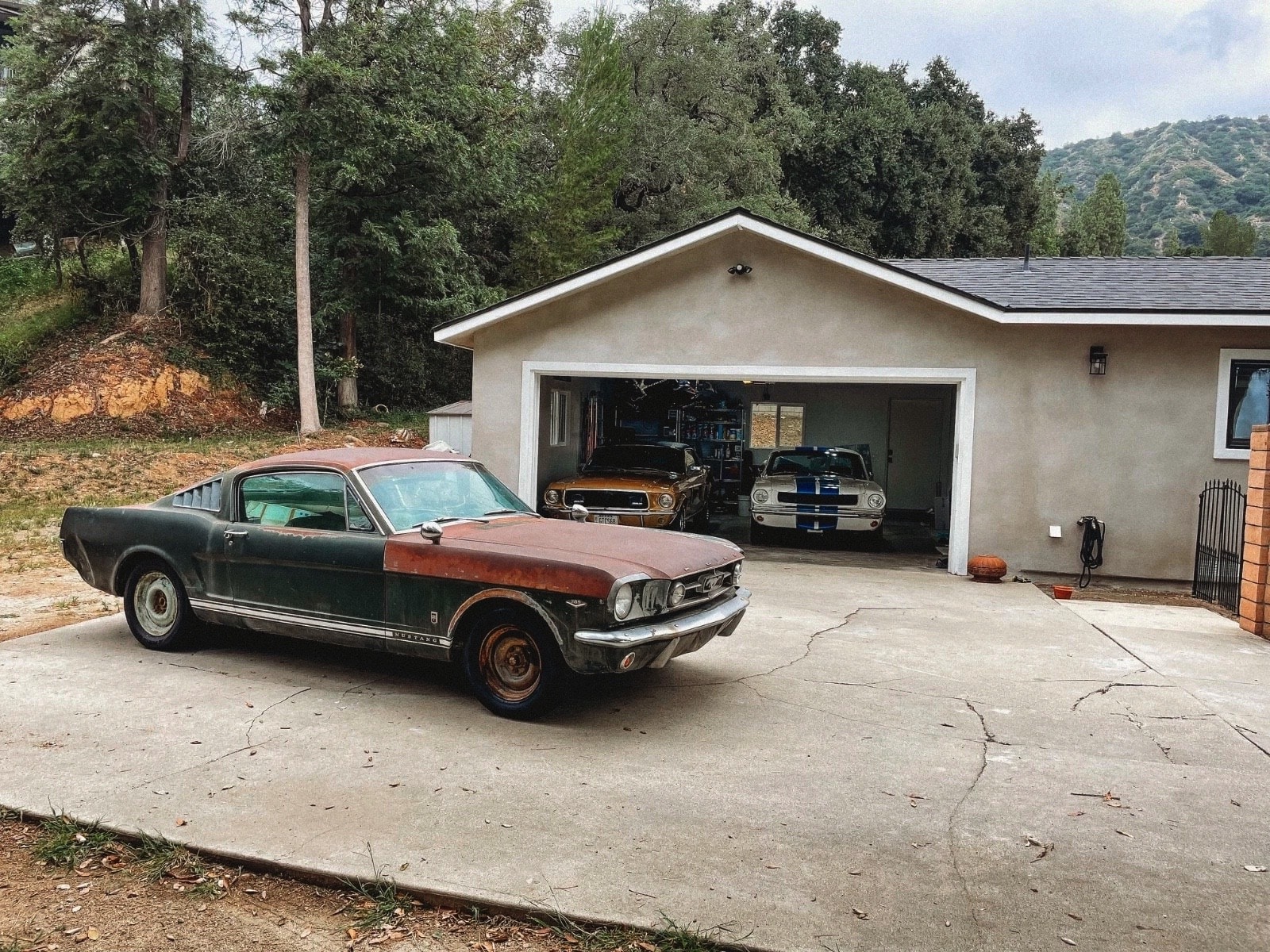
A 1965 Ford Mustang GT that was purchased by its current owner three years ago is ready to sell again if someone likes its patina. The seller’s candid admission about having “too many Mustangs” reflects a common challenge among serious collectors – when passion exceeds garage space and maintenance capacity, tough choices become inevitable.
It starts, runs, drives, and stops properly, so if your objective is buying this Mustang for occasional drives, the car is ready to serve you. The owner says they decided to sell the car because they have too many Mustangs. The bidding for this Mustang is surprisingly fierce, demonstrating that patina cars have found their devoted following among collectors who value originality over restoration perfection.
The Patina Phenomenon: Why Original Aging Matters
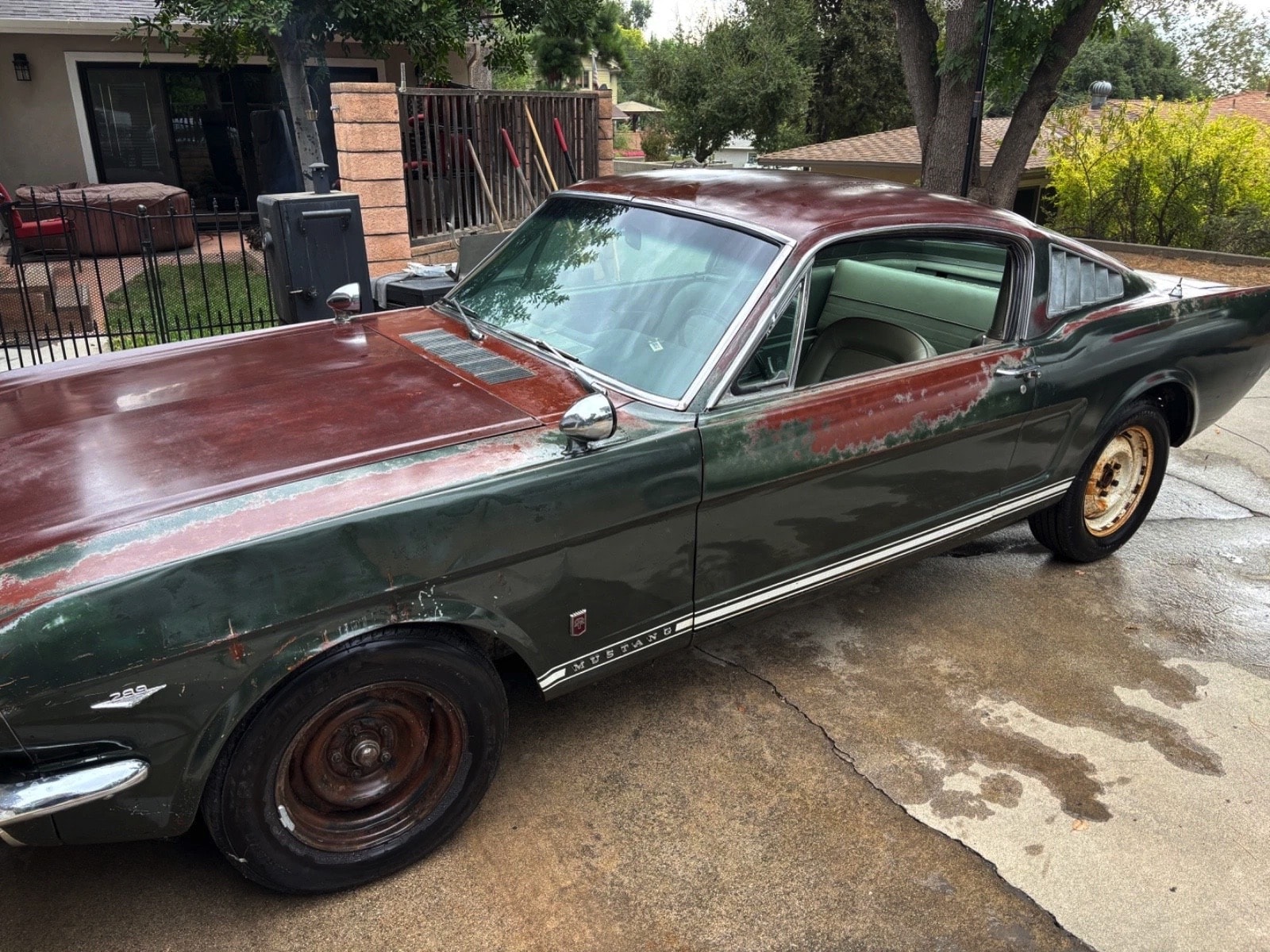
The growing appreciation for patinated classics represents a significant shift in collector preferences. VMFrs, I just went through 68 pages of 1964-66 Mustangs sold at Mecum Auctions over the last many years. 99.9% of them were beautifully restored mustangs that looked brand new. What I realized though is that the distressed-look (patina or faux-patina) mustangs caught my eye big time!
This observation from veteran collectors highlights why authentic patina commands premium attention:
Patina Advantages:
- Impossible to replicate artificially with same character
- Tells genuine story of the car’s life and experiences
- Preserves original factory finish and materials
- Appeals to collectors seeking authenticity over perfection
- Often indicates careful preservation rather than neglect
The debate over patina preservation versus restoration continues throughout the Mustang community: Is it taboo to mess with a Mustang that has been found and still retains its original paint, but as with many aged antiques, has an original “patina”?
1965 Mustang GT: The Foundation Year
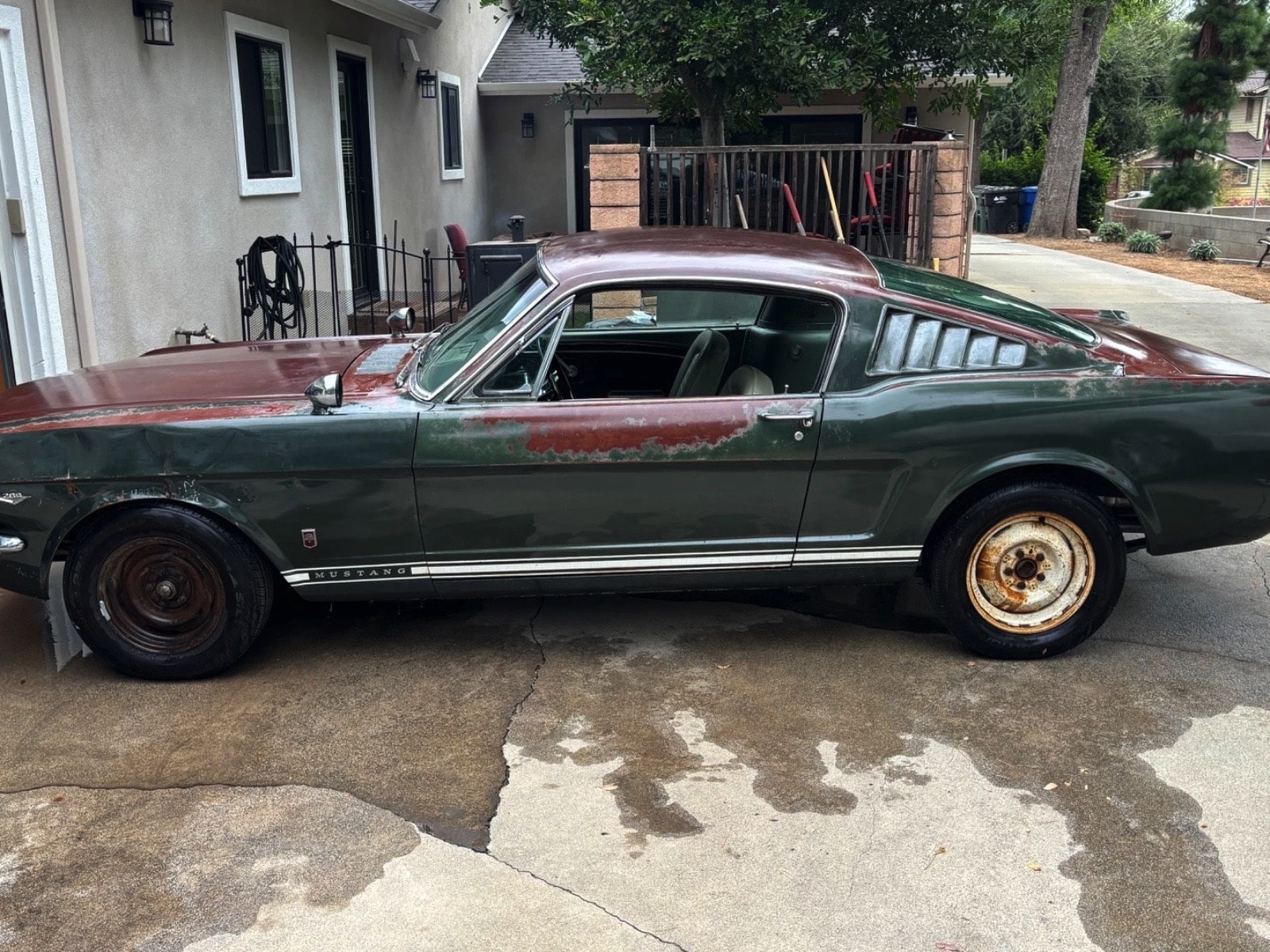
Understanding this GT’s significance requires appreciating what made the 1965 model year special in Mustang history. While often called “1964½” cars, the 1965 model year introduced important refinements that improved both performance and reliability over the initial production run.
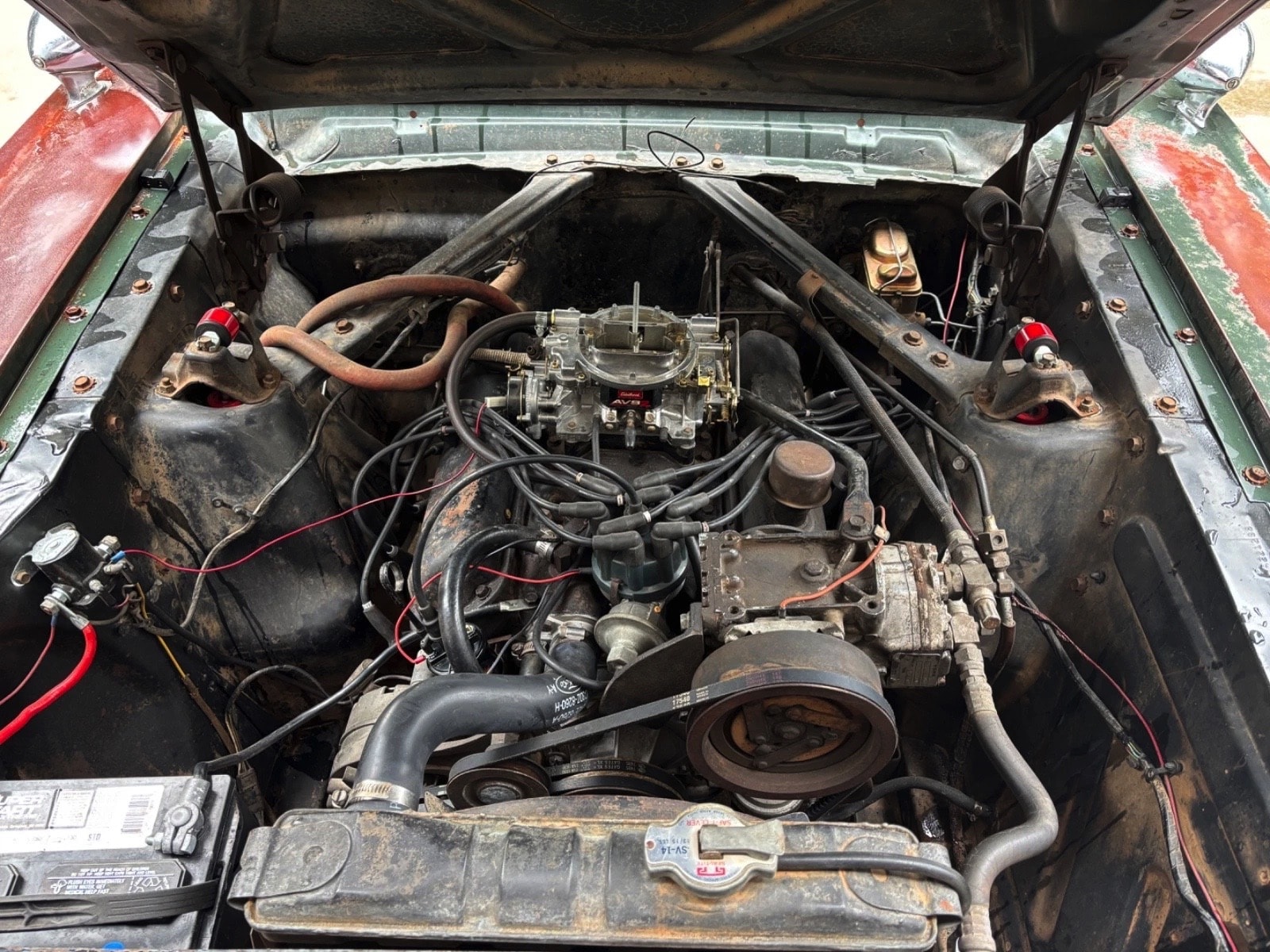
The 289 cubic-inch engines received key updates. Production of the Fairlane’s “F-code” 260 cu in (4.3 L) engine ceased when the 1964 model year ended. It was replaced with a new 200 hp (150 kW) “C-code” 289 cu in (4.7 L) engine with a two-barrel carburetor as the base V8. An “A-code” 225 hp (168 kW; 228 PS) four-barrel carbureted version was next in line, followed by the unchanged 289 HiPo “K-code.”
1965 Mustang Engine Options:
- 170 CID Inline-6: 101 horsepower (base engine)
- 289 2V (C-code): 200 horsepower with 2-barrel carburetor
- 289 4V (A-code): 225 horsepower with 4-barrel carburetor
- 289 HiPo (K-code): 271 horsepower with solid lifters and performance cam
About 73 percent preferred the 164 bhp 260 cid 2-barrel V-8 or the 289 cid 4-barrel, good for 210 bhp, showing that most buyers wanted V8 power over the base six-cylinder option.
GT Package: More Than Just Badging
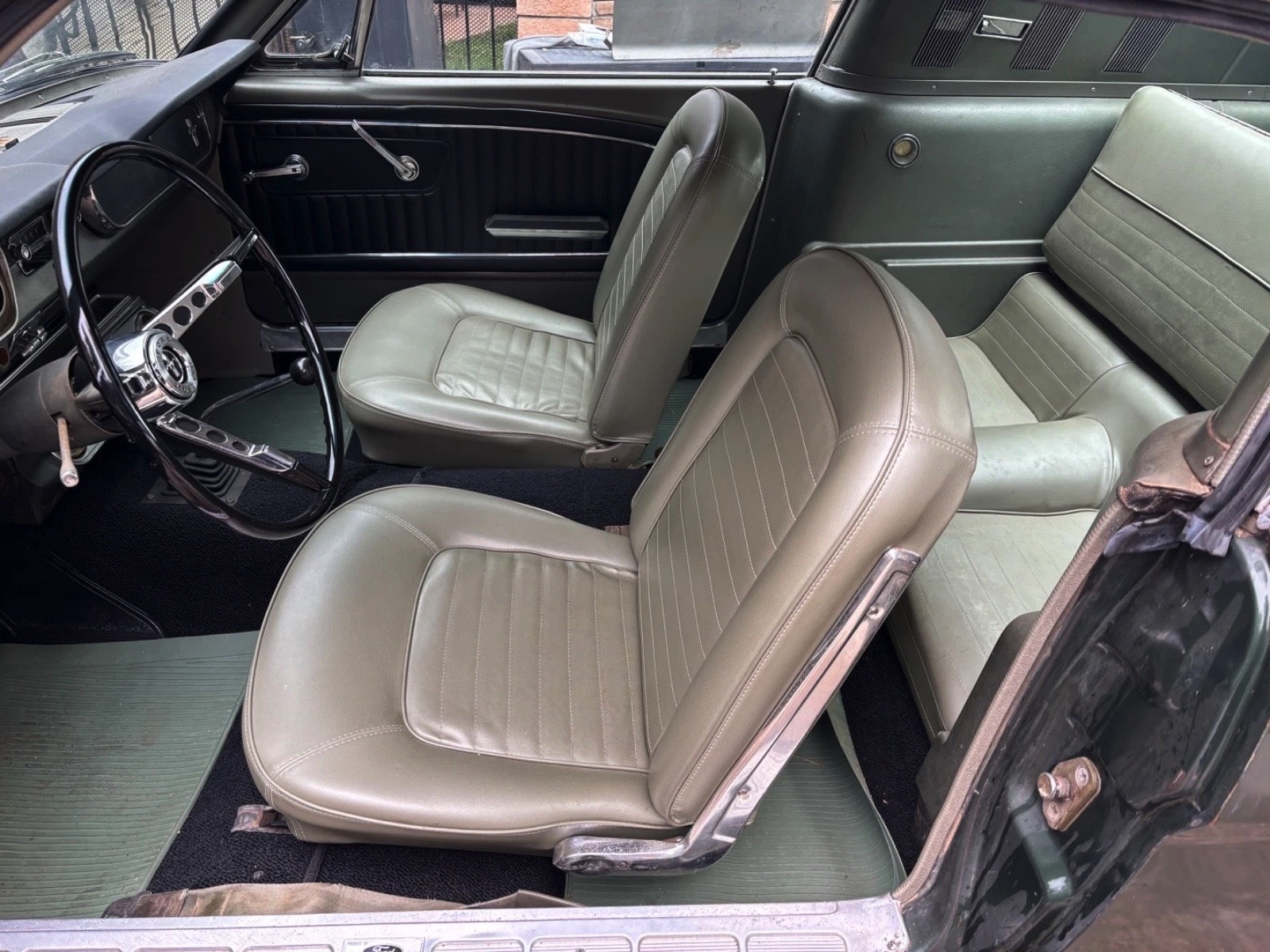
The GT package represented Ford’s commitment to performance-oriented buyers who demanded both style and capability. While specific GT equipment details aren’t provided in the listing photos, the package typically included:
1965 GT Package Features:
- Dual exhaust system with distinctive sound
- GT stripes and special badging
- Performance-oriented suspension tuning
- Upgraded wheels and tires
- Interior appointments suggesting performance intent
Almost all cars had heaters, 78 percent had radios, 49 percent had automatic transmissions and 31 percent had power steering, indicating that comfort and convenience options were popular even among performance-focused buyers.
Market Context: 1965 Mustang Values and Competition
Current market conditions reveal strong demand for well-preserved first-generation Mustangs. There are 262 new and used 1965 Ford Mustangs listed for sale near you on ClassicCars.com with prices starting as low as $3,900, indicating both availability and wide price range based on condition and equipment.
Current Market Segments:
- Projects: Below $5,000 for rough examples, though $20,000 is more appropriate for smooth runners
- Driver Quality: $15,000-35,000 for presentable examples
- High-Performance Models: Some 289 V8 examples carry price tags north of $70,000, particularly Hi-Perf K-code engines that kick out more than 270 horsepower
- Concours Restorations: $40,000-80,000+ depending on documentation and originality
Fierce Bidding: The Auction Reality
The seller’s observation that “bidding for this Mustang is surprisingly fierce” reflects several market dynamics:
Competitive Factors:
- Growing appreciation for patina cars among collectors
- Authentic 1965 GT models becoming increasingly rare
- Ready-to-drive condition eliminating restoration wait time
- Original papers providing documented provenance
- Fair market pricing attracting serious bidders
This competition demonstrates that today’s collectors understand the difference between projects requiring extensive work and survivors ready for immediate enjoyment.
The Three-Year Ownership Cycle
The current owner’s three-year possession period provides interesting insight into modern collecting patterns. Short-term ownership often indicates:
Possible Scenarios:
- Collection rotation to experience different models
- Space limitations forcing difficult choices
- Market timing considerations
- Discovery of other desirable acquisition opportunities
The fact that someone purchased this GT three years ago and maintained it in driving condition suggests it received appropriate care and attention during its recent ownership period.
Investment vs. Driving Enjoyment Balance
This patinated GT occupies the sweet spot between investment potential and driving pleasure. Its ready-to-drive condition means new owners can immediately enjoy the classic Mustang experience while potentially benefiting from continued appreciation in the patina car market segment.
Driving Enjoyment Factors:
- Immediate usability without restoration delays
- Authentic vintage driving experience with period character
- Lower pressure than trailer queen restoration
- Participation in driving events and tours
Investment Considerations:
- Patina cars showing strong market appreciation
- Original condition impossible to replicate once restored
- Growing collector recognition of preservation over restoration
- Documented provenance supporting authenticity claims
The Collector Community Perspective
The Mustang community’s embrace of patina cars reflects broader changes in collector preferences. Vintage Mustang Forums discussions reveal growing appreciation for survivors that tell authentic stories through their aging rather than attempting to look showroom fresh.
This shift creates opportunities for collectors who:
- Appreciate automotive history and authentic aging
- Prefer driving experiences over show competition
- Understand that patina represents irreplaceable character
- Value originality preservation over restoration perfection
Assessment for Potential Buyers
Serious buyers considering this patinated GT should evaluate both tangible and intangible factors:
Immediate Advantages:
- Running and driving condition eliminating project delays
- Original papers providing documented history
- Authentic patina impossible to replicate
- GT package performance and style credentials
Due Diligence Requirements:
- Mechanical system evaluation despite running condition
- Structural integrity assessment beneath patina surface
- Documentation verification and completeness review
- Market comparison with similar condition examples
The “Original Papers” Factor
The mention of original papers significantly enhances this Mustang’s appeal and value. Proper documentation provides:
Documentation Benefits:
- Proof of authentic GT package equipment
- Factory specification verification
- Ownership history and provenance
- Insurance and registration advantages
- Enhanced resale value and market credibility
Many classic cars lack proper documentation, making this GT’s complete papers particularly valuable to serious collectors.
The Verdict: Rare Opportunity for Patina Enthusiasts
This 1965 Ford Mustang GT represents exactly what patina car enthusiasts seek – authentic aging, ready drivability, and documented history. The owner’s “too many Mustangs” situation creates opportunity for someone to acquire a proven survivor without the uncertainty of barn find condition or restoration project commitment.
The fierce bidding competition validates growing market appreciation for cars that preserve their authentic character rather than pursuing concours perfection. This GT offers immediate entry into classic Mustang ownership with the bonus of originality that can never be restored once lost.
Ideal Buyer Profile:
- Collectors appreciating patina over restoration perfection
- Drivers seeking immediate classic car enjoyment
- Enthusiasts valuing authenticity and documented provenance
- Investors recognizing patina car market trends
The seller’s candid admission about having “too many Mustangs” creates credible motivation for the sale while suggesting this car received knowledgeable care. For buyers seeking authentic first-generation Mustang experience without restoration commitment, this patinated GT with original papers deserves serious consideration.
Whether this particular survivor becomes someone’s weekend driver, car show participant, or long-term investment depends entirely on finding the right match between authentic classic and appreciative owner. What’s certain is that genuine patina cars like this 1965 GT are becoming increasingly rare as more examples undergo restoration, making preservation-focused collectors the ultimate winners in today’s evolving classic car market.