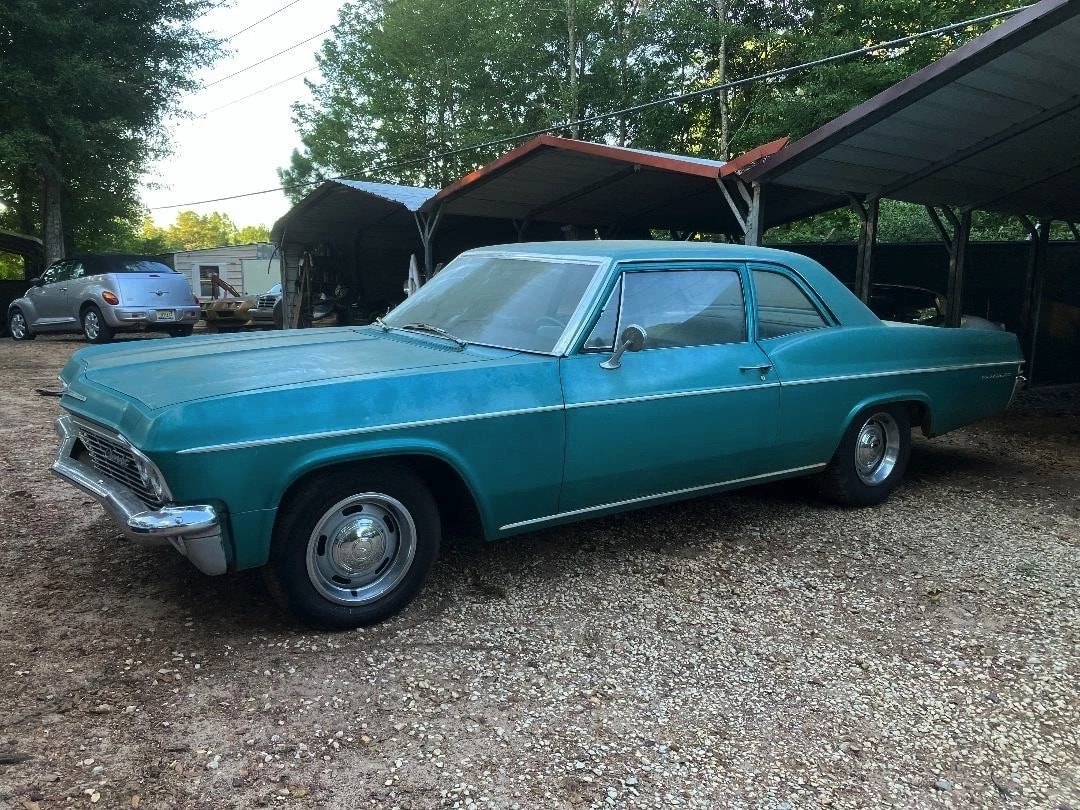
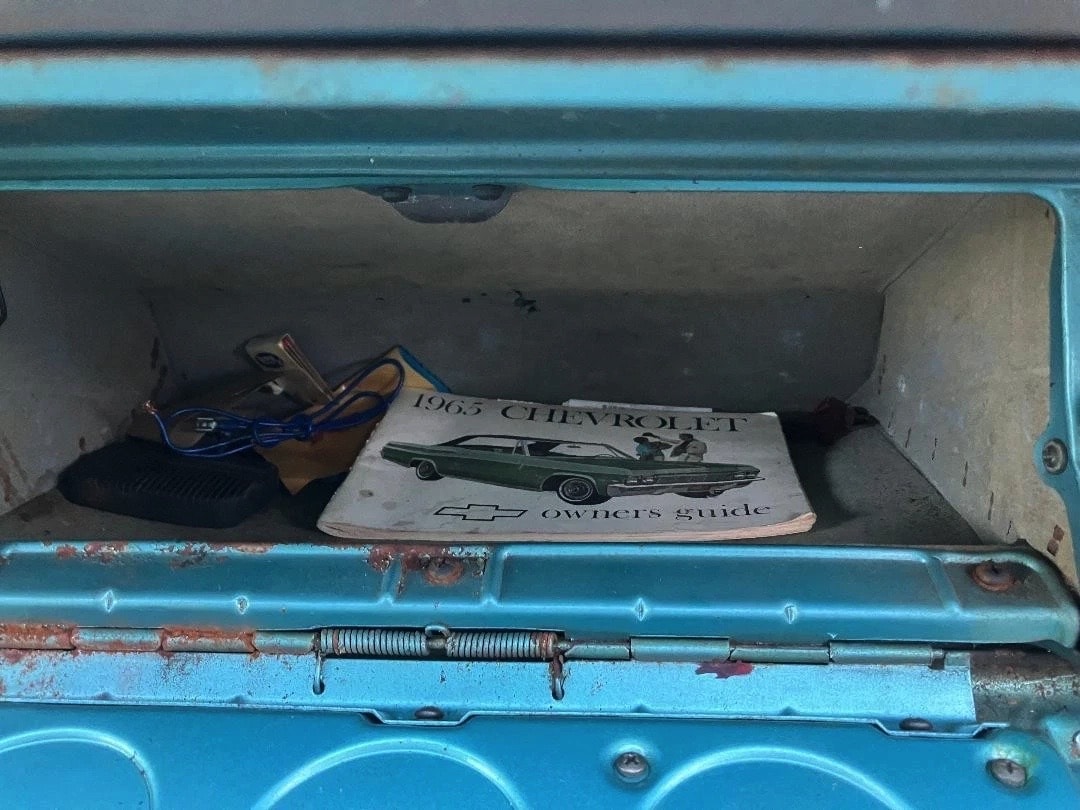
The classic car community thrives on rescue stories, and few are as satisfying as watching a forgotten classic emerge from decades of pole barn slumber to find new life. A 1965 Chevrolet Bel Air that spent 33 years in Alabama storage has been rescued, refreshed, and is now seeking a new caretaker willing to continue its automotive journey. After buying it last year, replacing the engine, and giving the car a small refresh, the current owner has decided to pass this middle-tier Chevy to someone who can provide the attention and road time it deserves.
The 33-Year Pole Barn Hibernation
Pole barn storage offers unique advantages for classic car preservation, providing overhead protection while maintaining natural ventilation that prevents the moisture buildup common in sealed environments. This 1965 Bel Air’s three-decade hibernation in Alabama’s climate likely protected it from the harsh winters and road salt that claim so many classics in northern regions, while the pole barn structure shielded it from direct weather exposure.
The 33-year storage period places this car’s parking around 1991-1992, when full-size Chevrolets from the mid-1960s were transitioning from used transportation to recognized collectibles. Someone made the prescient decision to preserve this Bel Air rather than continue driving or selling it, creating today’s rescue and restoration opportunity.
1965 Bel Air: The Middle Child of Chevrolet’s Lineup
Understanding this rescued Bel Air’s significance requires appreciating its position in Chevrolet’s 1965 hierarchy. Many people believe the Bel Air became a redundant product once the Impala was promoted to a stand-alone series in 1959. The Impala was indeed the best-selling car in the United States, but the Bel Air continued to serve buyers seeking substantial transportation without Impala luxury pricing.
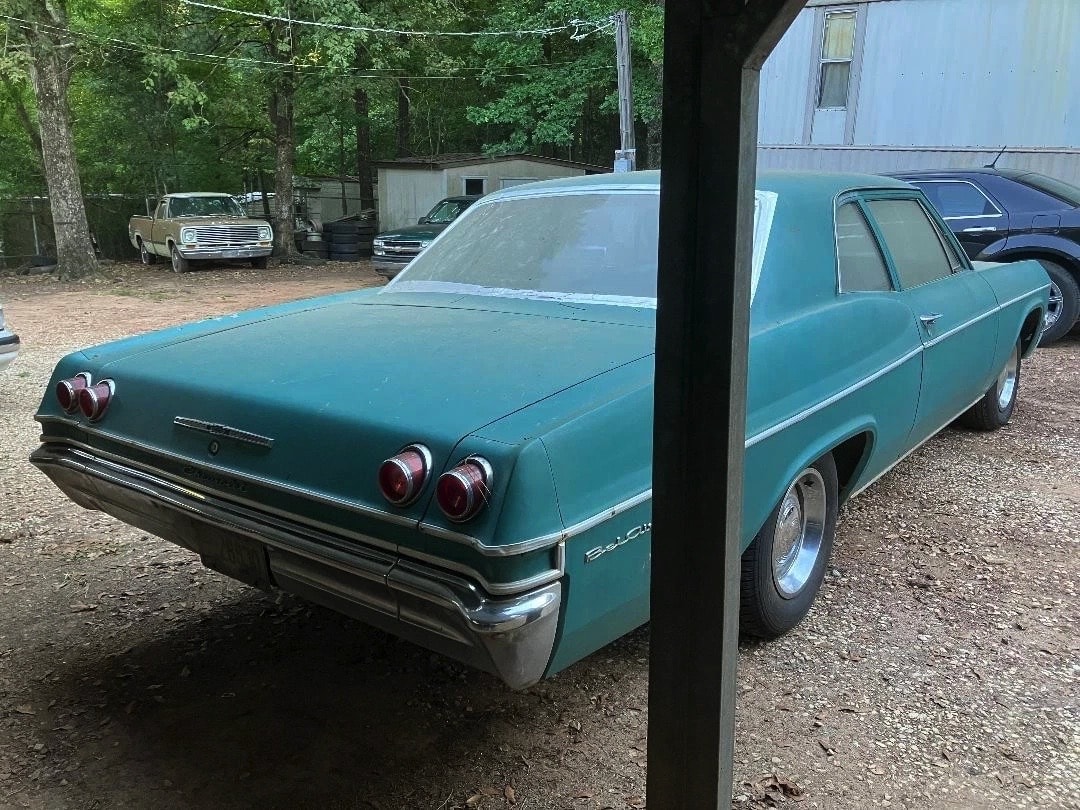
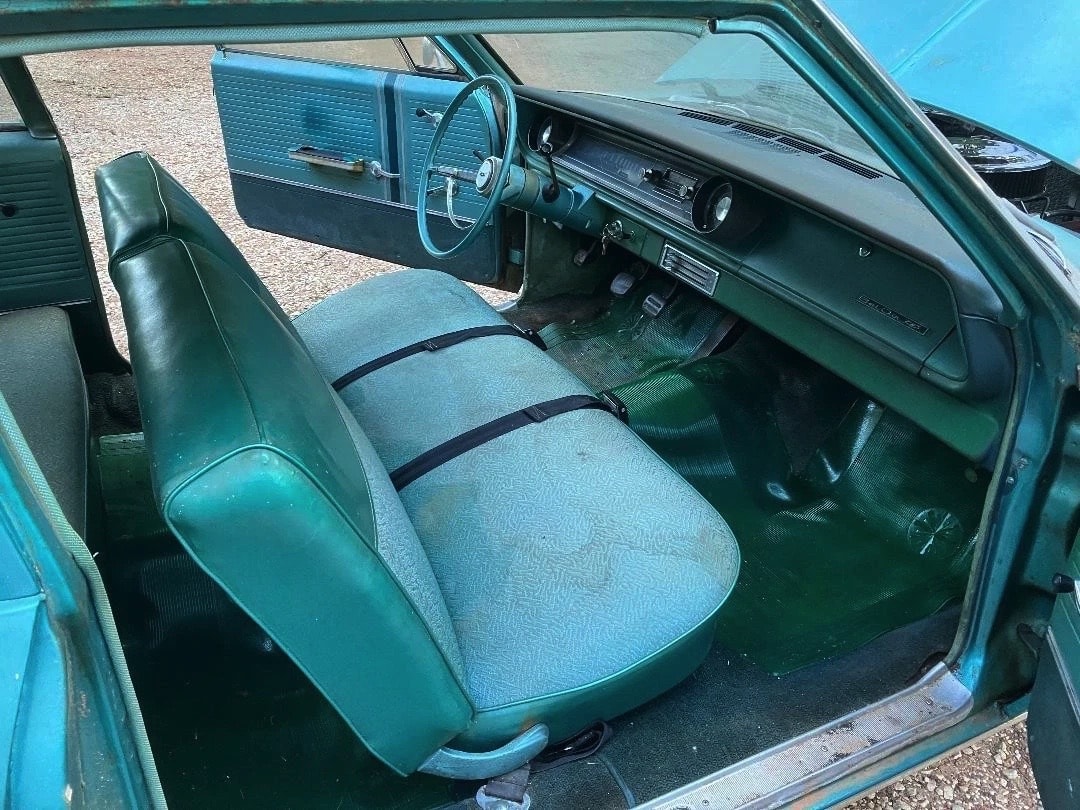
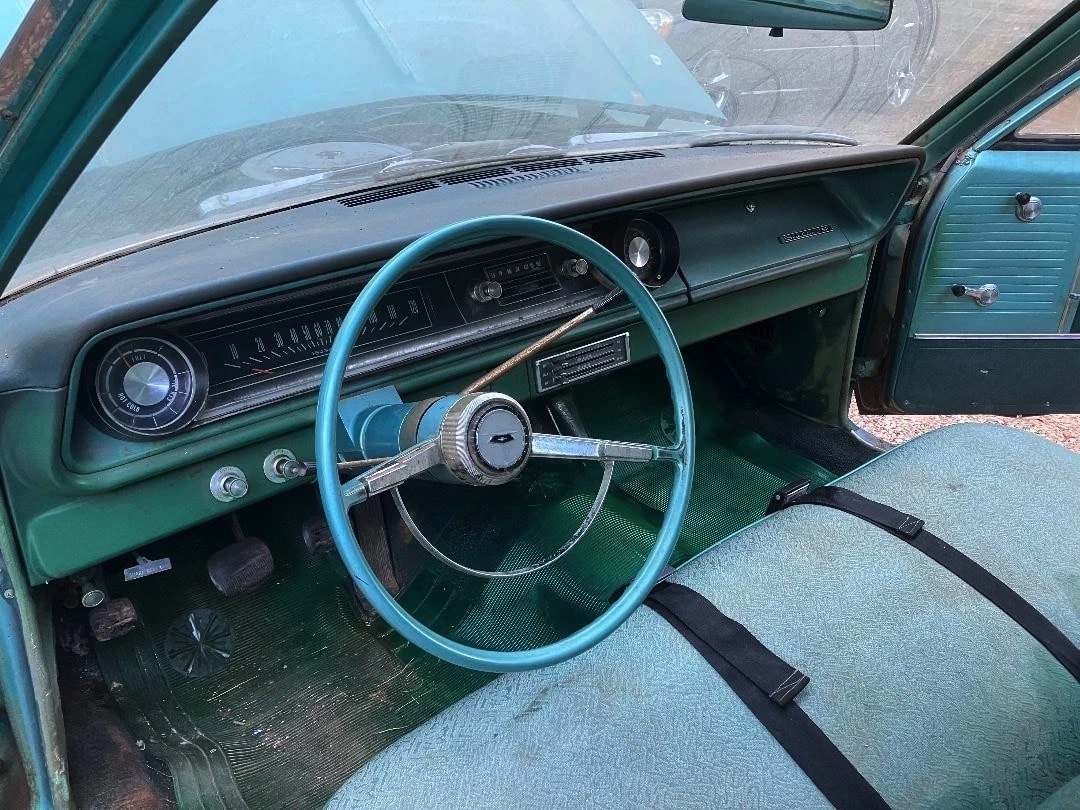
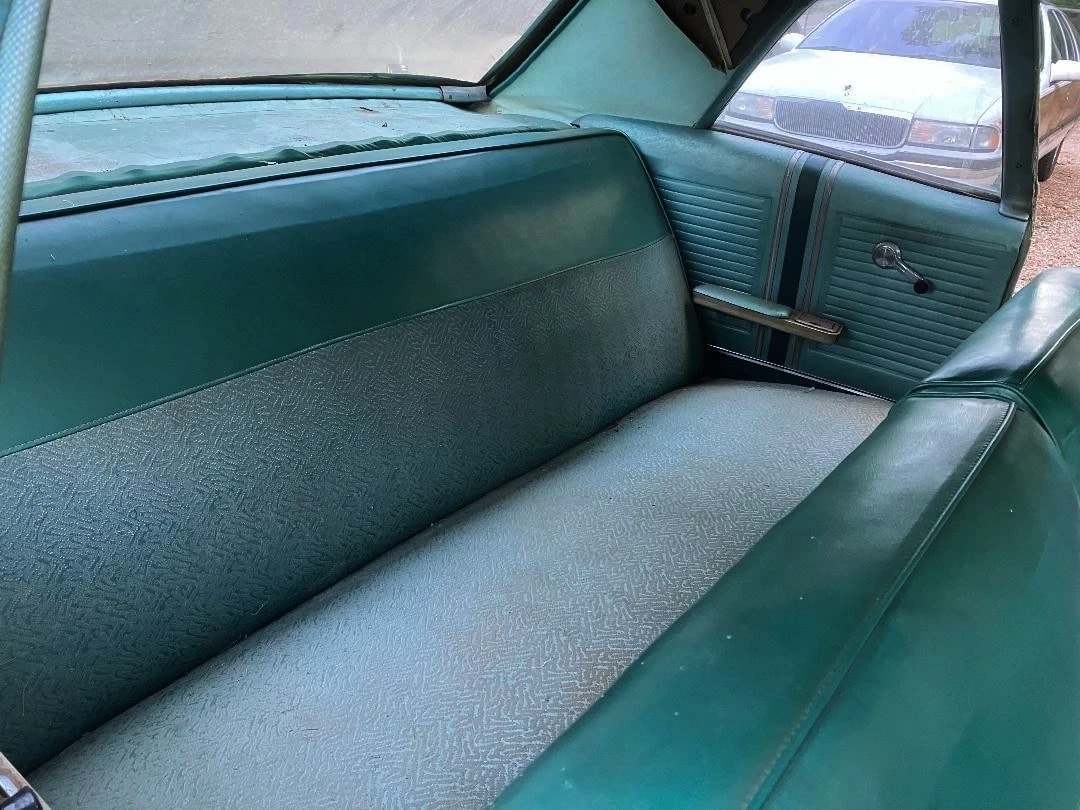
If you were interested in owning a big car in 1965 and wanted few frills, the Chevy Bel Air was a popular choice. With only a few more perks than a Biscayne (like carpeting instead of rubber floor coverings), the Bel Air offered a compelling middle ground between basic transportation and premium luxury.
1965 Bel Air Market Position:
- More affordable than Impala while offering full-size comfort
- Standard equipment exceeding entry-level Biscayne models
- Available in both two-door and four-door sedan configurations only
- Appeal to value-conscious buyers seeking Chevrolet quality
The Bel Air continued to be Chevrolet’s middle range, but it now consisted of only two car models – the 2-door sedan and the 4-door sedan, streamlining the lineup while maintaining market coverage.
Engine Options: 1965’s Comprehensive Powerplant Menu
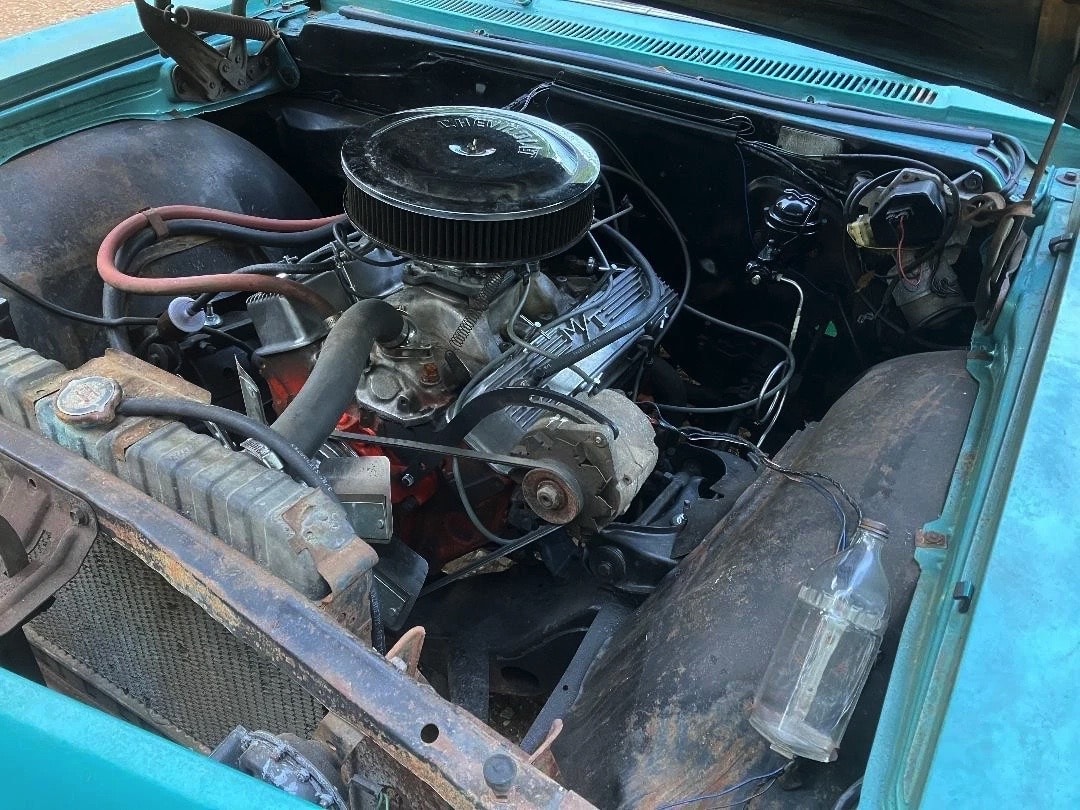
The 1965 Chevrolet lineup offered one of the most extensive engine menus in automotive history, and this rescued Bel Air could have been equipped with any number of powerplants. Engines offered included a standard 230 cubic inch six, a new larger 250 six, 195 and 220 hp versions of the 283 V-8, 250 and 300 hp versions of the 327 V-8, 340 and 400 hp versions of the 409 V-8 and a choice of 325 or 425 hp versions of the new 396 V-8.
The small block 327 V8 continued with options of 250 and 300 horsepower, while the 409 CID V8 was now offered in 340, 400 and 425 hp versions, providing buyers with everything from economical family transportation to serious muscle car performance.
1965 Engine Lineup Highlights:
- 230/250 CID Six-Cylinder: Economy-minded base options
- 283 CID V8: 195-220 horsepower small-block choices
- 327 CID V8: 250-300 horsepower performance options
- 409 CID V8: 340-425 horsepower big-block muscle
- 396 CID V8: 325-425 horsepower new big-block alternative
The Rescue and Refresh Process
The current owner’s decision to replace the engine demonstrates the reality of reviving long-dormant classics. After 33 years of storage, even carefully preserved vehicles require systematic mechanical attention before returning to reliable road duty. The engine replacement suggests either internal damage from extended storage or the opportunity to upgrade to more desirable powerplant options.
The “small refresh” accompanying the new engine likely included essential systems often compromised by extended dormancy:
Typical Revival Requirements:
- Fuel system cleaning and component replacement
- Brake system overhaul for safety compliance
- Cooling system service and hose replacement
- Electrical system diagnosis and repair
- Carburetor rebuild or replacement
- Exhaust system evaluation and service
Market Context: 1965 Bel Air Values Today
Current classic car market conditions reveal growing appreciation for well-preserved full-size Chevrolets from the mid-1960s. While Impala and SS models command premium pricing, Bel Air examples offer accessible entry into the classic Chevrolet experience without breaking budgets reserved for high-performance variants.
Current Market Segments:
- Driver Quality Examples: $12,000-20,000 depending on engine and condition
- Restored Examples: $18,000-30,000 for quality work
- Project Cars: $5,000-12,000 based on completeness and issues
- High-Performance Options: Premium pricing for big-block cars
This rescued Alabama Bel Air’s positioning likely falls within the driver quality range, offering immediate enjoyment potential for buyers seeking classic American transportation without project car commitment.
Investment vs. Utility Analysis
The current owner’s willingness to sell after investing in engine replacement and refresh work suggests realistic expectations about classic car ownership economics. Sometimes the satisfaction comes from successful rescue and revival rather than long-term ownership, making room for new projects and experiences.
Financial Considerations:
- Engine replacement investment already completed
- Immediate utility value without additional major work required
- Moderate appreciation potential without restoration pressure
- Lower insurance and maintenance costs than high-performance classics
The Alabama Advantage
This Bel Air’s Alabama origin provides climate advantages for classic car preservation. The southeastern United States offers year-round driving opportunities without the road salt and freeze-thaw cycles that accelerate corrosion in northern climates. Alabama’s automotive culture also ensures strong parts availability and service network support for classic Chevrolet maintenance.
Regional Benefits:
- Favorable climate for year-round classic car enjoyment
- Strong classic car community and event opportunities
- Abundant parts availability and restoration service providers
- Lower cost of living affecting hobby affordability
The Decision to Sell: Passing the Torch
The current owner’s decision to sell this rescued Bel Air reflects common patterns in classic car ownership – the satisfaction of successful revival sometimes outweighs long-term possession desires. Having invested time, effort, and money to bring the car back from 33 years of storage, they’re now ready to pass stewardship to someone who will provide different experiences and care.
This approach benefits the broader classic car community by ensuring vehicles find owners whose current circumstances and interests align with their needs. Rather than allowing cars to sit unused, sales like this connect classics with enthusiasts ready to drive, enjoy, and maintain them properly.
Assessment for Potential Buyers
Serious buyers considering this refreshed Alabama Bel Air should evaluate both tangible and intangible factors:
Positive Elements:
- Recent engine replacement eliminating major mechanical concerns
- Pole barn storage preservation protecting from weather damage
- Alabama location offering favorable climate conditions
- Current owner’s investment in revival and refresh work
Due Diligence Priorities:
- Engine upgrade specifications and compatibility verification
- Overall mechanical system evaluation despite recent work
- Body and interior condition assessment after storage period
- Documentation of refresh work and parts replacement
The Verdict: Successful Rescue Seeking Continuation
This 1965 Chevrolet Bel Air’s rescue from 33 years of Alabama pole barn storage represents classic car preservation at its finest. The combination of protective storage, dedicated rescue effort, mechanical refresh, and realistic sale approach creates opportunity for the next owner to enjoy rather than struggle with their classic car investment.
The current owner’s willingness to invest in engine replacement and refresh work before selling demonstrates genuine commitment to ensuring the car reaches its next caretaker in functional condition. This approach contrasts favorably with barn finds sold “as-is” with unknown mechanical conditions and extensive recommissioning requirements.
Ideal New Owner Profile:
- Enthusiasts seeking functional classic rather than restoration project
- Collectors appreciating middle-tier Chevrolet significance and value
- Drivers ready to enjoy classic car ownership without major mechanical investment
- Buyers understanding that some classics deserve road time over garage display
Whether this rescued Bel Air becomes someone’s weekend cruiser, car show participant, or regular driver depends entirely on connecting with an owner whose vision matches the car’s current condition and capabilities. What’s certain is that thanks to one person’s rescue and revival efforts, this piece of American automotive history gets to continue its story rather than deteriorating into scrap metal.
The Alabama emergence of this 33-year pole barn survivor proves that significant classics still await discovery and rescue by dedicated enthusiasts willing to invest in automotive preservation. Every successful rescue like this one validates the importance of checking every barn, shed, and storage building for forgotten treasures waiting for their second chance at life.