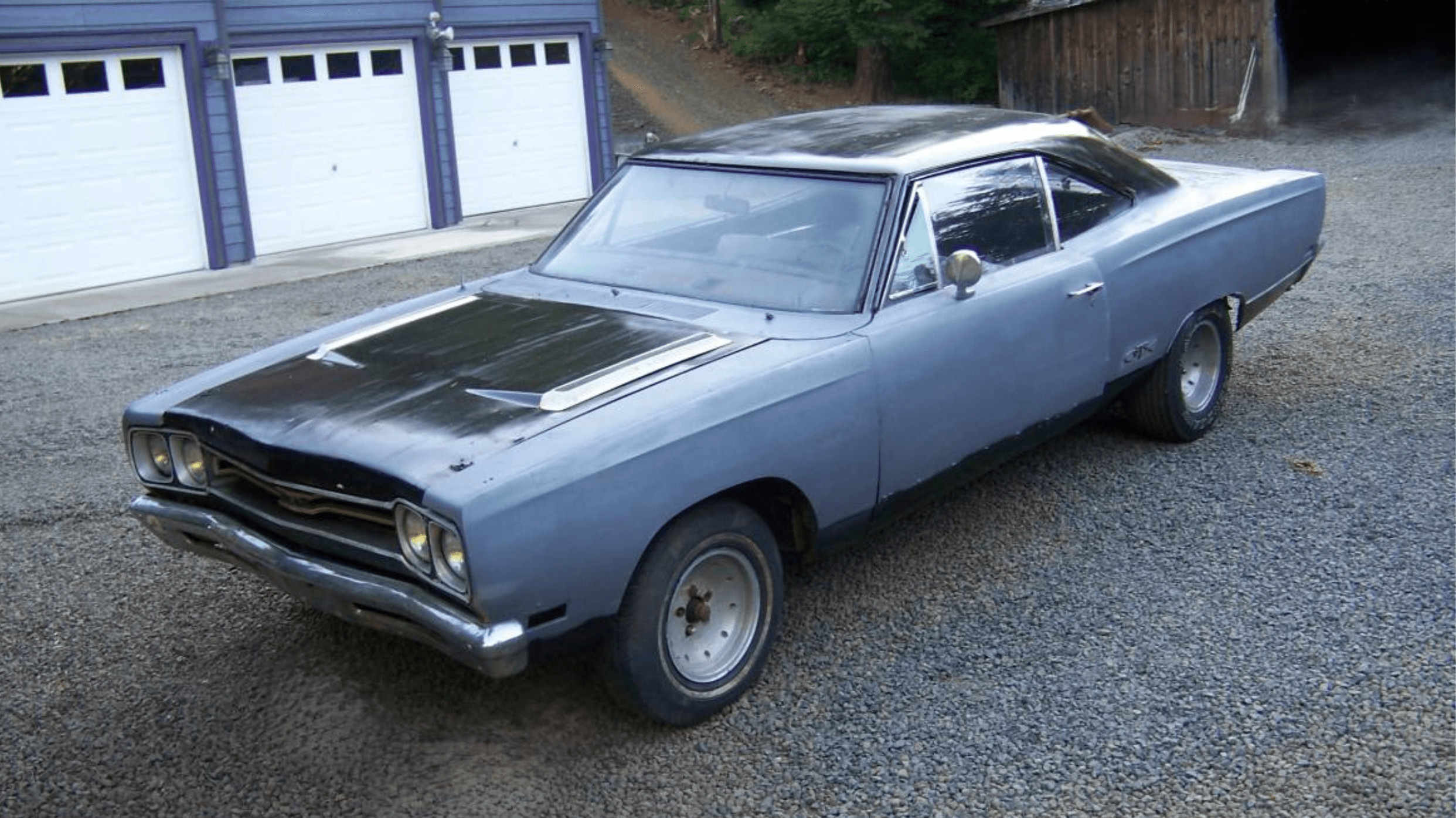
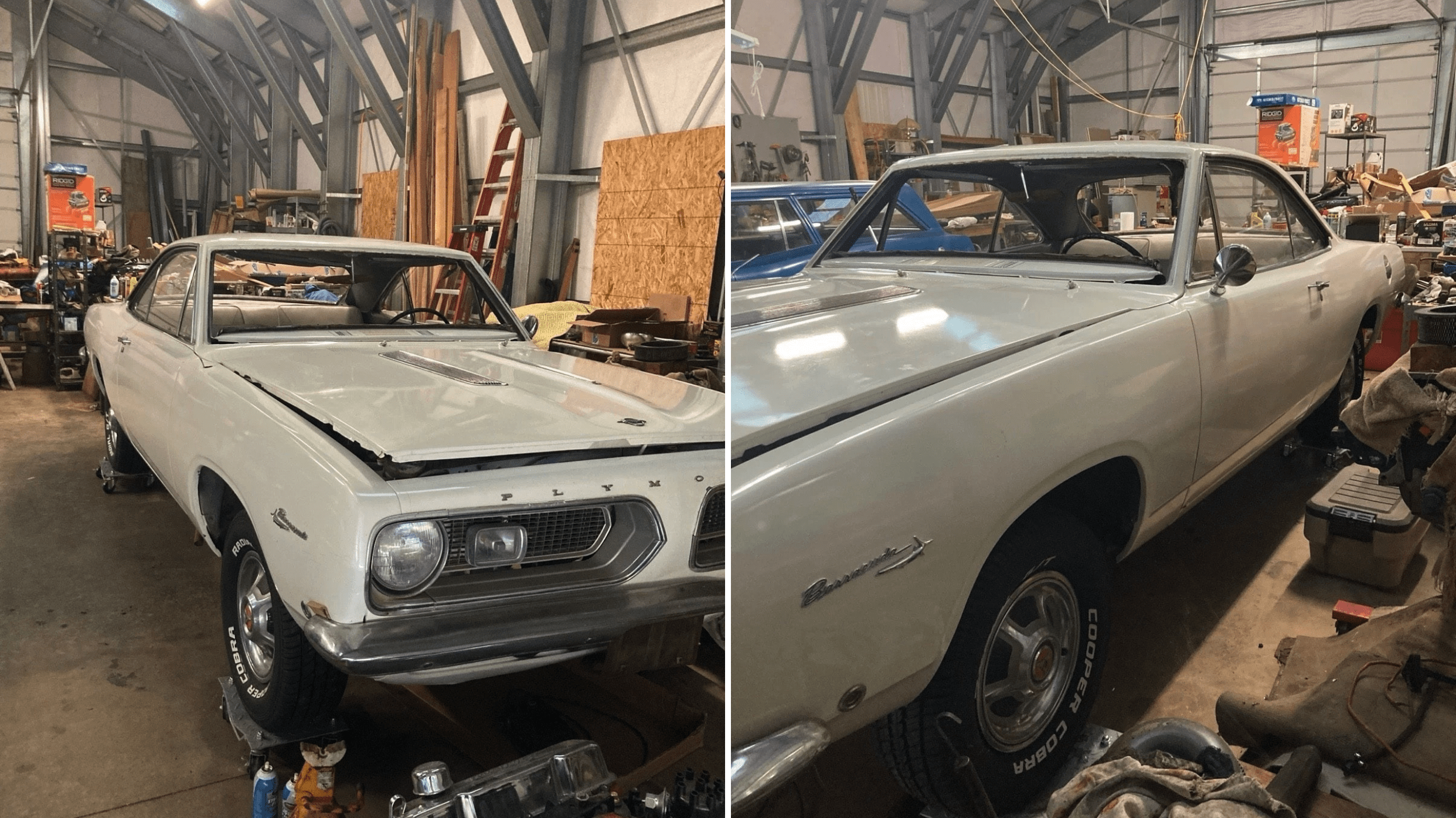
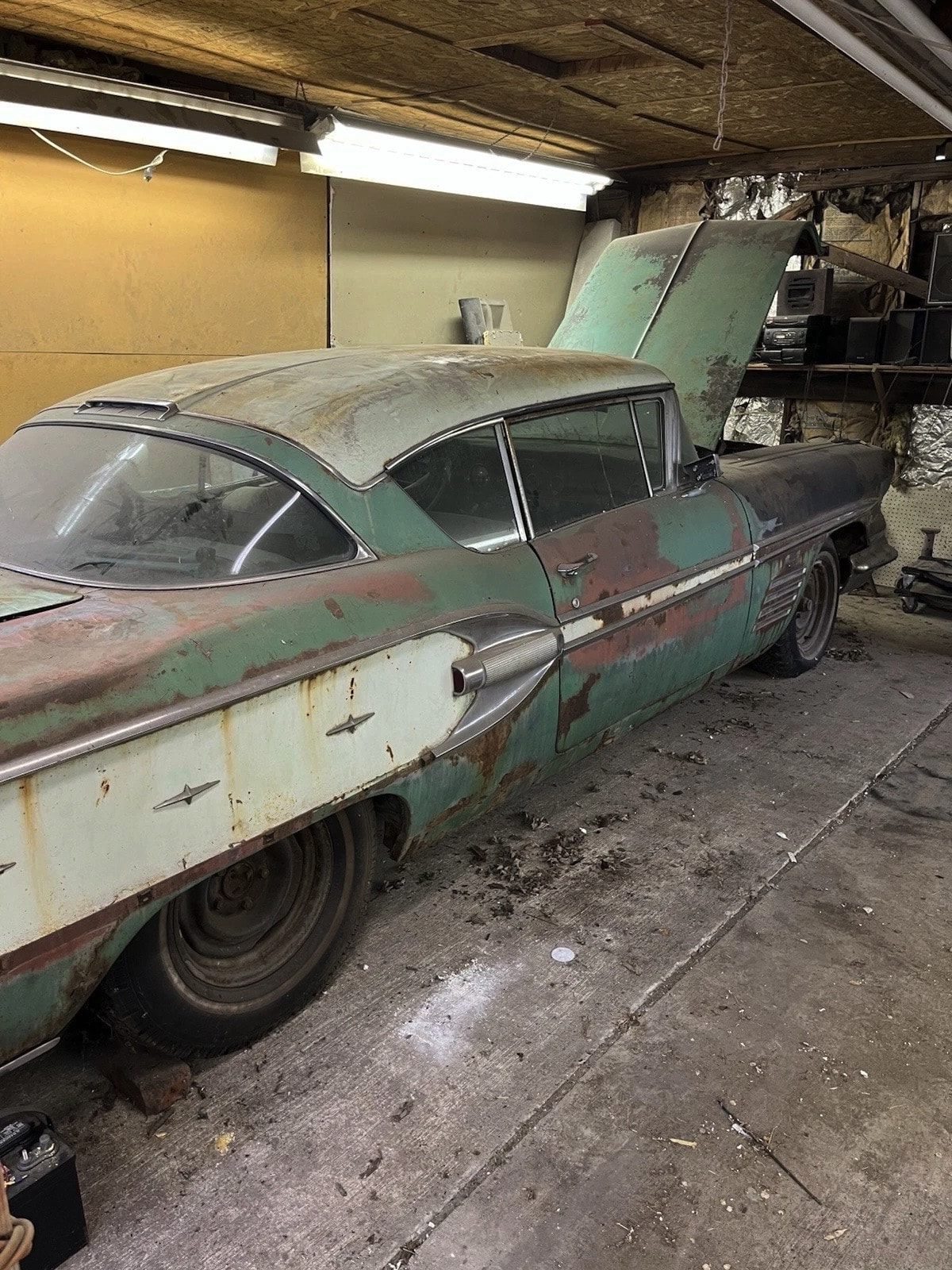
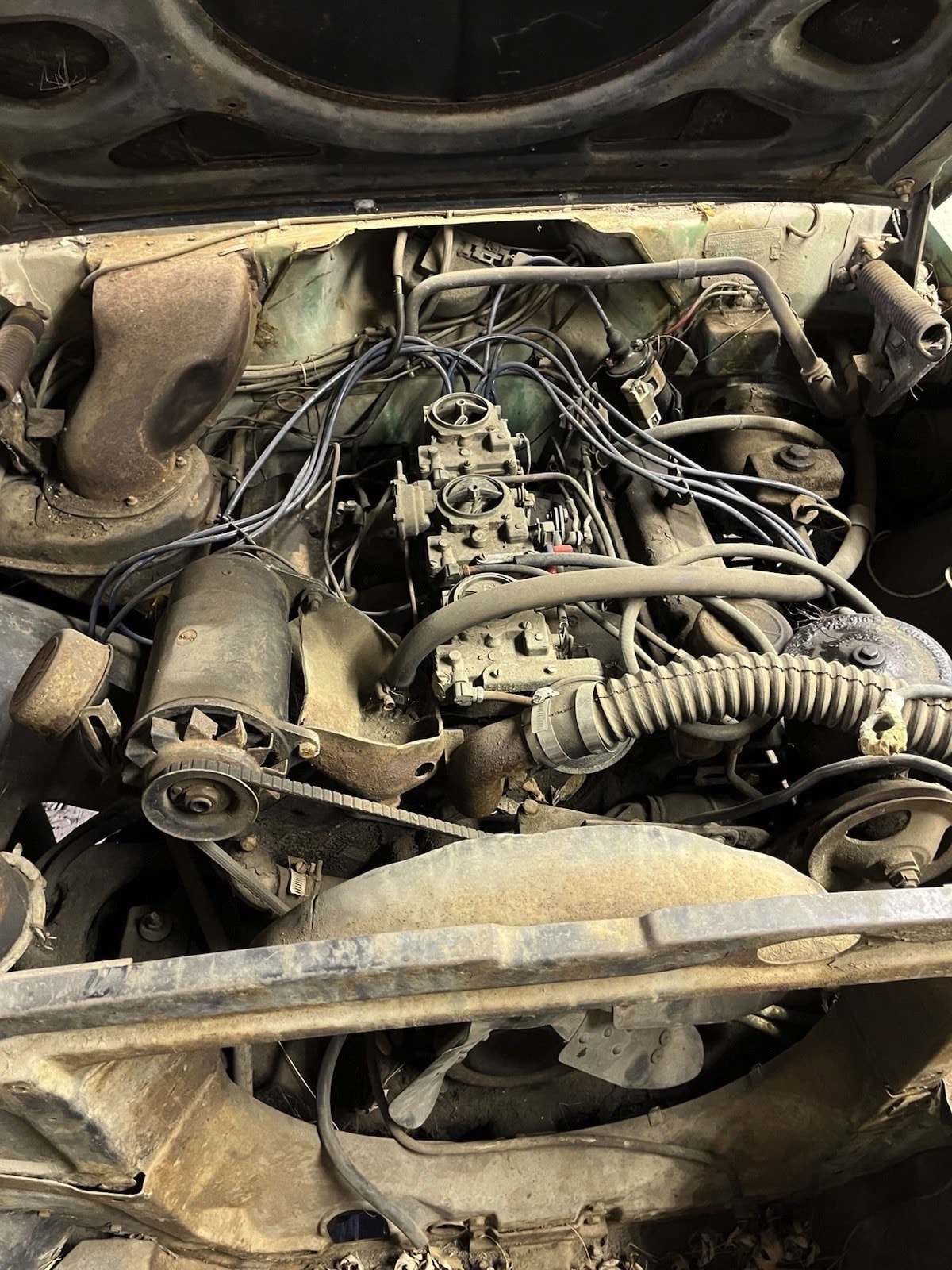
Some barn finds reveal their treasures gradually, but a recently discovered 1958 Pontiac Bonneville delivered its surprise immediately upon lifting the hood – a genuine Tri-Power setup that transforms this storage survivor from interesting classic to significant muscle car ancestor. This Bonneville has been sitting for God knows how long, so its only option is now a complete restoration; the car is no longer running. However, the presence of triple two-barrel carburetors elevates this project from typical restoration to preservation of Pontiac’s early performance heritage.
The Tri-Power Discovery: Performance Heritage Under Dust
The excitement of discovering a Tri-Power system in a forgotten Bonneville cannot be overstated among Pontiac enthusiasts. The original factory 370 cubic inch 300 horse-power. Three two barrel Rochester carburetors and very smooth shifting four speed hydro-matic automatic transmission represents one of the most desirable Pontiac powerplant configurations ever offered to the public.
This surprise discovery transforms restoration priorities and financial calculations. While any 1958 Bonneville deserves preservation, a Tri-Power example commands significantly higher investment justification due to its rarity and performance significance in Pontiac’s muscle car evolution.
1958 Bonneville: Birth of an Icon
Understanding this discovery’s significance requires appreciating what made the 1958 Pontiac Bonneville historically important. The Pontiac Bonneville became its own line in 1958, having been promoted from a performance upgrade on the 1957 Star Chief. The 1958 Bonneville was built on the same chassis, but as a true performance model.
The 1958 model year marked Bonneville’s evolution from trim package to standalone model, establishing the nameplate that would become synonymous with Pontiac luxury and performance for decades. As a candidate for the first true Pontiac muscle car, Bonneville buyers got a lot of power for their money.
1958 Bonneville Production:
- Only 9,144 Sport Coupes produced total
- Even fewer Tri-Power examples created
- Choice between two-door Sport Coupe and Convertible body styles
- Shared A-body structure with other GM full-size models
The Tri-Power System: Engineering Excellence
The Tri-Power setup discovered under this Bonneville’s hood represents sophisticated engineering that predated the muscle car era’s more famous multi-carburetor systems. Under the hood, Pontiac installed a single V-8 engine but offered six power outputs ranging between 255 hp to 355 hp for the Tri-Power option (triple two-barrel carburetors).
Tri-Power Technical Specifications:
- Base Engine: 370 CID (6.1L) V8
- Tri-Power Output: 330 horsepower @ 5000 rpm
- Torque: 415 lb-ft @ 3000 rpm
- Carburetion: Three Carter 2-barrel carburetors
- Compression Ratio: 10.5:1
- Bore x Stroke: 4.0625″ x 3.5625″
The slightly more expensive PM package added the Tri-Power carburetors, increasing output to 330 horsepower, representing a significant performance advantage over base configurations that justified the additional cost for performance-focused buyers.
Market Rarity and Collector Significance
Current market data reveals the significance of this Tri-Power discovery. There are 26 1958 Pontiac Bonneville for sale right now across various platforms, but Tri-Power examples represent a small fraction of available inventory, making this storage find particularly significant for collectors.
The rarity stems from several factors:
- Higher initial purchase price limiting sales volume
- Complex carburetor system requiring more maintenance
- Limited dealer knowledge about tuning and service
- Competition from Rochester fuel injection option
Today, these factors contribute to Tri-Power Bonnevilles commanding premium pricing among collectors who understand their significance in Pontiac’s performance evolution.
Storage Assessment: Complete Restoration Reality
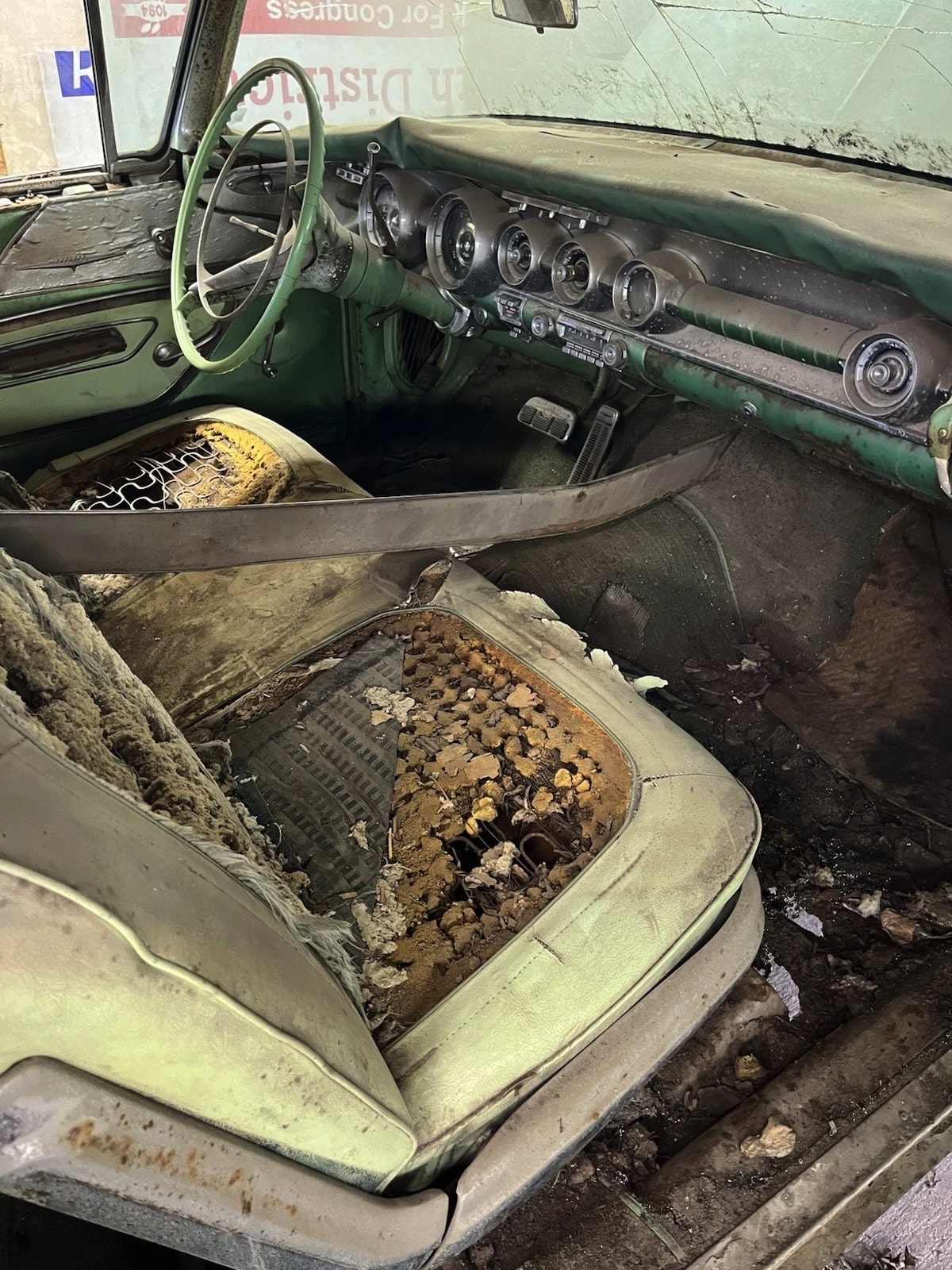
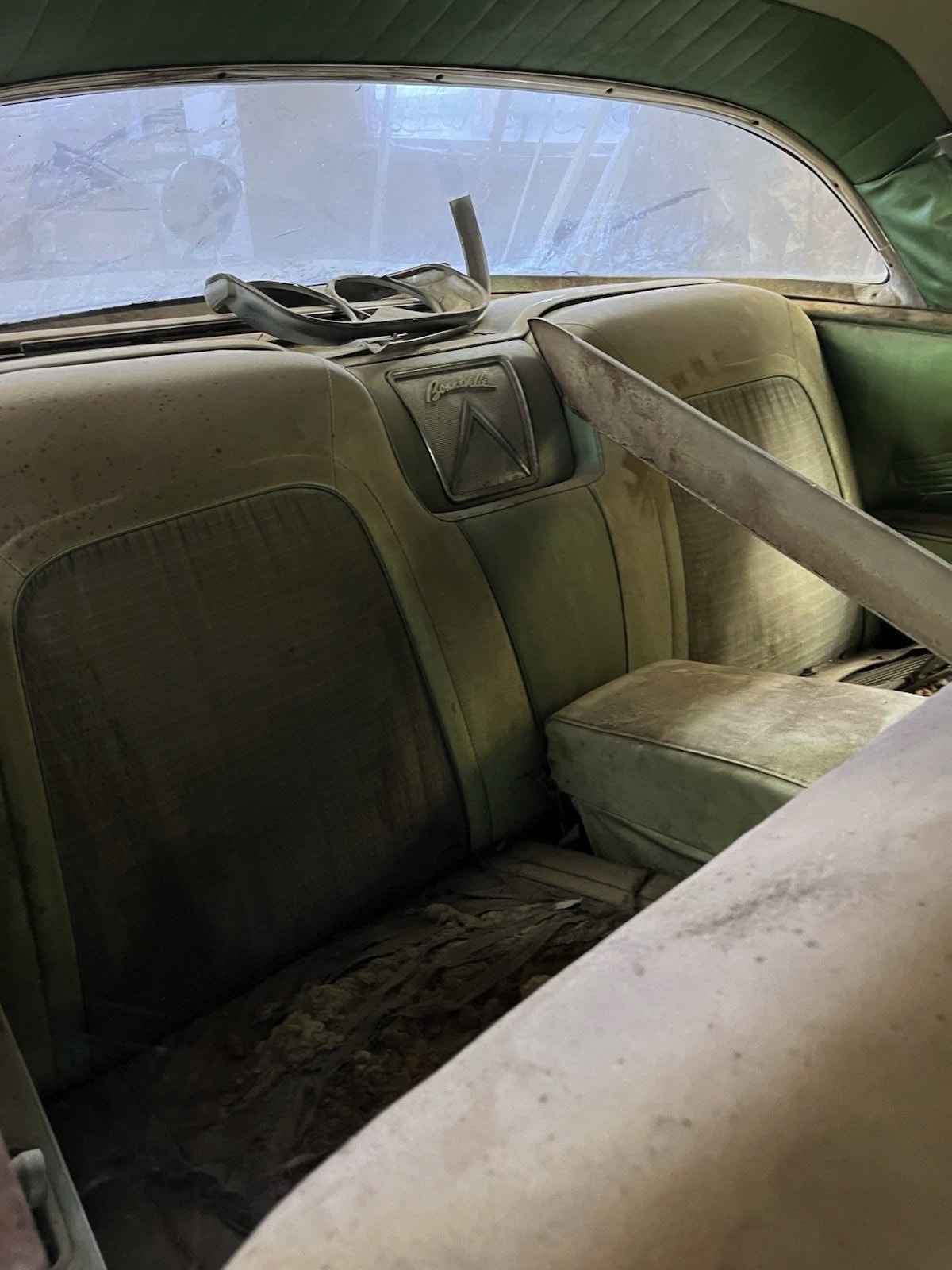
The harsh reality facing this Tri-Power discovery involves comprehensive restoration requirements. After extended dormancy, “no longer running” status indicates systematic attention to multiple vehicle systems will be necessary before this Bonneville can fulfill its performance potential again.
Typical Extended Storage Issues:
- Fuel system contamination affecting all three carburetors
- Brake system failure requiring complete overhaul
- Cooling system deterioration and component replacement
- Electrical system degradation throughout
- Interior preservation challenges from environmental exposure
The Tri-Power system itself presents specific recommissioning challenges that require specialized knowledge and potentially expensive carburetor rebuilding services.
Restoration Investment Analysis
The presence of genuine Tri-Power equipment significantly affects restoration economics for this project:
Positive Financial Factors:
- Tri-Power rarity commanding premium finished values
- Original equipment authenticity increasing collector appeal
- 1958 Bonneville historical significance supporting investment
- Growing appreciation for pre-muscle car performance classics
Investment Requirements:
- Complete Tri-Power carburetor rebuild: $2,500-4,000
- Engine rebuild and machine work: $8,000-15,000
- Body and paint restoration: $15,000-30,000
- Interior restoration: $8,000-15,000
- Mechanical systems overhaul: $5,000-10,000
- Total Restoration Investment: $40,000-75,000+
Authentication and Documentation Priorities
For any Tri-Power Bonneville project, authentication becomes crucial for both restoration accuracy and market value:
Critical Verification Points:
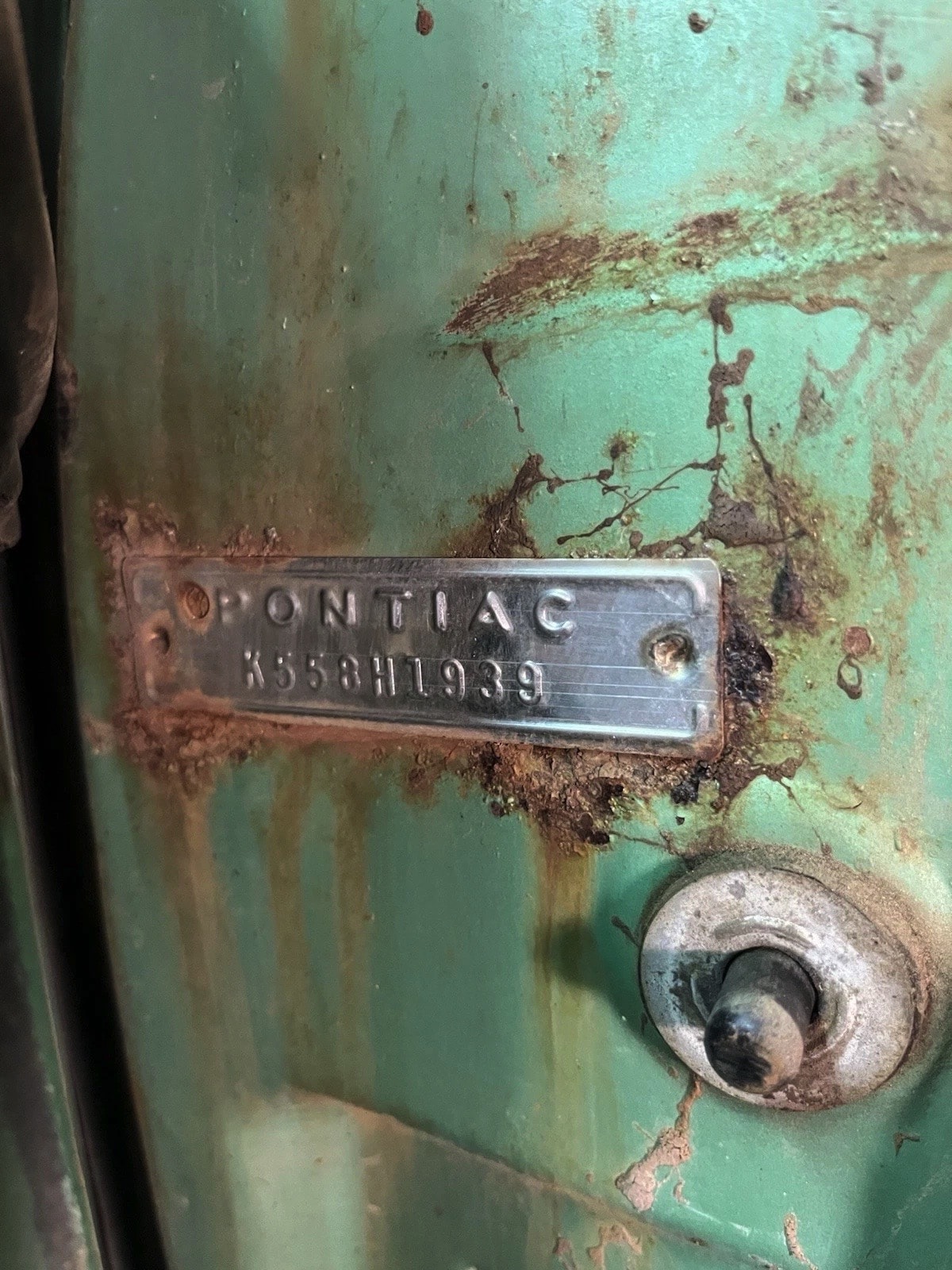
- Engine identification codes confirming 370 CID displacement
- Carburetor date codes and part numbers verification
- Intake manifold casting numbers authentication
- Build sheet or window sticker documentation if available
- Transmission and rear axle ratio confirmation
The investment in professional authentication often pays dividends through increased collector confidence and market value realization.
Tri-Power vs. Fuel Injection Debate
The 1958 Bonneville also offered Rochester fuel injection as an alternative high-performance option, creating interesting comparison points for collectors:
Tri-Power Advantages:
- Mechanical simplicity enabling field maintenance
- Distinctive visual and auditory character
- Lower initial cost than fuel injection
- Parts availability through restoration suppliers
Fuel Injection Considerations:
- Higher original cost and complexity
- Greater rarity in surviving examples
- Electronic system challenges for period technology
- Premium collector pricing for documented examples
Most performance buyers chose Tri-Power for its combination of power, reliability, and serviceability advantages over the experimental fuel injection system.
The Restoration Challenge: Tri-Power Complexity
Successfully restoring this Tri-Power Bonneville requires specialized knowledge that extends beyond typical classic car restoration:
Tri-Power Specific Requirements:
- Understanding progressive throttle linkage operation
- Carburetor synchronization and tuning expertise
- Air cleaner and intake manifold authenticity verification
- Fuel delivery system capacity for three carburetors
- Exhaust system compatibility with high-performance output
Finding qualified Tri-Power restoration specialists becomes essential for achieving authentic and reliable results.
Market Value Expectations
Current market data suggests strong appreciation potential for properly restored Tri-Power Bonnevilles:
Estimated Market Values:
- Project Tri-Power Cars: $15,000-25,000 depending on completeness
- Driver Quality Examples: $35,000-50,000 for functional condition
- Concours Restorations: $60,000-85,000+ for documented authenticity
- Convertible Premium: Additional 25-35% over hardtop values
These values assume proper authentication and quality restoration work that preserves original Tri-Power equipment and specifications.
The Verdict: Significant Discovery Worth Preserving
This storage-discovered 1958 Pontiac Bonneville with genuine Tri-Power equipment represents exactly the type of barn find that justifies comprehensive restoration investment. The combination of historical significance, performance rarity, and collector desirability creates compelling arguments for returning this classic to roadworthy condition.
The Tri-Power surprise transforms this project from typical restoration to preservation of significant automotive history. As one of Pontiac’s earliest serious performance offerings, this Bonneville bridges the gap between 1950s luxury cars and the muscle car explosion that would follow in the 1960s.
Success Factors for Restoration:
- Professional authentication of all Tri-Power components
- Locating qualified specialists familiar with 370 V8 and triple-carburetor systems
- Realistic budget planning including premium costs for rare components
- Understanding that finished values justify comprehensive restoration investment
- Appreciation for the car’s role in Pontiac performance heritage
Whether this particular Tri-Power Bonneville receives frame-off concours restoration or becomes a high-quality driver, its emergence from storage represents victory for automotive preservation. The surprise discovery of genuine triple-carburetor equipment ensures this project will contribute to maintaining Pontiac’s early performance legacy for future generations of enthusiasts.
For serious Pontiac collectors, discoveries like this reinforce the importance of investigating every barn find thoroughly – sometimes the most significant treasures hide beneath years of dust and neglect, waiting for someone who recognizes their true historical value.