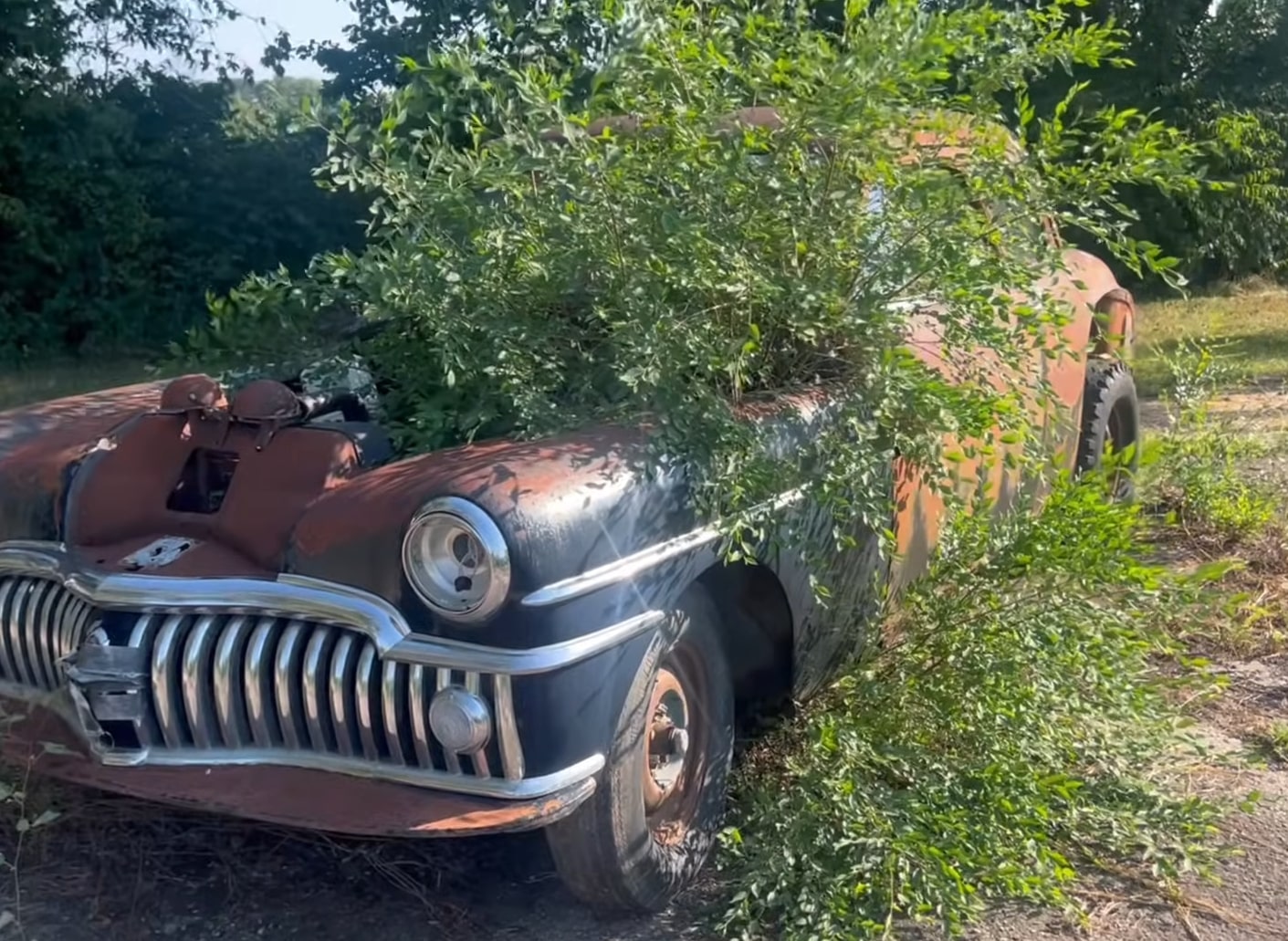
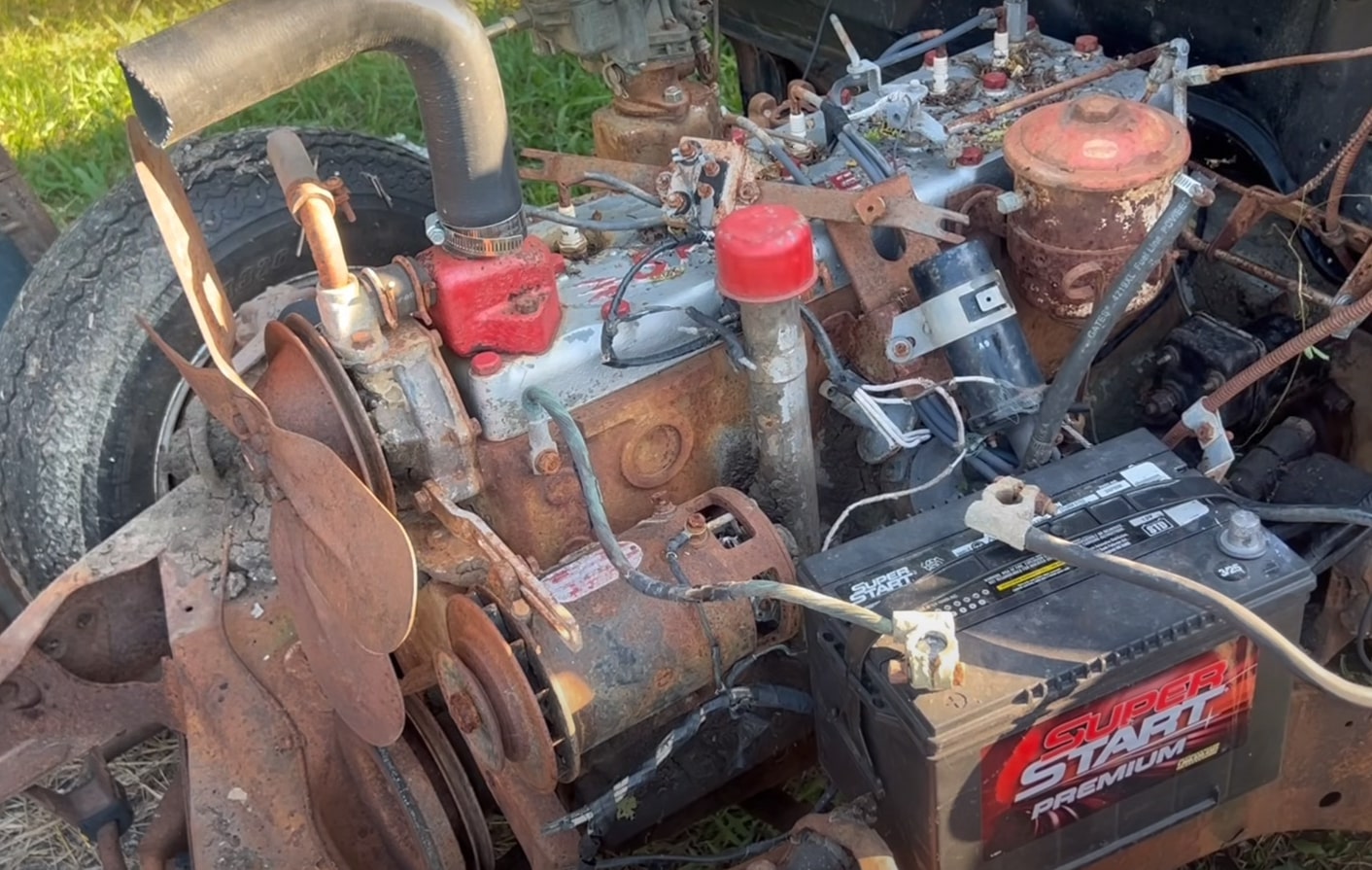
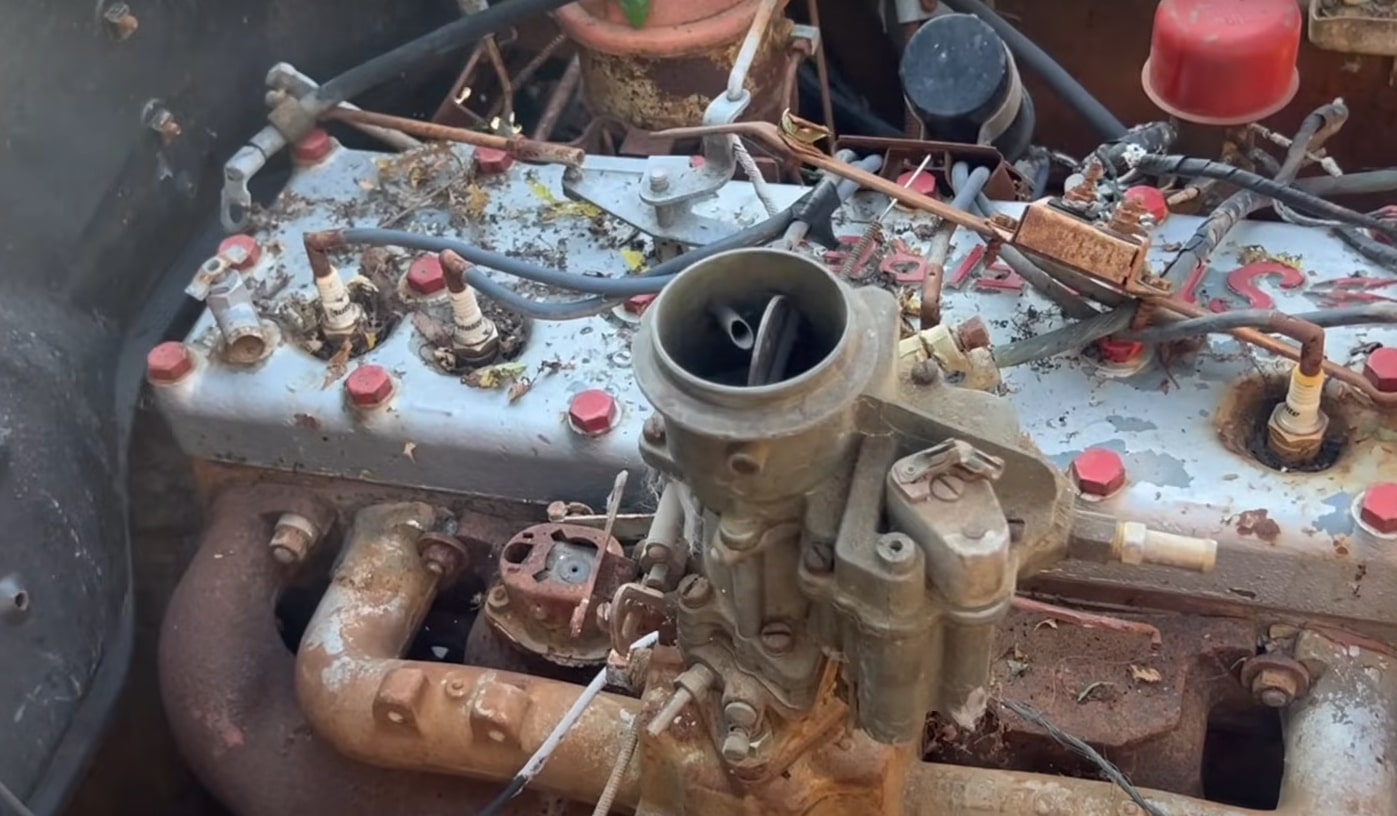
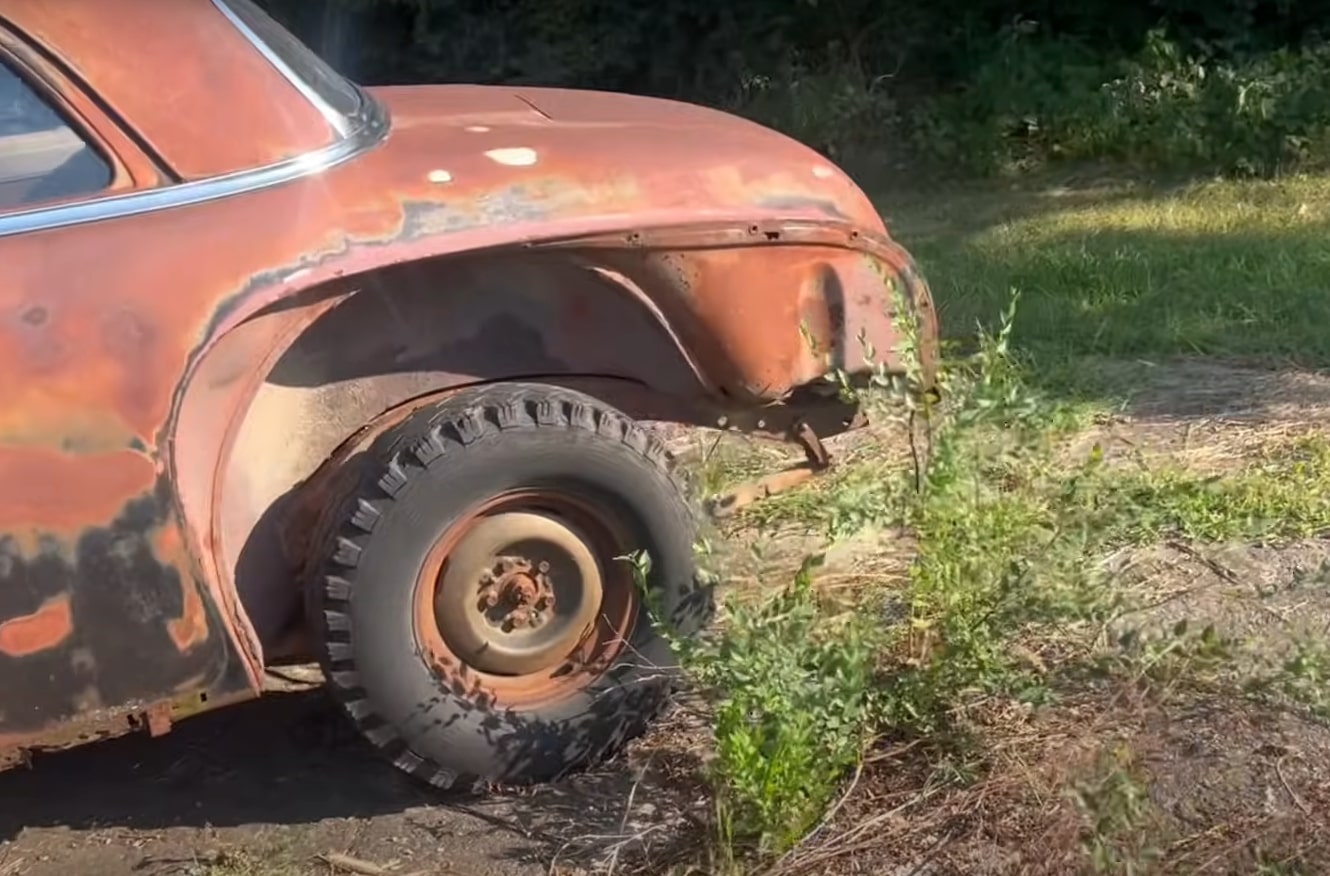
The ultimate testament to engineering excellence isn’t found in spec sheets or marketing claims, but rather in real-world survival against overwhelming odds. A 1950 DeSoto two-door coupe that spent decades rotting outside has emerged with its flathead six-cylinder engine still willing to fire, demonstrating the remarkable durability that made Chrysler Corporation’s L-head engines legendary among enthusiasts. Part of Chrysler’s flathead engine lineage, this mill was unique to DeSoto and powered all S-10 models from 1949 to 1951, rated at 112 horsepower in this car – modest output that belied extraordinary longevity.
The Vanishing DeSoto: Rarity Through Attrition
Understanding this survival story’s significance requires appreciating just how rare 1950 DeSoto two-door coupes have become. Existing records suggest DeSoto sold 6,100 two-door coupes in 1950, and most of them have already succumbed to rust, making every survivor precious regardless of condition. Total DeSoto production for 1950 was just around 136,000 units, which was good for twelfth place in the industry, sandwiched between Nash and Hudson.
The two-door coupe represented DeSoto’s sportiest offering for buyers seeking something more dynamic than the standard four-door sedan. However, lower production numbers compared to sedans means surviving coupes have become increasingly rare as decades of weather, accidents, and parts car cannibalization claimed the majority of examples.
1950 DeSoto Production Context:
- Total production: approximately 136,000 units
- Two-door coupes: 6,100 units (less than 5% of production)
- Market position: 12th place in industry rankings
- Competition: Nash, Hudson, Packard in similar market segments
The Flathead Six: Engineering for Endurance
The engine refusing to die in this outdoor survivor represents Chrysler Corporation’s flathead inline-six engineering at its peak development. From 1946 through 1950 the DeSoto engine was the venerable 236.6 cid flathead six that made just 109 hp (increased to 112 midway through 1949), providing reliable if unspectacular performance that prioritized durability over dynamism.
236.6 Cubic Inch Flathead Six Specifications:
- Displacement: 236.6 cubic inches (3.9 liters)
- Power Output: 112 horsepower @ 3,600 rpm
- Compression Ratio: 7.0:1
- Configuration: Inline-six L-head (valves in block)
- Bore x Stroke: 3.25″ x 4.75″
- Fuel System: Single downdraft carburetor
The engine is a 236.7 CID 6 cylinder flat head, 7.0/1 CR, 112 HP, designed for longevity rather than performance. This conservative approach to engineering created powerplants capable of surviving conditions that would destroy more highly-strung engines.
The L-Head Legacy: Why Flatheads Endured
The flathead or L-head engine design dominated American automotive production from the 1920s through the early 1950s for good reasons. The L-head inline six was far and away the engine of choice for the U.S. automakers for several decades, with Auburn, Kaiser-Frazer, Pontiac, Oldsmobile, Graham, Hupmobile, Willys-Overland, Packard, Studebaker, Nash, Hudson, Plymouth, Chrysler, Dodge, and DeSoto all utilizing variations of this proven design.
Flathead Design Advantages:
- Mechanical Simplicity: Fewer moving parts reducing failure points
- Lower Manufacturing Cost: Simpler casting and machining requirements
- Compact Packaging: Valves in block creating lower hood lines
- Robust Construction: Heavy castings withstanding abuse and neglect
- Easy Maintenance: Straightforward valve adjustments and repairs
These characteristics explain why this particular engine could survive decades of outdoor exposure and still demonstrate willingness to run despite complete neglect.
Outdoor Storage: The Ultimate Durability Test
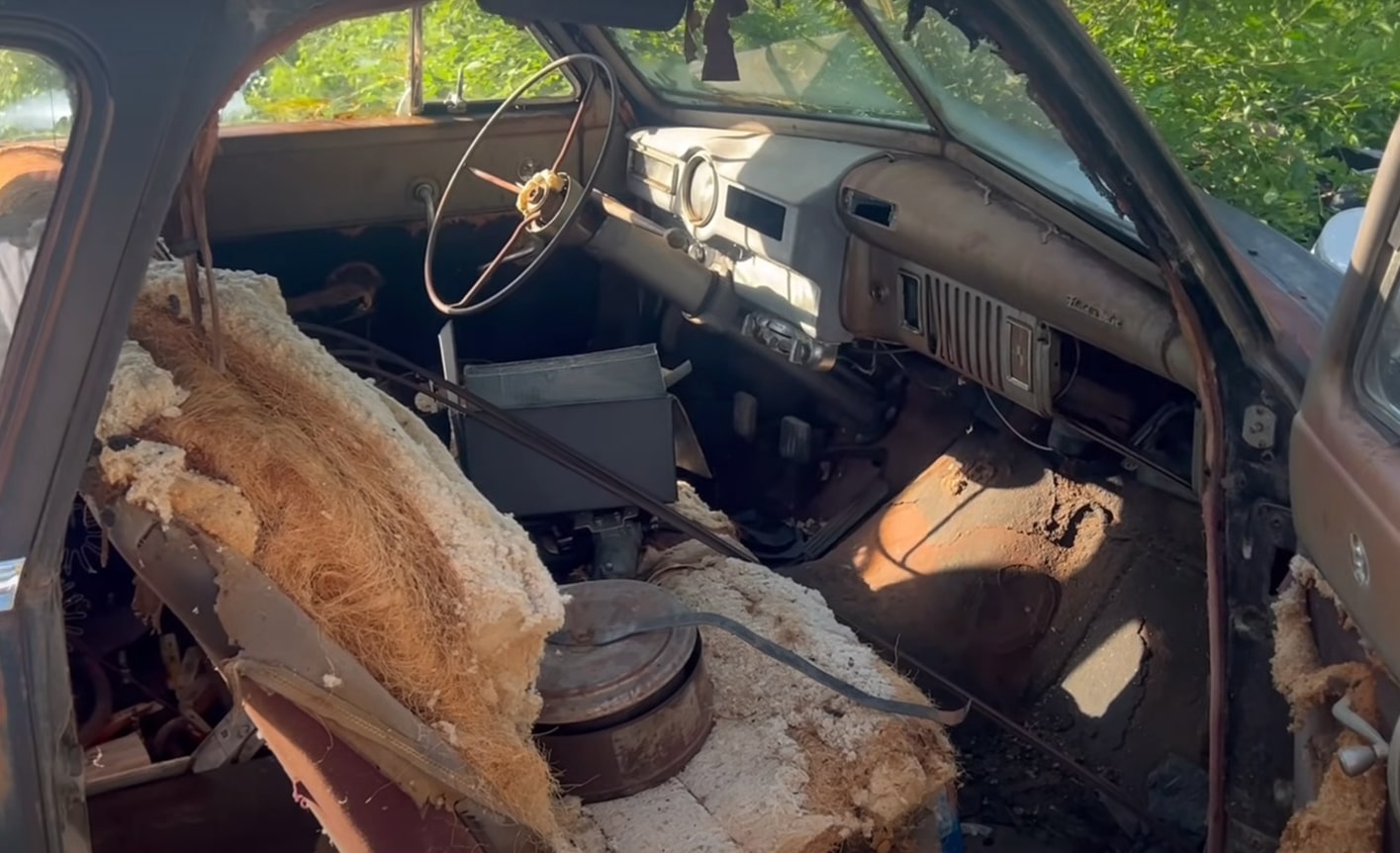
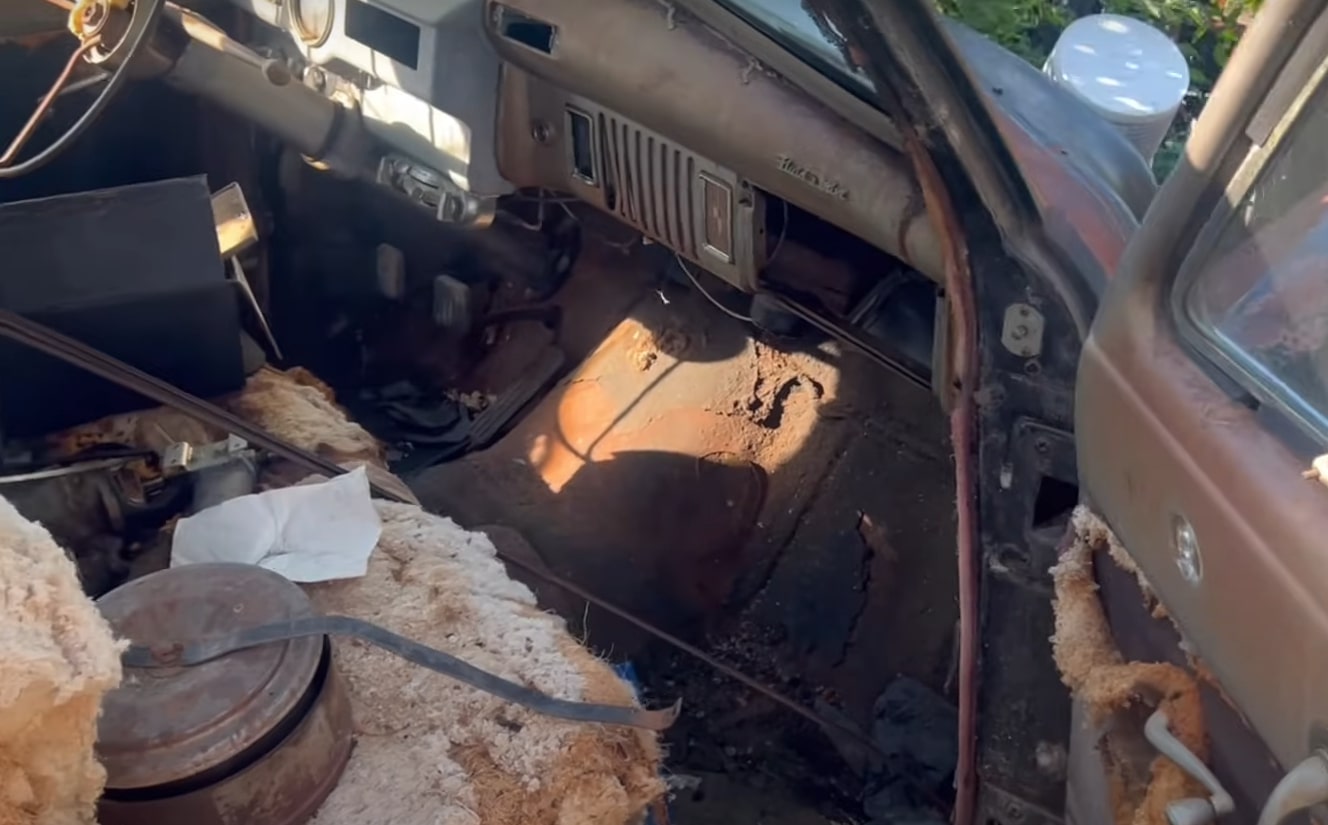
Decades of outdoor exposure represents one of the most punishing tests any engine can face. Unlike climate-controlled storage or even basic barn shelter, outdoor abandonment exposes mechanical components to:
Accelerated Degradation Factors:
- Direct weather exposure causing rust and corrosion
- Temperature cycling expanding and contracting metal components
- Moisture intrusion into cylinders, bearings, and oil passages
- UV radiation degrading rubber and plastic components
- Biological growth in fuel and cooling systems
The fact that this flathead six showed any sign of life after such treatment testifies to both the engine’s fundamental robustness and Chrysler Corporation’s conservative engineering approach during this era.
The Revival Process: Coaxing Life from Neglect
Bringing any decades-dormant engine back to life requires systematic approach addressing both obvious and hidden issues. While specific revival details aren’t provided for this particular DeSoto, experienced enthusiasts understand the typical requirements:
Essential Revival Steps:
- Cylinder freeing using penetrating oil over extended period
- Fuel system complete cleaning and component replacement
- Carburetor disassembly, cleaning, and rebuild
- Ignition system evaluation and points/condenser replacement
- Oil system flushing removing decades of sludge accumulation
The flathead’s simple design facilitates revival efforts compared to more complex overhead valve configurations, as fewer components require attention before attempting to fire the engine.
Market Context: Orphan Brand Values
Current classic car market conditions reveal interesting dynamics for surviving 1950 DeSoto examples. As products of a defunct manufacturer with relatively modest performance credentials, these cars occupy unique market positioning:
Current Market Segments:
- Running/Driving Examples: $8,000-15,000 for presentable survivors
- Project Cars: $2,000-6,000 depending on completeness and rust
- Parts Cars: $500-2,000 for incomplete or severely damaged examples
- Concours Restorations: $20,000-35,000 for show-quality work
The modest values relative to more glamorous classics make DeSoto survivors attractive for enthusiasts seeking affordable entry into post-war American car collecting.
The Orphan Brand Phenomenon
DeSoto’s 1961 demise created instant orphan status that affects both parts availability and collector interest today. DeSoto was once a 1950s middle-class American tradition, but now it’s a forgotten brand whose survivors depend on dedicated enthusiast communities for support.
Orphan Brand Challenges:
- Limited parts availability through traditional channels
- Specialized knowledge concentrated in small enthusiast groups
- Lower collector recognition affecting market values
- Increased difficulty sourcing trim and body components
However, these challenges also create tight-knit communities of dedicated owners who maintain knowledge and parts inventories essential for preservation efforts.
Investment vs. Passion Analysis
This outdoor survivor DeSoto presents interesting proposition for potential buyers:
Practical Considerations:
- Affordable acquisition costs enabling enthusiast participation
- Proven engine durability reducing mechanical concerns
- Simple technology facilitating owner maintenance
- Unique story and character unavailable in mainstream classics
Realistic Challenges:
- Extensive rust repair likely required after outdoor exposure
- Limited appreciation potential compared to muscle car alternatives
- Parts sourcing difficulties for trim and body components
- Modest performance by modern or even period standards
The Survivor Philosophy
Cars like this outdoor DeSoto appeal to collectors who appreciate preservation over restoration perfection. The engine’s refusal to die after decades of neglect tells more valuable story than any concours restoration could provide, documenting both period engineering excellence and the resilience of simple, well-executed design.
This philosophy embraces:
- Authentic aging and patina over restored perfection
- Mechanical function prioritized above cosmetic appearance
- Documentation of real-world durability and survival
- Celebration of engineering excellence through longevity
The Verdict: Testament to Flathead Engineering
This 1950 DeSoto two-door coupe’s survival after decades of outdoor exposure, combined with its flathead six engine’s willingness to run, validates everything enthusiasts love about pre-war and immediate post-war American automotive engineering. The 236.6 cubic inch L-head six wasn’t powerful, wasn’t sophisticated, and certainly wasn’t glamorous – but it was fundamentally sound in ways that ensured survival when more complex engines would have failed completely.
The fact that only 6,100 two-door coupes were built in 1950 makes every survivor significant, while this particular example’s extreme neglect followed by mechanical resilience creates automotive archaeology documenting the remarkable durability of Chrysler Corporation’s flathead engine family.

Whether this outdoor survivor receives comprehensive restoration or preservation-focused recommissioning depends on finding an owner who appreciates authentic survival stories over cosmetic perfection. The engine’s refusal to die after decades of abuse deserves celebration as testament to an era when American automotive engineering prioritized longevity over planned obsolescence.
For enthusiasts seeking affordable entry into classic car collecting with unique stories and proven durability, forgotten brands like DeSoto offer compelling alternatives to mainstream muscle car market pricing. This flathead survivor proves that sometimes the most interesting classics are the ones that simply refuse to die.