The most exciting barn finds often involve the rarest configurations of iconic cars, and a recently discovered 1964½ Ford Mustang convertible delivers exactly that combination. After 35 years of storage, this D-code example has emerged with its original 289 four-barrel V8 intact, representing one of the most desirable and historically significant Mustang variants ever produced. The “good engine news” extends beyond mere survival – this powertrain represents a crucial bridge in Ford’s early Mustang evolution and one of the most sought-after engine codes among serious collectors.

The 35-Year Slumber: Time Capsule Discovery
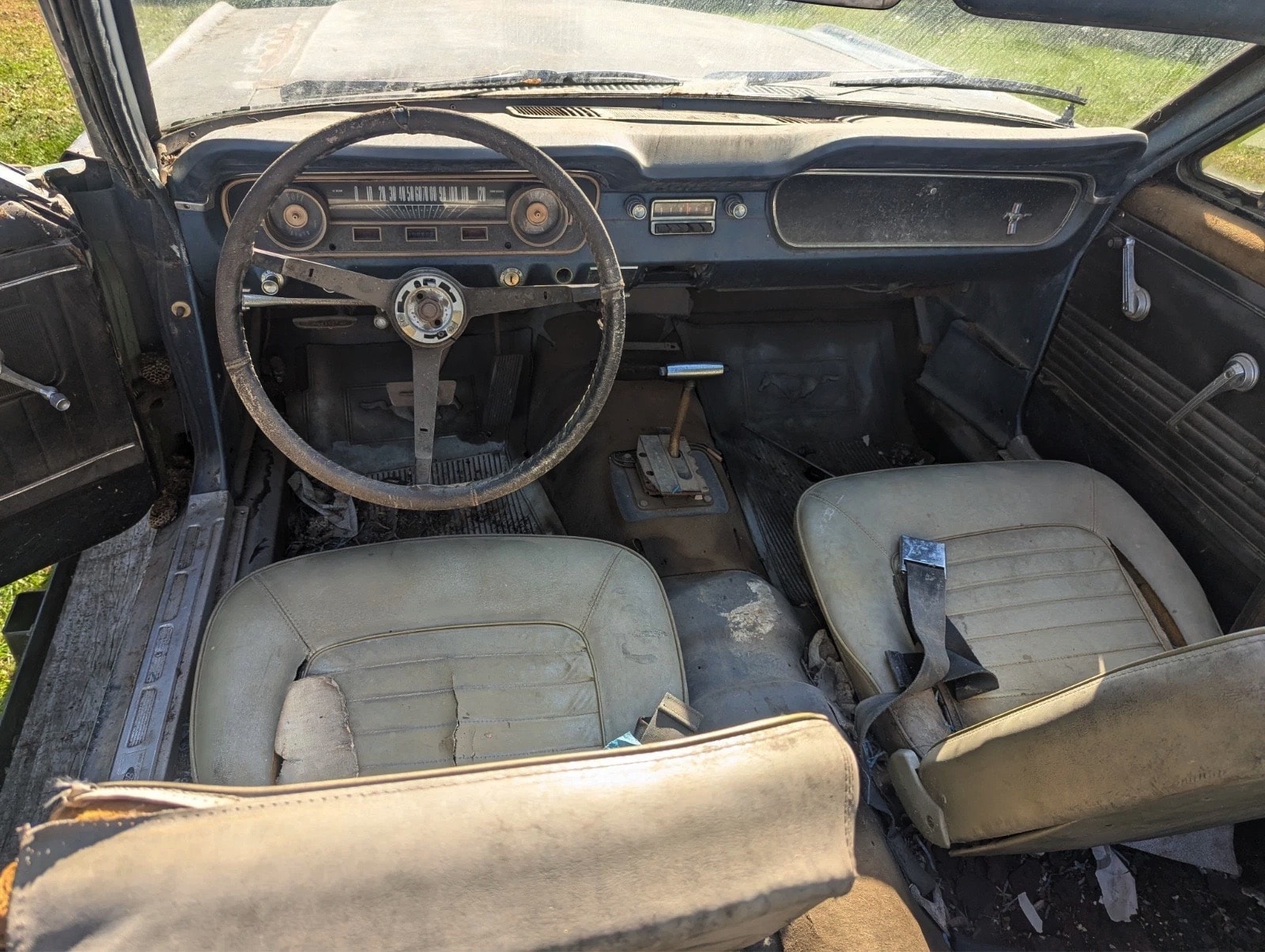
While roaming around the net I found a 1964 1/2 Mustang coupe, D code 289 4-V, 4 speed that has bee stored for the last 35 years. It has a set of RWL polyglas Goodyears on it so been there a while. The Polyglas tires serve as automotive archaeology, confirming extended storage while suggesting the car was last actively driven during the tire’s heyday in the 1970s and early 1980s.
The 35-year storage period places this Mustang’s parking around 1989-1990, when first-generation examples were just beginning their transition from used cars to collectibles. Someone with remarkable foresight recognized this D-code convertible’s future significance and preserved it through three and a half decades of changing automotive trends.
D-Code Significance: The Rare 289 Four-Barrel
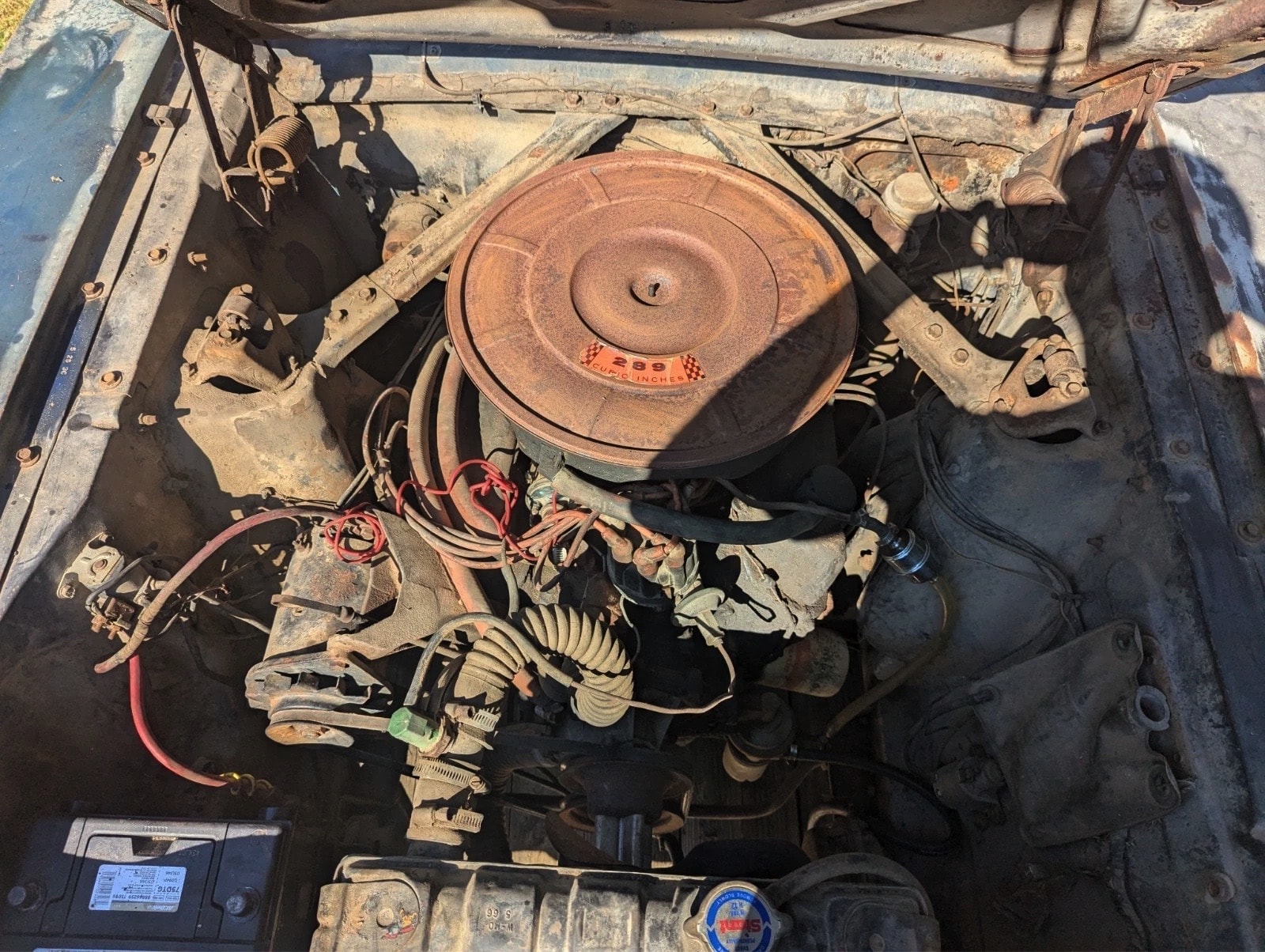
A D-coded engine means this Mustang rolled off the assembly lines with a 289ci engine with a four-barrel carburetor. There are no production numbers for the 1964 1/2 engines, but it’s estimated that approximately 28 to 35 percent of the Mustangs built this year came with this powertrain.
Understanding D-code rarity requires appreciating early Mustang production dynamics. The rare 210-horsepower 1964-and-a-half Mustang engines offered the four-barrel V-8 but lacked high-performance internals of the K-code Hi-Po version. This positioned D-code cars as the sweet spot between economy and performance – serious power without race-bred extremes.
D-Code Engine Specifications:
- Displacement: 289 cubic inches (4.7 liters)
- Power Output: 210 horsepower
- Carburetion: Autolite 4-barrel
- Compression Ratio: 9.0:1
- Production Period: March through September 1964 only
The D Code 289 Mustang engine with the Autolite 4 bbl carburetor is a rare engine. It was only offered as an option in 1964 1/2 Mustangs dated March – September of 1964, making this discovery particularly significant for collectors seeking authentic early production examples.
1964½ Convertible Rarity: Double Significance
This barn find’s significance extends beyond engine code to body style rarity. RARE as built and highly desirable Early Mustang …. often referred to as the 64.5 model, AND this is one is the coveted factory “D” code 289 equipped example. The convertible body style represented premium positioning in Ford’s initial Mustang lineup, commanding higher prices and lower production numbers.
Early Mustang convertibles faced unique market challenges:
- Higher initial cost limiting sales volume
- Structural complexity requiring additional engineering
- Weather protection concerns in pre-air conditioning era
- Insurance premiums reflecting theft and accident risks
These factors combined to create relatively low production numbers, making surviving examples increasingly precious as collectibles.
The “Good Engine News” Factor
The phrase “good engine news” likely refers to either mechanical condition discoveries or authentication of the original D-code powerplant. For 1964½ D-code cars, engine authenticity represents crucial value determinant, as these motors command premium pricing among collectors and restorers.

Authentication Elements:
- Original engine identification tags and stampings
- Date code verification matching production records
- Carburetor and intake manifold originality confirmation
- Accessory drive components and brackets inspection
- Oil feed distributor and generator presence (period correct)
Since most 64 1/2 Mustangs were produced with either a 260 V8 or a 170 I6, this car is one of the rare late 64 1/2 production cars with the highly coveted and all new 289 V8 with the factory 4 Barrel carburetor, emphasizing its significance within the inaugural model year production run.
Market Context: D-Code Collectibility
Current market conditions reveal strong demand for authenticated early Mustang rarities. The early 65’s 289 was 9.0:1/210HP and a 5 bolt bellhousing block. (D code/4brl) The late 65’s 289 was 9.3:1/200HP and a 6 bolt bellhousing block, demonstrating how quickly Ford evolved the 289 platform and why D-code specifications remain unique to the 1964½ production period.
Current Market Segments:
- Restored D-Code Convertibles: $45,000-75,000 for documented examples
- Driver Quality D-Code Cars: $25,000-40,000 depending on authenticity
- Project D-Code Examples: $15,000-30,000 based on completeness
- Parts Cars with D-Code Engines: $8,000-15,000 for drivetrain value alone
Historical Significance: Bridge Between Eras
The D-code engine represents crucial transition in Ford’s performance strategy. The 30 day limited production from April to May of 64 only offered the 6cyl engine, the 260 2bbl V8, and the 289 hi-po 4bbl V8. Dad said he wouldn’t buy one with the 289, as it only came with a 90 day warranty on the engine, reflecting Ford’s caution about new performance applications.
The D-code filled the gap between conservative 260 two-barrel power and extreme K-code Hi-Po performance, providing serious capability with reasonable reliability expectations and standard warranty coverage.

Assessment Challenges: 35-Year Revival
Bringing any 35-year storage veteran back to roadworthy condition requires systematic evaluation of predictable issues:
Mechanical Priorities:
- Fuel system cleaning and component replacement
- Brake system safety inspection and fluid renewal
- Cooling system service and hose replacement
- Electrical system diagnosis and repair
- Carburetor rebuild for proper operation
Convertible-Specific Concerns:
- Top mechanism operation and hydraulic system condition
- Weather seal replacement and window alignment
- Structural integrity inspection for stress crack development
- Interior preservation assessment for UV and moisture damage
Documentation and Authentication
For D-code cars, proper documentation becomes critical for both restoration planning and market value:
Essential Verification:
- Original broadcast sheet or build records
- Engine identification tag and stampings
- VIN decoding for factory specification confirmation
- Title history and ownership provenance
- Any service records or modification documentation
Investment Analysis: Risk and Reward
This 35-year storage D-code convertible presents classic risk-reward scenarios:
Positive Factors:
- Extreme rarity of D-code convertible combination
- Extended storage preservation of original components
- Strong market demand for authenticated early Mustangs
- Historical significance as transitional powerplant
- Convertible premium pricing in current market
Risk Considerations:
- Unknown mechanical condition after extended dormancy
- Potential for significant recommissioning costs
- Market volatility affecting classic car values
- Authentication requirements for maximum value realization
The Restoration vs. Preservation Decision
This barn find’s condition will likely determine its future path:
Complete Restoration Approach:
- Frame-off restoration to concours standards
- Period-correct component sourcing and refinishing
- Professional documentation of authenticity verification
- Investment requirement potentially $40,000-60,000+
Preservation Strategy:
- Mechanical recommissioning prioritizing safety and reliability
- Cosmetic preservation maintaining authentic patina
- Selective component replacement only as necessary
- Lower investment with authentic survivor appeal
The Verdict: Significant Discovery
This forgotten D-code 1964½ Mustang convertible represents exactly the type of discovery that drives collector passion – extreme rarity combined with historical significance and proper preservation. The 35-year storage period, while substantial, likely protected this car from modification, accident damage, and weather exposure that claims so many classics.
The “good engine news” suggests this barn find retains its most valuable component – the original D-code 289 four-barrel engine that makes this car irreplaceable in Mustang history. Whether the discovery leads to concours restoration or preservation-focused recommissioning, this convertible deserves recognition as one of the most significant early Mustang survivors.

Success Factors Moving Forward:
- Professional authentication of all original components
- Realistic assessment of restoration scope and costs
- Appreciation for the car’s historical significance within Ford’s early pony car development
- Understanding that D-code cars represent crucial bridge between economy and performance in Mustang evolution
For the fortunate individual who acquires this time capsule, they’re not just buying a classic car – they’re becoming steward of automotive history that documents Ford’s transition from conservative family car manufacturer to performance innovator. The D-code engine represents that pivotal moment when American automakers began taking enthusiast buyers seriously, creating the foundation for the muscle car era that would follow.
Whether this 35-year survivor becomes a restoration showcase or preserved driver, its emergence represents victory for automotive preservation and reminder that significant classics still await discovery in the most unexpected places.