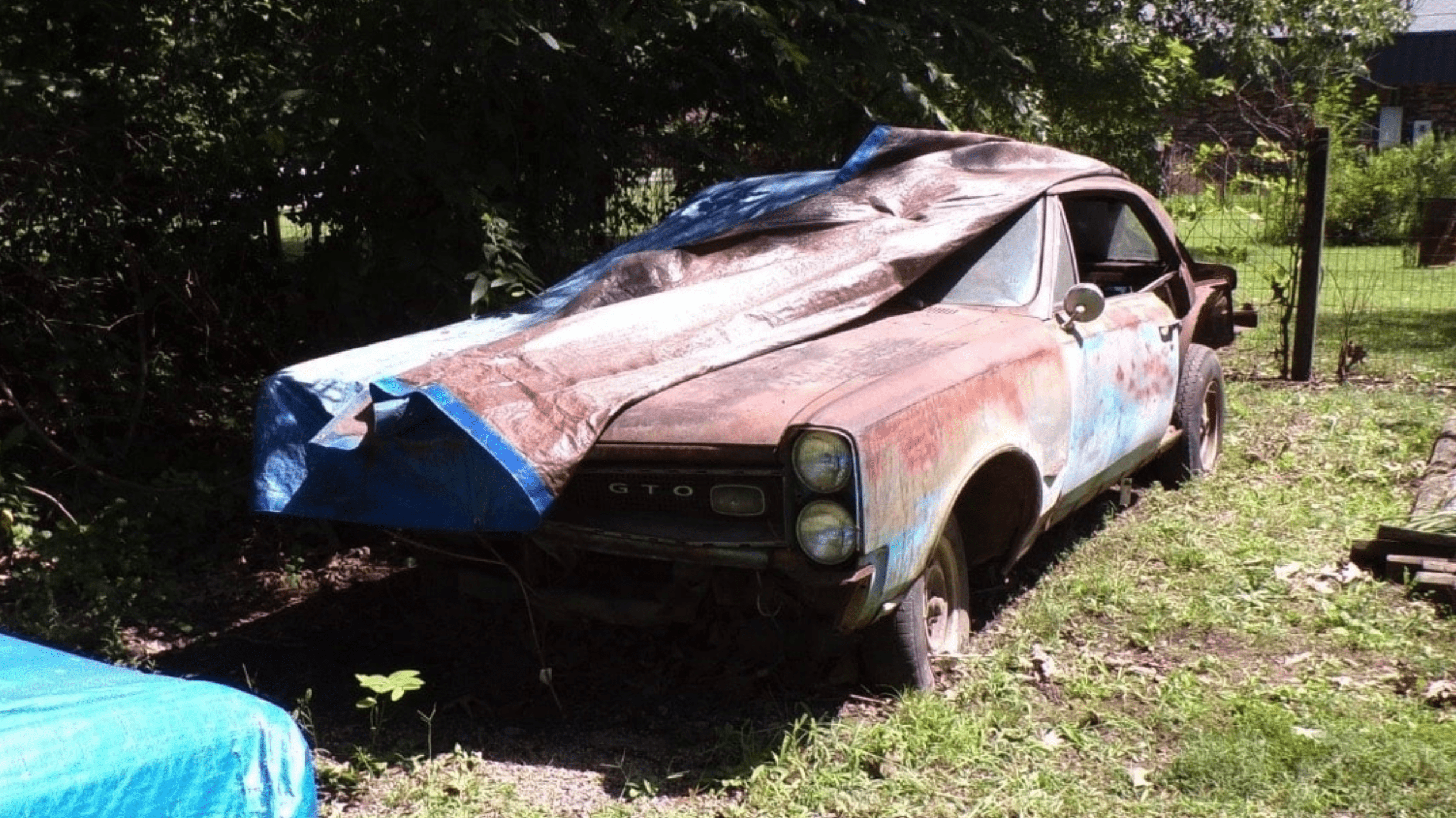
The No-Reserve Phenomenon: When Barn Finds Meet Auction Reality
Few events generate more excitement in the classic car world than a no-reserve auction of a genuine barn find. When that vehicle happens to be a 1968 Buick Skylark – a car that bridges the gap between luxury cruiser and legitimate muscle car – the combination of unknown condition and guaranteed sale creates a perfect storm of opportunity and risk.
This Skylark landed online for auction. eBay seller bookirb3 did not configure a reserve, meaning that once someone makes an offer, the car is guaranteed to have a new home at the end of the battle. The race to secure this Buick starts at $500, representing one of the most accessible entry points into classic car ownership available today.
But this accessibility comes with significant risks. No-reserve auctions mean the seller accepts whatever final bid emerges, even if that amount falls far below restoration costs or market values. For buyers, it represents the ultimate gamble – potentially scoring an incredible deal, or inheriting someone else’s expensive nightmare. Understanding the 1968 Skylark’s place in automotive history helps determine whether this no-reserve barn find represents opportunity or disaster.

Understanding the 1968 Buick Skylark: Gentleman’s Muscle Car
The 1968 Buick Skylark occupied a unique position in GM’s midsize lineup. While Chevrolet offered the Chevelle, Pontiac the GTO, and Oldsmobile the 442, Buick’s approach emphasized refinement and luxury alongside performance capability. The result was a muscle car for buyers who appreciated power but refused to sacrifice comfort.
Design Philosophy: Luxury Meets Performance
If you parked all of GM’s mid-size cars next to each other, the Skylark (and the lesser Special) would be the easiest to identify. The distinctively styled Buick featured design elements that set it apart from corporate cousins:
Exterior Distinctiveness:
- Distinctive grille: Unique front-end treatment with vertical bars
- Sweepspear side trim: Signature Buick styling element flowing from front to rear
- Rear styling: Motor Trend described the car’s rear view as reminiscent of the limited-production 1954 Buick Skylark sport convertible
- Quality chrome: Extensive brightwork throughout exterior
- Refined proportions: Less aggressive stance than GTO or 442
Interior Luxury:
- Premium materials: Higher-quality upholstery than Chevrolet or Pontiac equivalents
- Sound deadening: More insulation for quieter highway cruising
- All vinyl, foam-padded seats were standard equipment and bucket seats were optional
- Upper level instrument panel ventilation system was a new feature that eliminated the use of front ventipanes
- Comprehensive instrumentation: Full gauge packages available
Model Hierarchy: From Economy to Performance
The 1968 Skylark lineup offered multiple trim levels and powerplant options designed to appeal to different buyer segments.

Base Skylark:
- Economy focus: Six-cylinder and small V8 options
- Practical equipment: Basic trim and minimal options
- Budget pricing: Entry-level full-size luxury
- Family transportation: Practical four-door sedans and wagons
- Insurance friendly: Lower premiums than performance models
Skylark Custom:
- Mid-range offering: Additional trim and equipment
- A less-potent edition of that mill (230 horsepower) was standard in Skylark Customs
- Improved appearance: More chrome and upgraded interior materials
- Versatile power: Multiple V8 options available
- Comfort features: Power accessories and convenience options
GS 400:
- Performance flagship: Buick’s muscle car contender
- The GS 400 again used the 400-cid/340-hp V-8 introduced in 1967 models
- Topping the performance charts once again was the GS400, with its 400-cubic-inch V-8 ready to unleash 340 horses. That was enough to shoot a “400” to 60 mph in a trifling six seconds
- Distinctive styling: Twin hood scoops and rally stripes
- Heavy-duty components: Upgraded suspension, brakes, and drivetrain
Engine Options: From Practical to Powerful
The 1968 Skylark’s comprehensive engine lineup reflected Buick’s commitment to offering appropriate powerplants for diverse buyer needs and budgets.
Base Six-Cylinder: Economy Power
The entry-level engine was a 250 cubic inch inline six-cylinder that prioritized fuel economy and reliability over performance.
Six-Cylinder Specifications:
- 250 cubic inches (4.1 liters): Adequate displacement for family transportation
- 155 horsepower: Sufficient power for daily driving
- Single-barrel carburetor: Simple, reliable fuel delivery
- Excellent fuel economy: Important consideration for cost-conscious buyers
- Proven durability: Thousands of examples still running decades later
Small-Block V8 Options: Balanced Performance
Buick offered multiple V8 displacement options that provided substantial performance improvements over the base six-cylinder.


350 Cubic Inch V8:
- 280 horsepower: Respectable performance for luxury cruising
- 375 lb-ft torque: Smooth, effortless acceleration
- Two-barrel or four-barrel: Optional carburetor configurations
- Refined operation: V8 smoothness with reasonable fuel economy
- Popular choice: Most common V8 in non-GS models
The GS 400: Maximum Muscle
The performance-oriented GS 400 featured Buick’s largest displacement V8, creating a genuine muscle car experience with luxury appointments.
400 Cubic Inch V8:
- 340 horsepower: Genuine muscle car performance
- 440 lb-ft torque: Massive low-end pulling power
- Rochester Quadrajet carburetor: Four-barrel fuel delivery
- Twin hood scoops: Functional cold-air induction
- Heavy-duty internals: Built for sustained high-performance use
Stage 1 Option: Despite a 345-bhp rating, it added an estimated 50 bhp to the base 340-bhp mill and cut quarter-mile times by a second or more. The name of this rare dealer-installed option was a portent of great things to come from Buick. It was called the “Stage 1 Special Package.”
The Stage 1 represented Buick’s most aggressive performance option, transforming the GS 400 into a genuine supercar competitor that could embarrass supposedly more exotic machinery.
No-Reserve Auction Dynamics: Understanding the Risks and Rewards
No-reserve auctions create unique market dynamics that differ fundamentally from traditional sales where sellers protect themselves with minimum price thresholds.
How No-Reserve Auctions Work
Seller Perspective:
- Guaranteed sale: Car sells regardless of final bid amount
- Market discovery: True market value revealed through bidding
- Quick liquidation: Avoid extended listing periods
- Auction excitement: No-reserve generates more bidder interest
- Financial risk: Possibility of selling far below desired price
Buyer Perspective:
- Potential bargains: Opportunity to acquire cars below market value
- Competitive bidding: Multiple buyers drive prices toward fair market value
- Inspection limitations: Often buying sight-unseen or with minimal evaluation
- Condition uncertainty: Barn finds present unknown mechanical and structural issues
- Time pressure: Auction deadlines force quick decisions
The $500 Starting Bid Reality
The race to secure this Buick starts at $500, a figure that represents both opportunity and warning. Extremely low starting bids often indicate:
Positive Scenarios:
- Seller motivation: Genuine desire for quick sale
- Market testing: Allowing auction dynamics to establish fair price
- Complete inventory: All major components present despite poor condition
- Original configuration: Unmolested by previous modification attempts
- Clear title: Legal ownership transfer straightforward
Warning Scenarios:
- Extensive damage: Rust, accident damage, or mechanical failure
- Missing components: Engine, transmission, or valuable parts removed
- Title problems: Liens, disputes, or ownership complications
- Hidden issues: Serious problems not visible in listing photos
- Parts car status: Previous owner stripped valuable components
Barn Find Condition Assessment: What to Expect
Located in El Paso, Texas, this running project needs a lot of cosmetic love and is available here on eBay where the current bid is a mere $376 (reserve unmet). This example demonstrates typical barn find conditions and restoration requirements.
Common Barn Find Characteristics
Environmental Preservation:
- Indoor storage: Protection from weather exposure
- Dust accumulation: Decades of settled dust covering all surfaces
- Original paint: Often faded but potentially saveable
- Complete interior: Typically intact despite deterioration
- Minimal theft: Major components usually remain with car
Deterioration Patterns:
- Tire condition: Flat, cracked, and requiring replacement
- Fuel system: Contaminated tanks and varnished carburetors
- Brake failure: Complete hydraulic system replacement needed
- Electrical issues: Corroded connections and deteriorated wiring
- Rubber components: All weatherstripping and hoses failed
Wildlife and Pest Damage: An abandoned 1968 Buick Skylark left in a garage got a full, deep detailing. A dead little critter that’s partly mummified is found by the detailer, highlighting the reality that barn finds often house rodents, insects, and other creatures that cause extensive damage to wiring, upholstery, and interior components.
Restoration Economics: Calculating True Costs
Successfully evaluating a no-reserve barn find requires realistic understanding of both acquisition costs and comprehensive restoration investment.
Initial Investment ($500-$8,000)
Purchase Price Variables:
- Opening bid: $500 establishes baseline
- Competitive bidding: Multiple interested buyers drive prices higher
- Market knowledge: Informed bidders establish ceiling prices
- Condition assessment: Visible problems limit bidding enthusiasm
- Final hammer price: Typically $2,000-$8,000 for running barn finds
Immediate Costs:
- Transportation: Trailer rental or tow truck services ($300-$800)
- Initial cleaning: Professional detailing to assess true condition ($200-$500)
- Mechanical evaluation: Professional assessment of drivetrain ($200-$400)
- Parts inventory: Cataloging missing or damaged components
- Documentation research: Verifying authenticity and specifications
Mechanical Restoration ($8,000-$20,000)
Engine and Drivetrain:
- Engine service: Rebuild or replacement depending on condition ($3,000-$8,000)
- Transmission overhaul: Automatic transmission rebuild ($1,500-$3,000)
- Rear axle service: Differential rebuild and seal replacement ($800-$1,500)
- Fuel system: Tank cleaning, line replacement, carburetor rebuild ($600-$1,200)
- Cooling system: Radiator, water pump, hoses, thermostat ($600-$1,200)
- Exhaust system: Complete dual exhaust installation ($800-$1,500)
- Brake system: Complete hydraulic system replacement ($1,200-$2,500)
Body and Paint ($10,000-$30,000)
Rust Repair:
- Floor pans: Common rust areas requiring replacement ($2,000-$5,000)
- Quarter panels: Corrosion around wheel wells ($3,000-$8,000)
- Trunk floor: Water intrusion damage repair ($1,500-$3,000)
- Door and fender work: Surface rust treatment ($1,000-$3,000)
Paint and Finish:
- Paint preparation: Extensive bodywork and sanding ($3,000-$6,000)
- Professional painting: Base coat/clear coat system ($4,000-$10,000)
- Chrome restoration: Bumpers and trim refurbishment ($2,000-$4,000)
- Glass and weatherstripping: Complete seal replacement ($800-$1,500)
Interior Restoration ($5,000-$12,000)
Interior Components:
- Seat restoration: Reupholstery or replacement ($2,000-$4,000)
- Dashboard repair: Pad replacement and instrument restoration ($1,000-$2,500)
- Door panels: Reproduction or restoration ($800-$1,500)
- Carpet installation: Complete floor covering ($400-$800)
- Headliner: New material and installation ($500-$1,000)
- Trim pieces: Interior hardware and accessories ($300-$1,200)
Total Investment Range: $23,500-$70,000
Market Values and Investment Reality
Understanding finished 1968 Skylark values helps determine whether no-reserve barn finds represent sound investment opportunities.
Current Market Analysis
Base Skylark Values:
- Driver quality: $12,000-$18,000 for presentable examples
- Excellent condition: $18,000-$28,000 for properly restored cars
- Show quality: $28,000-$38,000 for concours-level restorations
- Convertible premium: Additional $8,000-$15,000 for drop-tops
- Original survivors: Premium pricing for documented examples
GS 400 Values:
- Driver quality: $25,000-$35,000 for roadworthy examples
- Excellent condition: $35,000-$55,000 for proper restorations
- Show quality: $55,000-$75,000 for concours examples
- Stage 1 cars: $65,000-$95,000+ for rare Stage 1 packages
- Convertibles: $75,000-$125,000+ for exceptional drop-tops
Financial Reality Check
For typical base-model Skylarks acquired at no-reserve auctions:
Best Case Scenario:
- Purchase price: $2,000
- Conservative restoration: $25,000
- Total investment: $27,000
- Finished value: $28,000-$38,000
- Potential profit: $1,000-$11,000
Worst Case Scenario:
- Purchase price: $8,000
- Comprehensive restoration: $70,000
- Total investment: $78,000
- Finished value: $28,000-$38,000
- Financial loss: $40,000-$50,000
Authentication: Verifying Genuine Skylark Identity
Before bidding on no-reserve barn finds, proper authentication helps avoid clone cars and ensures legitimate investment.
VIN Decoding and Documentation
Primary Identification:
- VIN structure: 1968 Buicks follow specific format indicating plant and model
- Trim tag: Contains build information including trim level and options
- Engine codes: Stamped numbers verify original powerplant
- Transmission identification: Tag plates confirm drivetrain specifications
- Rear axle codes: Casting numbers and tags verify original equipment
GS 400 Verification:
- Specific VIN codes: GS models use distinct identification numbers
- Unique trim tags: GS 400 models have specific option codes
- Engine stamps: 400 cubic inch engines have distinctive identifications
- Documentation: Build sheets and window stickers valuable for authentication
- Physical features: Hood scoops, trim pieces, and badging unique to GS models
The Bottom Line: Calculated Risk or Expensive Gamble?
The 1968 Buick Skylark no-reserve barn find represents a classic car collecting paradox. On one hand, the no-reserve format creates opportunities to acquire genuine classics at bargain prices. On the other hand, barn finds often hide expensive problems that don’t reveal themselves until restoration begins.
From purely financial perspectives, most barn find restorations fail to generate positive returns. Total restoration costs typically exceed finished car values, creating scenarios where enthusiasts lose money despite significant time and effort investments.
However, several factors might justify pursuing no-reserve Skylark barn finds:
When It Makes Sense:
- Personal labor: Performing substantial restoration work yourself dramatically reduces costs
- Mechanical aptitude: Existing skills and tools minimize professional service expenses
- GS 400 discovery: Performance models justify higher restoration investments
- Emotional satisfaction: Value derived from ownership experience rather than financial returns
- Long-term ownership: Planning to keep car forever rather than flip for profit
When to Walk Away:
- Extensive rust damage: Comprehensive bodywork exceeds reasonable budgets
- Missing major components: Engine, transmission, or unique parts absent
- Title complications: Legal issues that prevent legitimate ownership
- Budget limitations: Insufficient funds for proper restoration
- Investment focus: Seeking financial returns rather than personal satisfaction
The $500 starting bid represents a tempting entry point, but successful bidding requires looking beyond the initial price to calculate true restoration costs. Every dollar spent during competitive bidding reduces potential profit margins and increases the likelihood of negative financial returns.
For enthusiasts who appreciate Buick’s unique approach to the muscle car formula – combining performance with luxury in ways that Chevrolet, Pontiac, and Oldsmobile couldn’t match – the 1968 Skylark offers genuine appeal. Whether discovered in barns, garages, or offered at no-reserve auctions, these distinctive GM intermediates deserve preservation for their historical significance and unique character.
The question isn’t whether 1968 Skylarks are worth saving – they absolutely are. The real question is whether individual barn finds justify the financial investment required for proper restoration. That calculation depends on acquisition costs, hidden damage, restoration budgets, and personal motivations that extend beyond simple economics.
For the right buyer with realistic expectations, mechanical skills, and genuine enthusiasm for Buick’s gentleman’s muscle car, a no-reserve 1968 Skylark barn find might represent opportunity. For everyone else, it’s probably an expensive gamble best avoided.